An oval ring measurement describes directional inner dimensions; it does not automatically establish a circular ring size. Buyers should determine whether ovality is intentional or a deviation, use an agreed sizing method, record band profile and dimensions, and assess fit separately from a single diameter reading.
A ring can measure differently along two perpendicular directions even when both readings are accurate. Averaging them and converting the result to a familiar size may conceal a shape problem. The first step is deciding which geometry the order actually requires.
Separate intentional shape from unwanted distortion
Check the drawing and approved sample. Some rings deliberately use a noncircular shape; others are intended to have a circular opening. Record the directions used for measurement and distinguish inner dimensions from outer dimensions. Decorative projections should not change the identification of the functional opening.
Use the wholesale ring size guide to connect size labels to the order. Do not label every difference between readings a manufacturing defect without checking the design. Conversely, do not treat unintended ovality as acceptable simply because the ring fits one reviewer. The commercial size label and geometric requirement should both be documented.
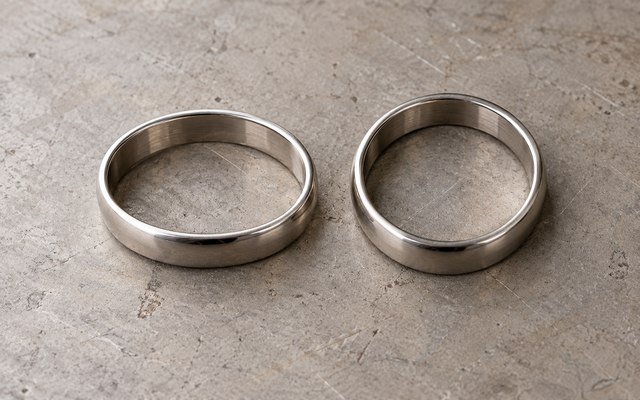
Use a defined sizing method
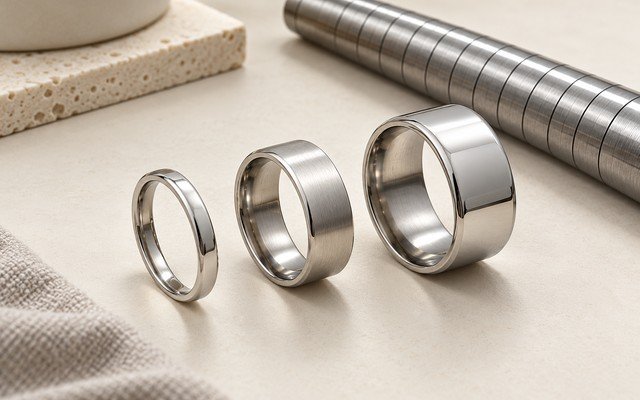
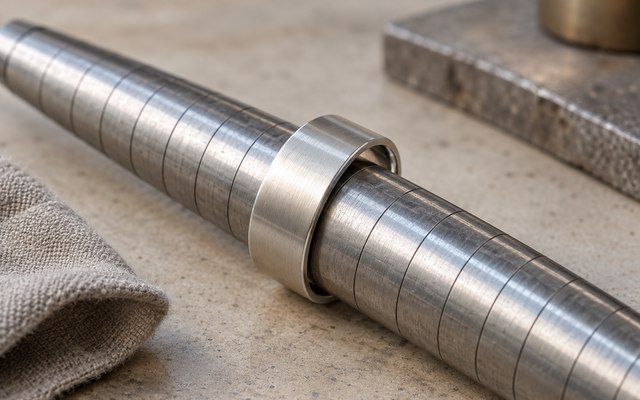
Agree the tool, orientation, seating procedure and reading convention before inspecting a lot. A tapered ring stick, caliper and wearer trial answer different questions. Band width and inner profile can affect how a ring seats on a tool and how it feels in use.
The ISO ring-size measurement overview describes a defined ring-size measurement approach. It should not be replaced by an improvised averaging rule. Read the applicable method and confirm how it handles your construction. For an intentionally noncircular ring, agree any additional geometry and fit assessment with the responsible technical team. Avoid claiming compliance with a full standard merely because its title appears on an inspection sheet.
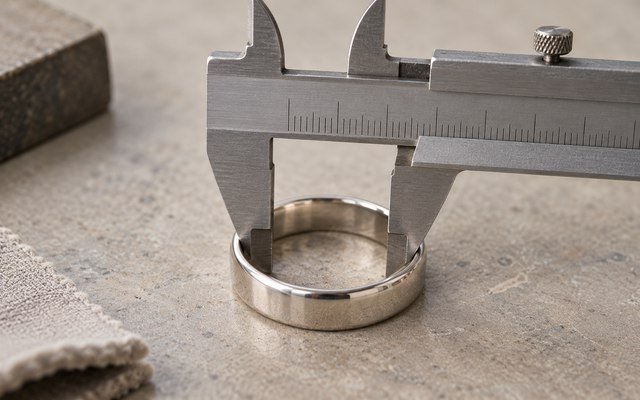
Record directional measurements and their limits
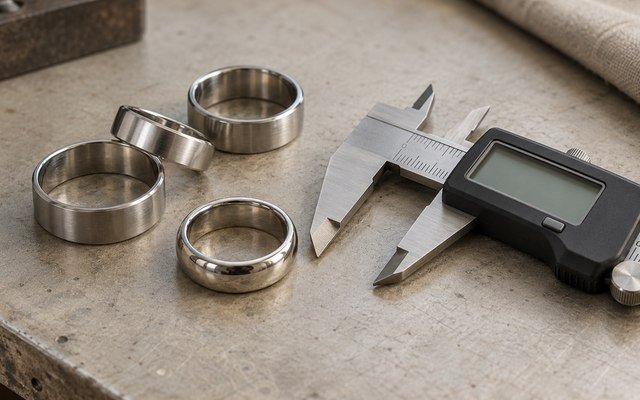
When checking shape, identify measurement axes and the relevant location through the band. Use equipment capable of accessing that feature. Inspectors should not squeeze a flexible ring into a different shape with the instrument. Record repeat readings where the procedure requires them.
The NPL callipers and micrometers guide discusses instrument use and measuring force. The NPL calibration overview explains calibration context. These references support method selection, not a universal ovality tolerance. Set product-specific acceptance limits before production and state how borderline results are reviewed. If the opening differs through the band depth, a single top-view measurement may leave important geometry unresolved.
Review fit and correction separately
A physical fit review can inform design suitability, but it does not replace geometric inspection. Check the relevant band profile and intended size group using a controlled review rather than assuming every wearer has the same preference. Keep observations such as difficult removal separate from measured dimensions.
Use the adjustable ring design guide when the ring has an open or adjustable construction; fixed-ring sizing assumptions may not apply. If correction changes the band shape, review the finish, stone settings and other affected features. Reinspect the complete ring after adjustment. A successful size reading alone does not establish that the correction left the rest of the product unchanged.
Buyer’s working record
Use these fields as a starting point and adapt the acceptance basis to the actual product. This is a proposed purchasing worksheet, not evidence of a completed Yleryler inspection.
| Field | Record | Decision purpose |
|---|---|---|
| Design | Circular or intentionally noncircular | Check the approved geometry |
| Direction | Axes and measurement location | Keep readings comparable |
| Sizing | Tool and seating convention | Avoid ad hoc averaging |
| Fit | Band profile and intended group | Review separately from diameter |
Illustrative purchasing example
Hypothetical example: a fixed ring measures differently across two axes after finishing. The drawing requires a circular opening. Record the directional readings and investigate the shape change; do not average the values simply to produce a passing catalogue size.
Approval and follow-up workflow
Maintain one sizing convention across drawings, purchase orders and inspection sheets. Photograph tool position when it affects repeatability. If multiple size systems are used commercially, record the approved conversion source and retain the underlying measurement reference. Confirm that sample revisions and repeat orders use the same band profile, because changes to width or inner shape can affect fit even with the same listed size.
Frequently asked questions
Can two inner diameters be averaged into a ring size?
Do not assume that averaging establishes a valid size. Use the agreed method for the actual geometry.
Does an oval opening always mean a defect?
No. It may be intentional, but the drawing and acceptance criteria must establish that.
Does a ring stick prove wearing comfort?
No. It supports a defined sizing measurement; fit needs its own review.
Discuss your wholesale jewelry requirements
Planning a stainless steel jewelry order? Send Yleryler your drawings or SKU references, complete assembly details, intended quantities, finish, destination market and the requirements discussed above. Include the approved sample revision and any independent inspection or testing expectations so the project can be reviewed before a quotation is prepared. Contact Yleryler with your product brief.
Prepared by the Yleryler editorial team for B2B purchasing. Technical links checked on 13 October 2026. Linked sources support background concepts; the worksheets and hypothetical examples are proposed workflows. They do not certify a Yleryler product or replace product-specific assessment.