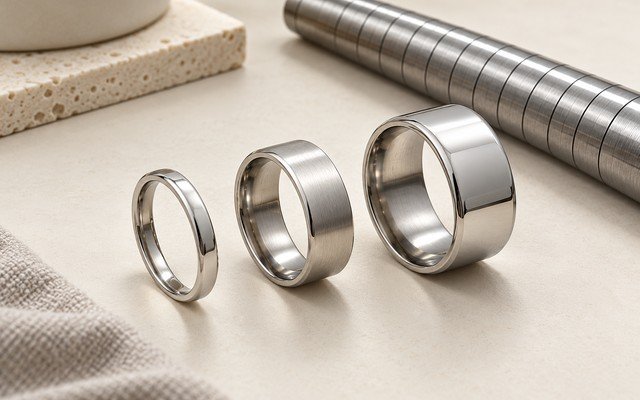
Wide stainless steel rings can feel different from narrow bands because band width, internal profile and the area of finger contact affect fit. The same nominal size does not guarantee the same wearing experience across different designs. Wholesale buyers should approve each important ring family with a defined measurement method and representative fit samples.
Avoid turning this into a universal instruction to add a fixed half size. A wide flat interior, a rounded comfort profile and an open or irregular design do not interact with the finger in identical ways. A practical sizing recommendation needs the actual finished geometry.
Separate ring size from wearing fit
Size describes an agreed measurement or designation. Fit concerns how the finished ring passes the knuckle, sits on the finger and feels during use. Both matter, but they answer different questions.
The GIA measurement benchmark distinguishes between narrow and wide rings and recommends suitable sizing gauges for wider bands. Its guidance supports matching the measurement approach to the item rather than assuming one thin sizing ring represents every product.
Record the size system, gauge or ring stick, reading position and any relevant profile information. A number without a method can lead two inspectors to disagree even when they are handling the same ring.
Images are editorial illustrations, including AI-generated concepts. They are not photographs of verified production, test results or approved customer samples.
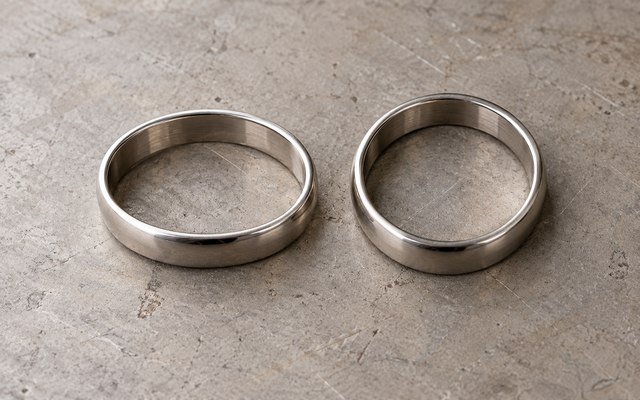
Specify the geometry that influences contact
At minimum, identify the band width and the internal shape. Note whether the interior is substantially flat, rounded or relieved, and whether the width changes around the ring. Thick edges or an unusual underside can also affect the wearing experience.
Keep the terminology clear. Comfort fit can mean different things in a catalog unless the profile is shown and approved. Ask for a section view, a suitable close-up or a physical reference that makes the intended shape understandable.
For a hypothetical range containing a narrow stacking band and a wide signet-style ring, create separate fit references. The buyer may later choose the same retail size labels, but that decision should follow the product review instead of being inherited from a generic conversion chart.
Agree on a repeatable measurement method
ISO 8653 concerns ring-size measurement and designation; BSI's published scope describes the use of a ring stick with defined characteristics during manufacturing. A standard reference is useful only when the actual inspection method and applicable product details are also agreed.
Avoid forcing a ring down a taper to obtain a preferred reading. Record how the ring is positioned and where the size is read. Check that the tool is appropriate and consistent across the supplier, inspector and buyer.
For noncircular or adjustable rings, identify the additional information required. A single diameter may not represent the usable opening or the product's intended adjustment behavior. Keep a wide circular band's method separate from an open ring's approval requirements.
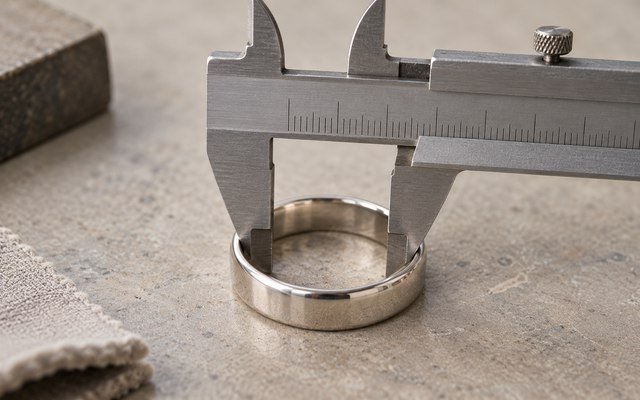
Use representative fit trials carefully
Select people and wearing situations relevant to the customer group, and record the ring version used. Finger shape, knuckle size, temperature and time of measurement can affect observations. GIA's consumer sizing guidance provides useful background on the practical factors involved.
Ask reviewers to describe what happens rather than simply rating the ring good or bad. Does it pass the knuckle comfortably? Does it rotate excessively? Does the edge press into the finger when the hand bends? Can it be removed normally under the trial conditions?
Do not use a small informal trial to claim universal ergonomic suitability. Its purpose is to identify design and size-presentation questions before the buyer commits to a larger size breakdown.
Connect fit approval to retail information
An accurate retail size chart should identify the measurement convention and any product-specific advice supported by the review. Avoid combining several generic rules, such as a wide-band addition and a comfort-fit subtraction, into an apparently precise recommendation without evidence.
Use product photographs that show width and profile. If a model image is illustrative, do not infer an exact fit or measurement from it. Keep the product's measured dimensions and the styling image clearly distinguished.
After launch, classify returns by product version and reported fit issue. A high number of exchanges may indicate an unclear chart, an inappropriate size mix, a manufacturing variation or a design-specific fit problem. Review the evidence before changing every product's size labels.
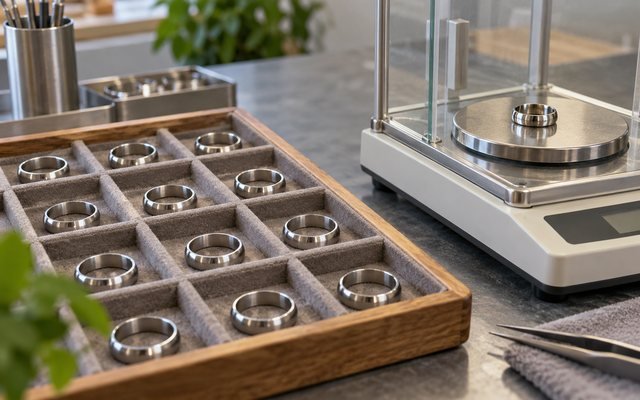
Wide versus narrow rings: fit-review checklist
| Characteristic | Narrow-band review | Wide-band review |
|---|---|---|
| Finger contact | Shorter contact area | Larger contact area may affect perceived tightness |
| Inner geometry | Document actual internal profile | Check comfort fit, edge shape and width together |
| Size measurement | Use defined mandrel or method | Use the same controlled method; record deviations |
| Fit approval | Representative wear trial | Separate fit findings by width and ring profile |
Illustrative assortment decision
A buyer sources a narrow band and a wide band labeled with the same nominal ring size. They may not feel identical because width, profile and finger shape interact. Do not impose an automatic size-up rule; approve representative finished samples and publish a style-specific sizing note.
FAQ
Should every wide ring be ordered half a size larger?
No universal adjustment is reliable for every design and wearer. Review the width, interior geometry, measuring method and representative fit observations before preparing product-specific guidance.
Does an identical inside diameter guarantee identical comfort?
No. Rings with similar dimensions can have different widths, edges and internal profiles. Dimensional inspection and a practical wearing review should support one another.
Can a supplier's standard size chart be used unchanged?
Check it against the supplied product family and the customer's size system. Confirm how the figures were obtained, and approve any fit advice separately from the basic size conversion.
Editorial review and buyer-use limitations
This article is published by Yleryler for wholesale stainless steel jewelry sourcing and OEM/ODM specification review. The practical examples are illustrative, not verified customer orders, product certificates or legal advice. Buyers should verify material, technical claims and market-specific requirements against their actual approved specifications and the authoritative sources linked below. No individual professional qualification or independent third-party review is claimed.
Sources and further reading
These references support the material, regulatory or buying principles discussed above. Product-specific purchasing recommendations are practical guidance; an industry reference does not certify a supplied item. Sources reviewed on October 22, 2026.
- GIA: accurate finger and ring size determination
- GIA: ring measurement tips and sizing
- BSI: ISO 8653 ring-size measurement scope
Related buying guides and product options
For the next purchasing step, read Wholesale Ring Size Breakdown: Build a Practical Opening Order and What Does an Oval Ring Measurement Mean for Wholesale Sizing?. Explore our stainless steel ring collection and contact Yleryler for an OEM/ODM sourcing review. Include your product type or drawings, estimated quantity, stainless steel grade and finish, destination market, required evidence or testing, preferred delivery terms and target date. We can then clarify the quotation scope and product-specific approval criteria. Material grade, process, evidence, MOQ, pricing and delivery are confirmed for the actual quotation and approved specification.