How Do You Choose the Right Custom Jewelry Manufacturer?
Struggling to find a reliable jewelry supplier? You worry about poor quality, communication gaps, and delays. Finding the right OEM/ODM partner feels overwhelming and full of risk.
To choose the right custom jewelry manufacturer, you must shift your focus from finding the cheapest price to finding the best fit. A good partner is found by assessing their communication, asking deep questions about their process, and evaluating their ability to meet your specific quality and brand requirements.

I've been in this business for years, and I've seen many buyers make the same mistakes. They focus only on the final price quoted on a spreadsheet. But the real cost of a project is much higher if things go wrong with production or communication. The goal isn't just to buy jewelry; it's to build a reliable supply chain for your brand. Let's break down how you can avoid common pitfalls and find a manufacturing partner who will help your business grow.
Should You Always Choose the Manufacturer with the Lowest Price?
Tempted by an incredibly low price quote? You hope it's a great deal, but you fear hidden costs or poor quality. This single decision could make or break your launch.
No. Choosing the lowest price often leads to higher total costs from defects, delays, and brand damage. A better approach is to define your "target cost" based on your quality needs and market position, then find a manufacturer who can meet it reliably.
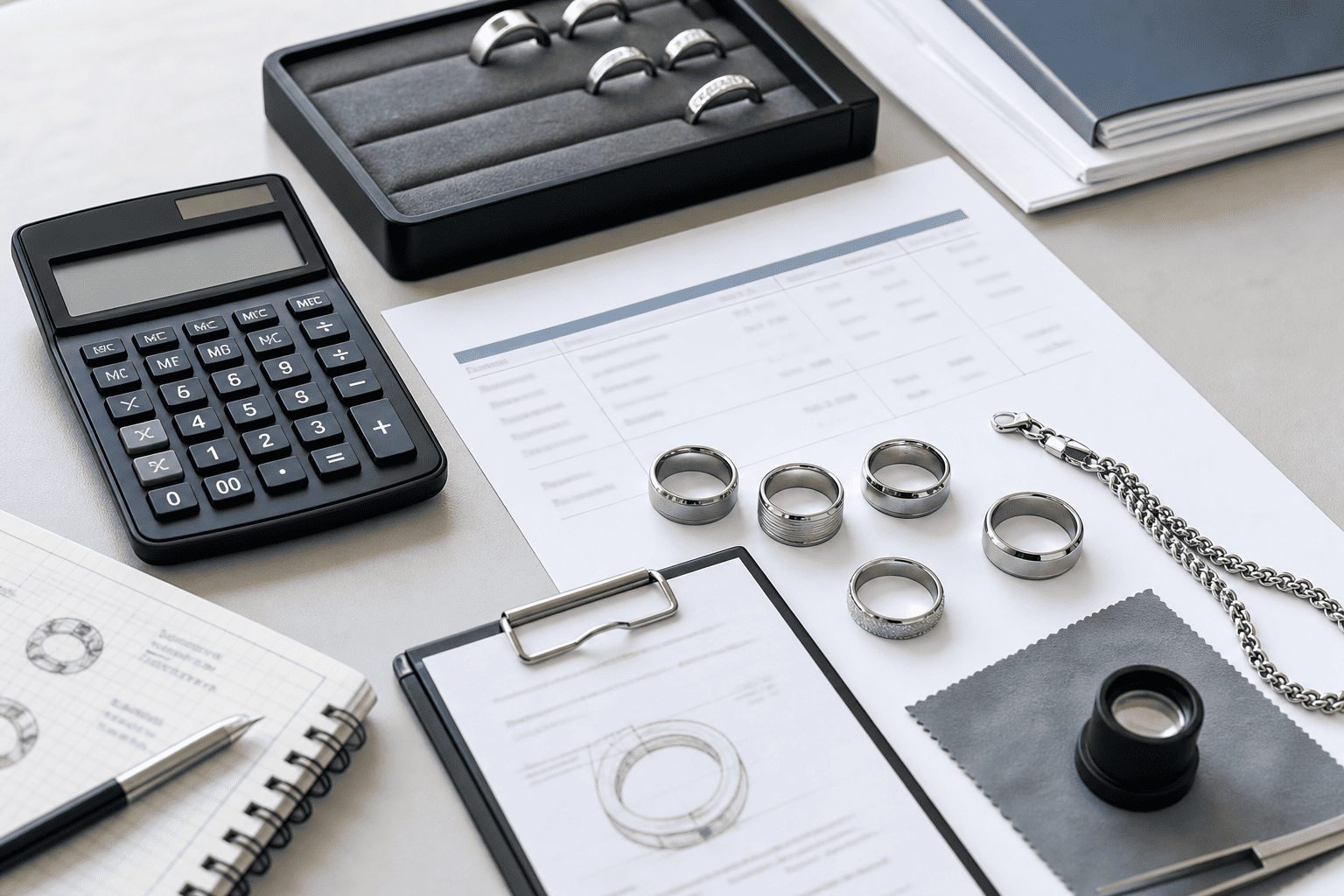
When you only focus on the unit price, you ignore the total cost of the partnership. I remember a client who came to us after a bad experience. They saved about 15% on their initial order with another supplier. The price was great. But when the shipment arrived, over 30% of the batch had flawed logos and inconsistent finishes. The cost to sort the bad units, deal with customer complaints, and reorder the product wiped out their entire profit margin for that season. A low initial price can be the most expensive mistake you make. You should think about the "Total Cost," which includes everything from sampling to the cost of fixing errors.
Comparing Bids: Price vs. Value
| Factor | Low-Price Bid | Value-Partnership Bid |
|---|---|---|
| Initial Quote | Lowest possible price | Competitive, but realistic |
| Quality Control | Basic, often overlooked | Multi-stage, documented process |
| Communication | Slow, non-responsive | Proactive, consultative |
| Hidden Costs | High risk of rework, delays | Lower risk, predictable costs |
| Final Cost | Potentially 1.5x - 2x initial quote | Close to the initial quote |
Are You Asking Your Potential Manufacturer the Right Questions?
You send out inquiries but only get generic price lists back. You're not sure if these suppliers really understand what you need. You worry that you are not getting the full picture.
Stop asking "what" and start asking "how." Instead of "Do you use 316L steel?", ask "How do you verify your steel suppliers and what documentation can you provide?". This tests their process, transparency, and expertise, not just their marketing claims.

The quality of your questions determines the quality of your supplier. Many first-time buyers ask simple questions, so they get simple, unhelpful answers. A professional manufacturer should be able to explain their processes in detail. When you ask better questions, you force them to prove their expertise. You also show them that you are a serious, professional buyer. This changes the dynamic from a simple transaction to a professional partnership. A good manufacturer will welcome these questions because it gives them a chance to show you how they can provide value beyond just a low price. It's a simple way to filter out the factories that aren't prepared to meet a high standard.
From Surface Questions to Deep Dive Questions
| Instead of Asking... | Try Asking... | Why It's a Better Question |
|---|---|---|
| "What are your customization options?" | "For a durable logo on a premium product, would you recommend laser engraving or enamel? Can you show me examples of both and explain the pros and cons for my use case?" | This tests their advisory skill and forces them to think about your specific product, not just list their services. |
| "What's your MOQ?" | "Our initial order is 500 units, but we plan to scale to 2,000 per quarter. How does your pricing and production schedule adapt to this kind of growth?" | This shows you are planning for the long term and tests their flexibility and ability to be a growth partner. |
| "Do you do quality control?" | "Can you walk me through your QC process, from raw material inspection to final packaging? What happens if a defect is found at each stage?" | This uncovers their actual, day-to-day process instead of just getting a simple "yes" answer. |
Is Your Manufacturer's Communication Style a Red Flag?
You're waiting days for a simple reply. Their answers are vague and don't address your questions directly. You start to doubt if they can actually handle your project correctly.
Yes, it is. Poor communication during the inquiry phase is a huge red flag for future problems. A good partner asks clarifying questions about your brand and goals. They are proactive problem-solvers, not just order-takers who send a price list.

Think of the inquiry stage as your first test of the partnership. If a supplier is slow, vague, or unhelpful now, imagine how they will be when they have your deposit and a production problem occurs. When a potential client, like an Amazon seller, contacts us, my first questions are not about quantity. I ask, "Who is your customer?" and "What is the feeling you want your brand to create?" This helps us recommend the right materials, finishes, and packaging. A supplier who skips this step is a risk because they don't care about your brand's success; they only care about getting the order. They are an order-taker, not a partner.
Green Flags vs. Red Flags in Supplier Communication
Red Flag: Only sends you a price list with no questions.
Green Flag: Asks about your brand, target customer, and sales channels.
Red Flag: Takes several days to reply to a simple question.
Green Flag: Responds within one business day with clear, detailed answers.
Red Flag: Says "yes" to everything you ask without discussing potential issues.
Green Flag: Points out potential challenges with your design or material choice and suggests solutions.
Red Flag: You speak to a different person every time you email.
Green Flag: You are assigned a dedicated account manager who understands your project.
Conclusion
Stop searching for the cheapest supplier. Instead, focus on finding the right manufacturing partner. Your brand's success depends on a relationship built on clear communication, shared quality standards, and trust.