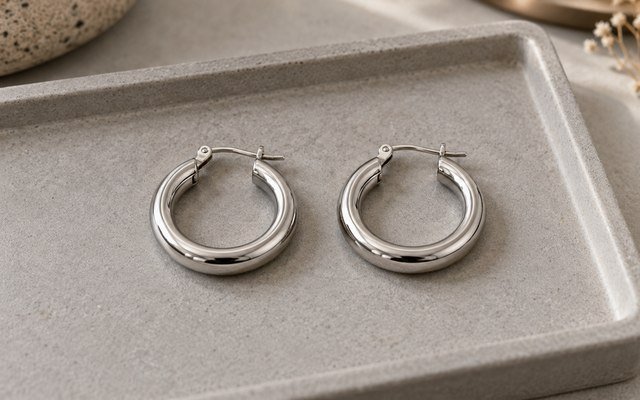
Check earring pair consistency by defining whether the design is identical, mirrored or intentionally asymmetric, then comparing finished pieces for orientation, dimensions, mass where relevant, finish, stone arrangement and fittings. Keep the approved pair identity through assembly and packing; two individually acceptable earrings may still form the wrong pair.
A pair can fail the buyer’s expectation even when neither earring has an obvious defect. Both pieces might face the same direction, use different backs or come from different finish references. Pair approval needs its own record beyond single-item inspection.
Define what constitutes the correct pair
State whether the style uses two identical pieces, a left-right mirrored design or a deliberate asymmetric combination. Identify each member using reference images and component records. Make the orientation clear from front, rear and worn views where useful.
Use the stud earring assembly guide to include posts, backs and cards in the review. If the design is mirrored, two right-hand components cannot become a correct pair simply because their measurements match. For intentionally asymmetric styles, document the permitted difference so inspectors do not incorrectly reject the feature that defines the collection.
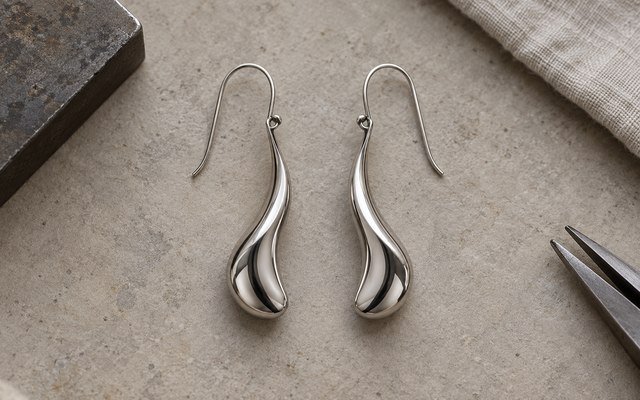
Compare the complete assemblies under consistent conditions
Place both pieces in the same orientation and light. Compare visible geometry, stone layout, finish and decorative placement. Record which dimensions need measurement and whether pair mass difference matters for the design. Compare equivalent components rather than a bare body against a finished earring.
The NPL callipers and micrometers guide supports dimensional method selection. The NPL weighing practice guide provides weighing background. Neither establishes universal pair-matching limits. Agree limits or appearance references appropriate to the style before inspecting. A good visual match does not prove identical mass, and identical mass does not prove matched geometry. Keep these observations separate so one favorable result cannot substitute for another required check.
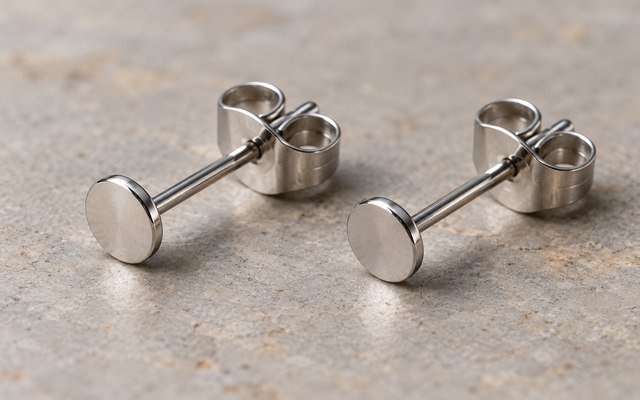
Verify fittings and operation on both sides
Check that post, hinge, closure and backing specifications are correct on each piece. Review closure operation and attachment orientation without forcing components. A matching decorative front can conceal different construction at the rear. Use the agreed functional criteria and document any intermittent behavior.
For hinged styles, connect the review to the huggie closure checklist. Keep fitted backs with the intended post specification and sales unit. If an accessory is substituted, evaluate compatibility before approving it. Avoid assuming that a loose replacement back is suitable because it fits once on a sample; the ordered assembly and repeatability still need review.
Protect pair identity through packing
Establish how the two members are brought together, inspected and transferred to the display card or bag. Keep mirrored components distinguishable until the correct pair is assembled. Identify the sales unit as a pair when that is what the customer orders.
The GS1 traceability framework provides traceability background. Apply clear identity relationships to your own SKU and packing workflow; adopting a reference does not automatically make the system traceable. Confirm the card orientation and label match the approved pair. If one earring is removed for rework, prevent it from returning to the wrong partner. Receiving staff should be able to reconcile pair quantities without converting loose pieces by guesswork.
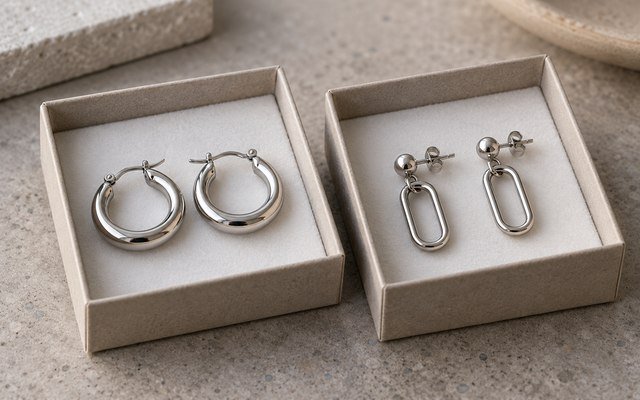
Buyer’s working record
Use these fields as a starting point and adapt the acceptance basis to the actual product. This is a proposed purchasing worksheet, not evidence of a completed Yleryler inspection.
| Field | Record | Decision purpose |
|---|---|---|
| Pair type | Identical, mirrored or asymmetric | Use approved pair images |
| Comparison | Geometry, finish and specified mass | Use consistent conditions |
| Function | Both closures and matched fittings | Inspect complete assemblies |
| Packing | Pair identity, card and label | Preserve the sales unit |
Illustrative purchasing example
Hypothetical example: an order of mirrored floral earrings is packed with two left-facing pieces on several cards. Individual appearance inspection did not reveal the pairing mistake. Add a pair-orientation check at assembly and confirm the corrected packing instructions before release.
Approval and follow-up workflow
Keep a complete approved pair as the reference, with front and rear photographs. Define the matching criteria and any intentional asymmetry in writing. Review the packing step as well as the product itself. When ordering replacements or handling rework, state whether the request is for one side or a complete pair so purchasing, production and receiving use the same unit.
Frequently asked questions
Should every pair have identical weight?
Not necessarily. Intentional asymmetry and normal production variation require product-specific criteria.
Can two passing single earrings form a failed pair?
Yes. Orientation, finish reference or fittings can make the combination incorrect.
Is a front photograph enough to approve a pair?
Usually it leaves rear construction and fitting questions unresolved. Review the complete assembly.
Discuss your wholesale jewelry requirements
Planning a stainless steel jewelry order? Send Yleryler your drawings or SKU references, complete assembly details, intended quantities, finish, destination market and the requirements discussed above. Include the approved sample revision and any independent inspection or testing expectations so the project can be reviewed before a quotation is prepared. Contact Yleryler with your product brief.
Prepared by the Yleryler editorial team for B2B purchasing. Technical links checked on 13 October 2026. Linked sources support background concepts; the worksheets and hypothetical examples are proposed workflows. They do not certify a Yleryler product or replace product-specific assessment.