A huggie earring can look excellent in a catalogue and still disappoint when a customer tries to fasten it. For a wholesale order, the practical question is whether the same design closes comfortably and consistently across the batch. This guide gives sourcing teams a repeatable way to evaluate the mechanism before approving production.
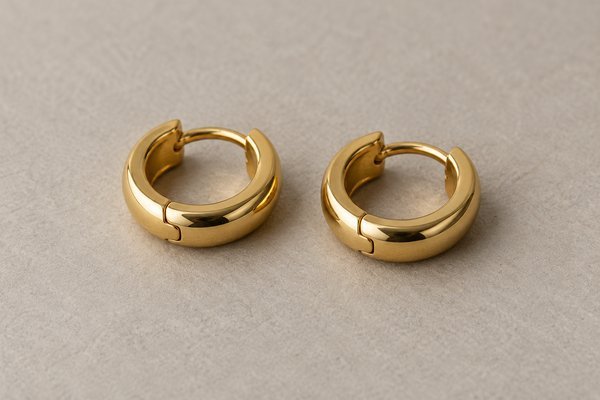
Check wholesale huggie earrings as moving assemblies: verify the wearable inner opening, hinge movement, post alignment, closure engagement and left-to-right consistency. Agree on a documented functional inspection rather than judging quality from sparkle or a clicking sound alone.
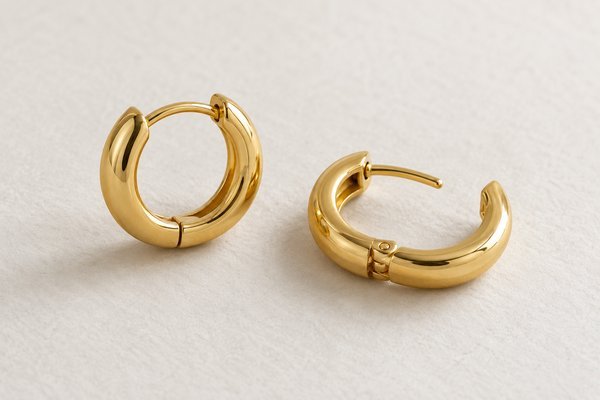
Check 1: Start with the wearable opening, not the outer diameter
Ask the supplier to distinguish outer diameter, inner diameter and post geometry in the drawing. A thick hoop may have an impressive outer size but a relatively small wearable opening. Decorative stones or a wider front can also change how the earring sits. Record the intended wearing position and audience without promising that one size fits every ear.
Compare Stainless Steel Huggie Earrings and Gold Stainless Steel Huggie Earrings as sourcing options. Review the selected pair’s hinge movement, post alignment and closure engagement before bulk approval.
For background on dimensional measurement records, see NIST guidance on metrological traceability. Keep wearable opening measurements separate from closure-function observations.
Review a physical pair from the intended construction. Look at the space around the post when the hoop is closed, and check whether the back edge is smoothly finished. A catalogue photograph cannot establish comfort. Where wear evaluation is used, arrange it appropriately and keep it separate from material and skin-contact testing.
Check 2: Open and close each sample in the same way
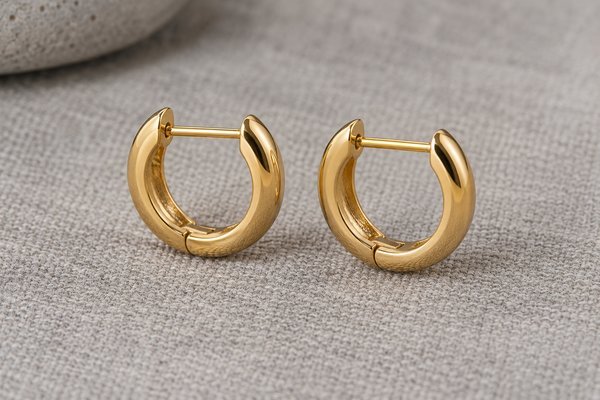
Use a consistent handling method and an agreed number of cycles for the sample review. This is a buyer-defined screening exercise, not a universal durability standard. Watch for rough movement, excessive sideways play or a hinge that changes position after repeated operation. Avoid forcing a resistant mechanism, because damage caused during review can obscure the original fault.
Compare several pairs rather than the best-looking unit. Note which samples require noticeably different pressure and whether any post misses its receiving point. Keep a short video of the normal closing action. A video is useful for explaining a functional issue, but it does not replace a retained sample or written acceptance criteria.
Check 3: Evaluate engagement without relying on the click
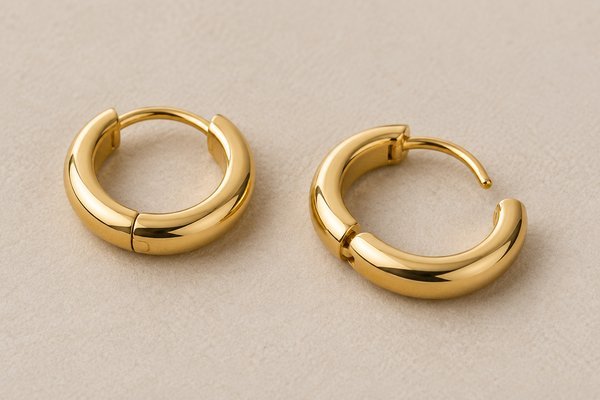
An audible click may help the wearer recognize closure, but sound alone does not prove secure engagement. Inspect whether the post meets the receiving area centrally and whether the closed profile looks aligned. A unit that clicks while sitting twisted deserves further review. Do not bend the post yourself to make a sample pass.
Discuss how the supplier will check closure during production and what happens to units that fail. Define the inspection action, the person responsible and the treatment of rejected pieces. If a supplier proposes a retention-force measurement, ask for the fixture, direction of loading and agreed limits. Without a defined method, numbers from different suppliers may not be comparable.
Check 4: Inspect the pair and its retail presentation
Two individually acceptable earrings can still make an inconsistent pair. Compare front width, color, stone arrangement, post position and overall orientation. A mirrored design may need explicit left and right identification. Record whether the order quantity means individual pieces or complete pairs; that small distinction can change packing counts and quoted costs.
Check the earring card as well. A card hole or tight fixing can put pressure on the mechanism during packing. Approve the actual retail presentation with the product attached. Keep the functional sample record linked to the SKU, drawing revision and packaging instructions so the inspection team does not have to reconstruct the intended design from a photograph.
A practical buyer exercise
Before issuing the purchase order, select three representative pairs and write one observation for each review point. If one pair behaves differently, ask for a cause assessment before deciding whether it represents a design issue or a sample defect. Use the approved pair as a reference, not as proof that every future piece will automatically pass. Link this exercise to your sample approval record and require confirmation of the production inspection method.
Record a closure concern before adjusting the sample
| Observation | Next action |
|---|---|
| Post misses receiving area | Photograph alignment and request a cause review |
| Hinge movement changes | Identify sample and review method; hold the release |
| Pair differs in shape or finish | Compare both pieces with the agreed pair reference |
| Packing puts pressure on closure | Review the mounted pair and revise packing where needed |
Keep unreviewed adjustments out of the approval reference. Use the front, rear and mechanism photo brief and packaging checks to document the complete pair.
Huggie mechanism review matrix
Use these fields in your purchase order or sample review. Numerical values and IDs below are illustrative, not live product specifications, test results or confirmed commercial terms. Agree measurement methods, tolerances and acceptance criteria for your actual design.
| Field | Record or illustrative example | Verification before release |
|---|---|---|
| Fit | Wearable inner opening and post geometry | Measure the actual sample; keep outer diameter separate |
| Mechanism | Hinge reference and post-to-catch alignment | Observe normal opening and full engagement without adjustment |
| Repeat check | Agreed operating sequence and quantity checked | Record method, cycles if specified, findings and release decision |
Buyer FAQ
Is a tighter closure always better?
No. A closure that is difficult to operate can create a different usability problem. Agree on secure engagement and reasonable operation together.
Can the supplier correct misalignment after finishing?
Ask for the proposed process and reinspection. An adjustment can affect appearance or the mechanism, so approve the corrected result rather than an informal promise.
Build a closure evidence record
Keep a paired sample ID, ear-post alignment view, open and closed hinge views, and a short unedited closure demonstration for the selected huggie design. Examine whether the post enters the catch cleanly and stays engaged under the agreed handling method; a clicking sound alone is not a pass criterion. Record repeated-cycle test conditions and observed wear when those tests are specified by the buyer. Approval must apply to the actual hinge and post construction, not a visually similar render.
What should a closure failure report include?
Include the SKU, sample revision, hinge and catch views, operating method and observed engagement problem. Document it before adjustment and agree the correction and repeat-check method.
Plan your wholesale project
Explore our stainless steel earring collection to compare relevant product designs before preparing your specifications and quotation request.
For the next approval step, see our jewelry sample approval checklist. Submit your huggie earring design with inner fit dimensions, post/catch reference, required closure checks and target quantity.
Images in this article are illustrative product concepts; they are not photographs of an approved sample or inspection evidence.