Control jewelry component substitutions by requiring a documented change request before use, comparing the proposed part with the approved specification, reviewing affected functions and evidence, and obtaining authorization from the designated buyer. Similar appearance or equal nominal dimensions do not establish equivalence.
A supplier may propose a different clasp or backing because the original part is unavailable. The substitution can appear minor while changing operation, finish matching or documentation. A short, structured review is more useful than accepting every replacement or rejecting changes without examining their effect.
Identify the proposed change completely
Name the current and proposed component references, the affected SKUs and lots, and the reason for the change. Include drawings or photographs, material declarations and relevant dimensions. State when the substitute would enter production and whether any units have already been assembled.
Use the reorder control record to preserve the approved baseline. A message saying same quality is not a comparison. Buyers need enough information to understand what changes and which requirements may be affected. Keep the original part available as a reference where practical, and do not relabel the substitute with the old component identifier merely to simplify paperwork.
Compare function and assembly compatibility
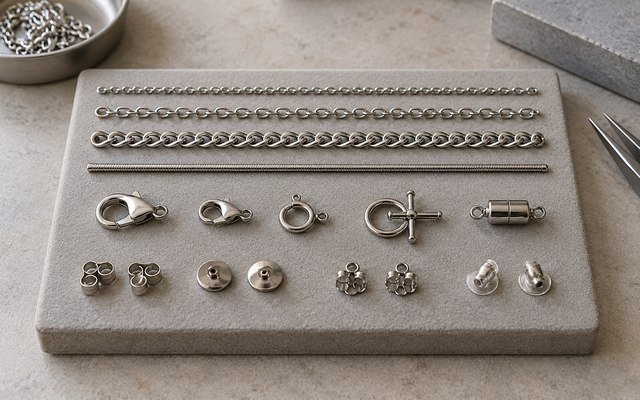
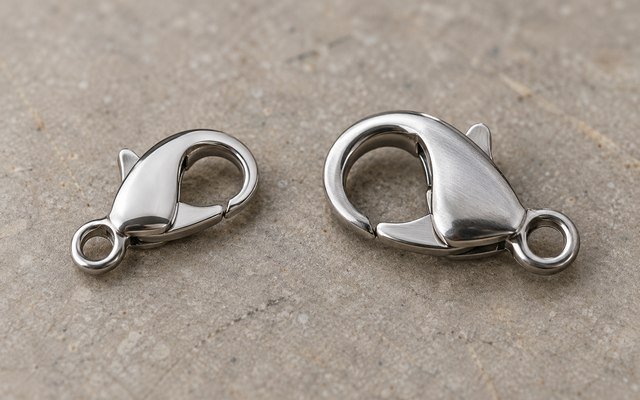
Review how the part connects to neighboring components. A replacement clasp may fit the terminal ring yet be harder to operate; a backing may attach to the post but differ in retention behavior. Confirm the finished assembly, not only the loose substitute.
The NPL callipers and micrometers guide supports dimensional comparison. It does not establish functional equivalence from matching measurements alone. Use the clasp compatibility guide where closures are involved. Define any additional operating or assembly checks and retain the results. If the substitution changes assembly sequence or tooling, assess those consequences before assuming the modification can be introduced without a new sample.
Review appearance and supporting evidence
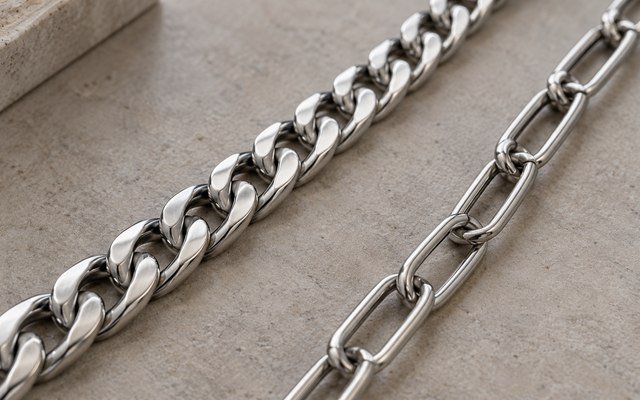
Compare finish, color, visible geometry and decorative details under agreed conditions. Determine whether earlier material declarations, tests or approval records cover the substitute. A report for the original component does not automatically cover a new source or construction.
The GS1 traceability framework provides identity and event-recording context. Preserve the relationship between the component used and the finished lot. Where new verification is needed, agree scope and timing before shipment. Keep product claims, care instructions and sales images aligned with the actual assembly. Do not use an unchanged product photograph to imply that the delivered construction is unchanged.
Authorize the change and update the release record
Identify who can approve the substitution and whether approval is limited to one order or establishes a new permanent specification. Record conditions, evidence and any remaining restrictions. Update the bill of materials, packing references and relevant inspection instructions after authorization.
The ISO quality management overview provides management-system background. Use a practical decision trail rather than treating the source as approval of a particular substitute. If the buyer declines the change, record the agreed alternative and its scheduling impact. If the substitute is approved, keep its effective date and affected lots visible. A verbal acceptance can leave later inspectors comparing production against the wrong reference.
Buyer’s working record
Use these fields as a starting point and adapt the acceptance basis to the actual product. This is a proposed purchasing worksheet, not evidence of a completed Yleryler inspection.
| Field | Record | Decision purpose |
|---|---|---|
| Change request | Old/new part and affected lots | State the proposed scope |
| Comparison | Function, dimensions and appearance | Review the complete assembly |
| Evidence | Material and test applicability | Identify missing verification |
| Approval | Owner, conditions and effective date | Update the product record |
Illustrative purchasing example
Hypothetical example: a replacement lobster clasp has the same quoted length but a different gate opening. It does not operate reliably with the approved terminal ring. Review the actual pairing before authorizing it; the nominal dimension alone is insufficient to establish equivalence.
Approval and follow-up workflow
Keep an open change log for each product family. Link every approved substitution to the relevant sample and lot. Specify whether existing stock may be mixed with revised stock and how labels distinguish them when needed. Review upcoming reorders against the updated record so a one-time exception does not silently become the standard construction. Confirm the final release reference before shipment.
Frequently asked questions
Can a supplier use a similar part without approval?
Follow the agreed change-control requirements. Similar appearance does not establish equivalence.
Does one passing test cover a new component?
Only if its applicability is supported. Review the actual specimen, construction and scope.
Can approval be limited to one order?
Yes. Document that limitation and preserve the original specification for later orders.
Discuss your wholesale jewelry requirements
Planning a stainless steel jewelry order? Send Yleryler your drawings or SKU references, complete assembly details, intended quantities, finish, destination market and the requirements discussed above. Include the approved sample revision and any independent inspection or testing expectations so the project can be reviewed before a quotation is prepared. Contact Yleryler with your product brief.
Prepared by the Yleryler editorial team for B2B purchasing. Technical links checked on 13 October 2026. Linked sources support background concepts; the worksheets and hypothetical examples are proposed workflows. They do not certify a Yleryler product or replace product-specific assessment.