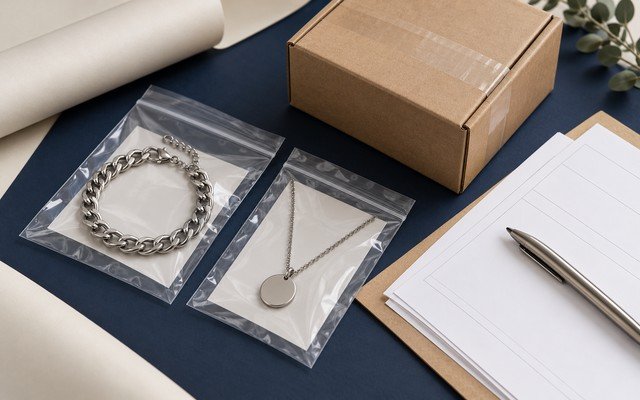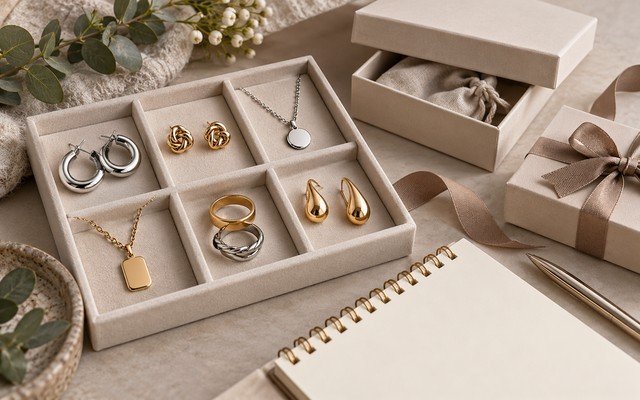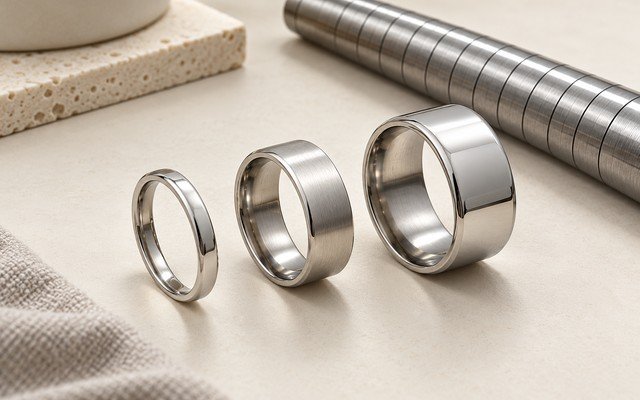
“Please repeat the last order” sounds clear until the supplier discovers that the chain has changed, the old packaging is unavailable or the buyer’s team is using a different photograph. Jewelry reorders need a product record that explains what must remain the same and what may change.
Link every repeat order to an approved specification and sample. Identify components, finish, dimensions, artwork and packaging, then require proposed changes to be reviewed before production. Keep revision identity separate from the production batch.
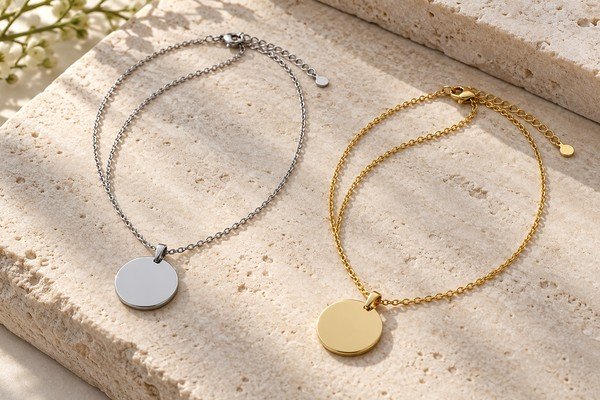
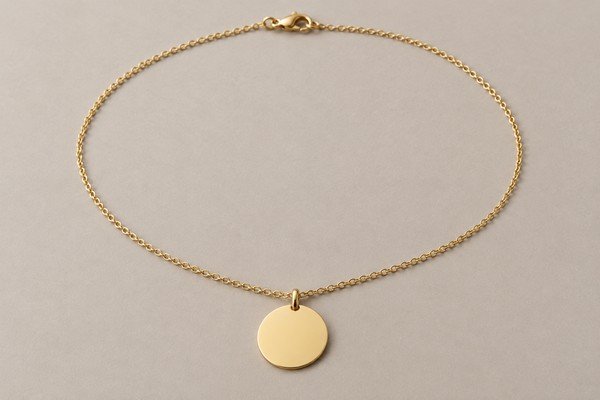
A simple disc pendant necklace is a useful example. Its appearance depends on several small details, even though the overall design looks uncomplicated.
Build one authoritative product record
Start with the product code and approved revision. Include pendant diameter and thickness, bail opening, chain style and length, clasp, extender and finish. Add the packaging and label requirements.
For repeat orders of a design such as Women’s Silver Stainless Steel Circle Pendant Necklace, link the approved pendant, chain, finish and packaging references to one controlled product revision.
See ISO 10007 configuration-management guidance for a broader framework for product-version control. Record which approved revision applies to each repeat order and preserve the preceding version.
Attach the approved drawing, reference photographs and sample ID. Store them together so a buyer does not need to reconstruct the order from months of messages.
Choose an owner for the record. Purchasing, design and warehouse teams can contribute, but someone must decide which version is current and communicate that version to the supplier.
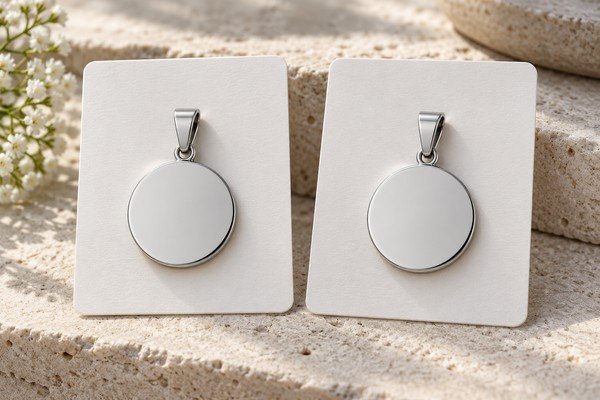
Separate a revision from a batch
A revision describes the product configuration. A batch identifies a particular production run. Two batches may follow the same revision, while a deliberate change creates a new revision.
Keep both references. If customers report a concern, the team needs to know whether it relates to a design change or to one production run of an otherwise unchanged product.
Do not overwrite old records when a revision is approved. Preserve what was supplied previously and state when the new version begins. That history is useful when old and new stock exist at the same time.
Define which changes need approval
Ask the supplier to notify you of proposed substitutions involving materials, chain, clasp, coating, dimensions, logo or packaging. A component that appears equivalent may still affect the product’s feel, fit or presentation.
Create a short change request with the reason, affected products, comparison evidence and consequences for cost or timing. Decide whether a new sample, photograph, measurement report or other review is required.
| Proposed change | Likely review focus |
|---|---|
| Chain or clasp | Length, appearance and handling |
| Surface finish | Color reference and texture |
| Pendant dimensions | Proportion, weight and packaging fit |
| Insert or pouch | Protection and presentation |
Reconfirm the reference before ordering
Send the product revision and previous purchase order number with the new quantity breakdown. Ask the supplier to confirm that the required components and process remain available.
Check the condition of retained samples. Scratched or heavily handled references can create confusion during appearance approval. Replace an unreliable reference through a documented decision rather than silently choosing a new one.
Confirm whether new stock will sit beside earlier deliveries. Mixed display stock can make a small color or geometry difference more noticeable. The receiving plan should reflect that commercial reality.
Our custom jewelry manufacturing guide explains why the initial specification should be detailed enough to support repeat production.
Use early checks to catch drift
Compare representative early production pieces with the approved record before the order is fully packed. Focus on areas that changed or caused previous concerns, while retaining the agreed overall inspection scope.
For a disc necklace, check the relationship between pendant, bail and chain. A different end tag may prevent the pendant from being removed even if the visible chain width looks unchanged.
Document discrepancies before accepting them. If a variation is commercially acceptable for this batch only, say so explicitly. A one-time concession should not automatically revise the permanent product specification.

Give receiving staff a usable comparison
Provide the warehouse with current photographs, variant names and the relevant checks. The record should help staff identify the correct product without requiring them to interpret the full development history.
Record the batch received, quantity, date and any hold decision. Keep retained samples or representative photographs according to the needs of the sourcing program.
When a complaint occurs, connect it to the relevant product revision and batch. This makes the investigation more focused and helps avoid unnecessary changes to unaffected stock.
Close the loop after each reorder
Review what changed, what caused delays and what the next order needs. Update supplier lead-time assumptions and component notes where evidence supports a change.
Do not confuse a forecast with a production authorization. If you want the supplier to plan capacity or reserve materials, agree the commercial arrangement explicitly rather than relying on an informal estimate.
My view: a bestseller deserves a better record than a new design, because more customers already know what to expect from it. Consistency is easier to protect before the reorder than after delivery.
Use a change summary for each reorder
Ask the supplier to mark every specification line as unchanged or revised. List any new component source, drawing revision, finish route, packaging artwork or quantity split. State which changes require another sample and who can release them. A purchase-order number alone does not identify the approved configuration.
Review finish changes through the PVD color comparison process and tie the shipment to the SKU and carton record.
Repeat-order change declaration
Use these fields in your purchase order or sample review. Numerical values and IDs below are illustrative, not live product specifications, test results or confirmed commercial terms. Agree measurement methods, tolerances and acceptance criteria for your actual design.
| Field | Record or illustrative example | Verification before release |
|---|---|---|
| Current release | Drawing, finished sample, component and packing IDs | Confirm supplier has the same references before ordering |
| Proposed change | Old vs new source, geometry, finish or label | State reason and whether price or timing changes |
| Approval | Affected checks repeated on revised sample | Record who accepted the change and update the controlled specification |
Reorder questions
Is the old invoice enough?
Usually not. It may omit construction, component references, artwork and packaging details.
Can an approved substitution become permanent?
Yes, if it is deliberately reviewed, recorded as the appropriate revision and communicated to every relevant team.
Send Yleryler your repeat-order brief with the prior order number, approved reference and proposed quantity by variant.
Images are AI-generated design illustrations. Confirm actual products and specifications against approved samples.
Does a new batch require a new specification revision?
A batch identifies a production run; a revision identifies a changed configuration. Keep the two separate and revise the specification when an approved product requirement changes.