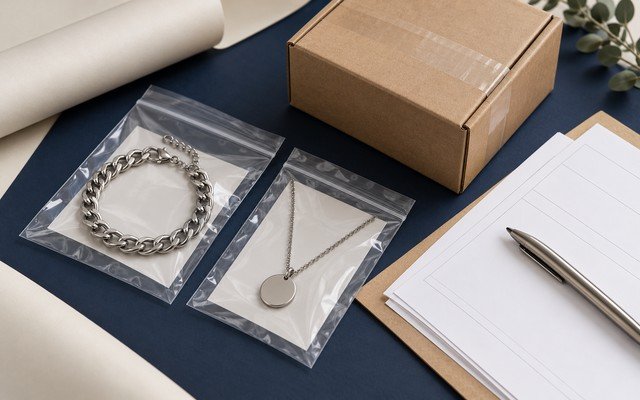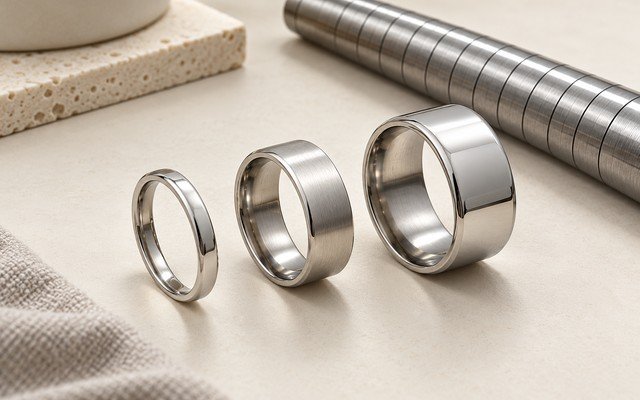
Manage stainless steel jewelry returns by recording the condition, product identity and customer observations before cleaning, repair or repacking changes the evidence. A refund decision and a technical defect investigation are related but separate tasks. The customer can receive a timely commercial response while the product review follows a documented process.
For wholesale buyers, the objective is to turn a returned item into reliable information about the supplied product. An isolated photograph without an order reference, exposure history or description of the problem may show a symptom while leaving its cause unresolved.
Capture facts before interpreting the cause
Give each returned item or clearly defined group a return reference. Record the product SKU, finish, size, order, sale or delivery date where known, production lot if available and the reason the customer selected. Keep the customer's original wording as well as the team's category.
Photograph the item as received, including the packaging and any detached parts. Take an overall view and a clear close-up with a consistent scale reference where useful. Keep observations such as clasp does not close separate from conclusions such as defective spring until the assembly has been examined.
Do not ask staff to diagnose an alloy or coating chemistry from color alone. A brown mark, dark residue or pale area can have several explanations, and an early assumption can distort the whole investigation.
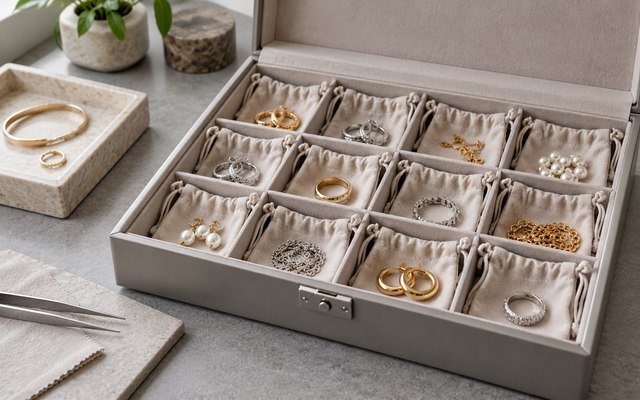
Images are editorial illustrations, including AI-generated concepts. They are not photographs of verified production, test results or approved customer samples.
Separate handling paths for different return types
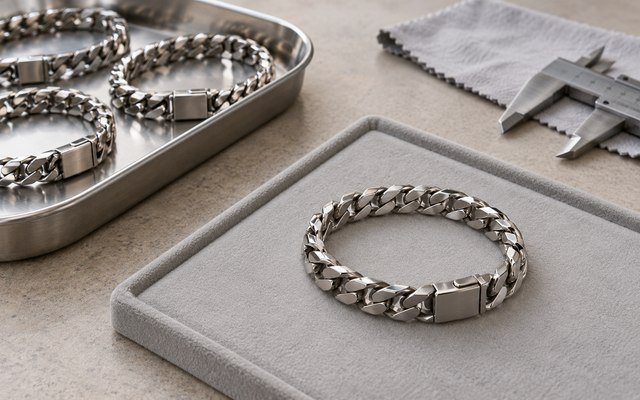
A size exchange, an unwanted gift and a reported sharp edge should not all enter the same undifferentiated defect count. Create categories that help decide the next action while preserving enough detail for review.
Useful categories can include fit, description mismatch, missing component, closure function, surface appearance and suspected safety concern. Treat the classification as provisional until inspection supports it. Staff should have a clear route to escalate an issue that may affect other units or customers.
Shopify's returns guidance separates returns, exchanges and refunds in its operational workflow. The same distinction is useful in any system: the movement of stock, the customer transaction and the technical investigation should each be recorded accurately.
Preserve condition and control access
Keep an investigation item separate from sellable inventory. Use a protective container that prevents additional scratching or loss of detached pieces. Record who examines it and what actions are taken, especially if a part is opened, cleaned or tested.
If cleaning is necessary to understand the surface, photograph first and agree a suitable method for the construction. Preserve an untreated area or a separate sample where practical. Avoid aggressive treatment that may remove the original condition before the supplier or laboratory can review it.
For earrings and other skin-contact products, any decision about resale, sanitation or disposal must follow the business's applicable rules and product requirements. A technical investigation should not turn a returned item back into available stock by accident.
Compare against the right reference
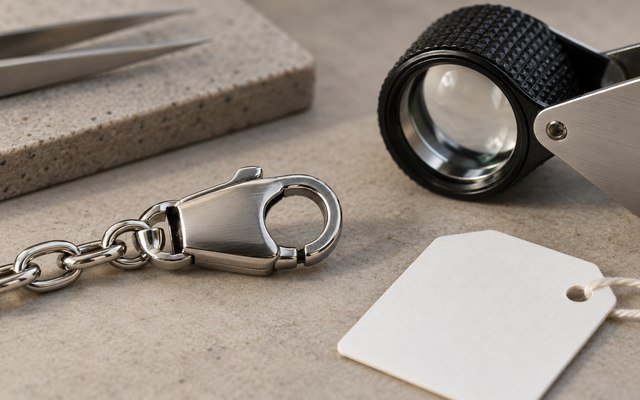
Link the return to the approved specification, relevant retention sample and production evidence. Confirm that the comparison item is the same version, finish and component arrangement. A current sample from another supplier cannot automatically explain an older production lot.
Ask focused questions:
- Does the returned item match the ordered configuration?
- Is the reported condition present on receipt?
- Does the relevant production reference show the same condition?
- Are there other reports involving the same lot or component?
- What additional evidence would distinguish the possible causes?
ISO 10002 provides guidance on customer complaints handling. Its value here is a disciplined approach to receiving, reviewing and learning from complaints, not an automatic finding that the product or customer is at fault.
Close the loop with a defined action
The investigation record should state what was observed, what remains uncertain and what action follows. Possible outcomes include correcting a size description, changing packaging, replacing a component, adjusting inspection or requesting a more detailed assessment. Tie the action to the evidence.
Do not make a broad defect-rate claim from a small number of returns without a meaningful denominator. Compare the same product versions and sales periods, and distinguish reported cases from confirmed findings. Returns that arrive later can also change the picture.
If the evidence suggests a product-safety issue, use the appropriate escalation and regulatory process for the market. European Commission product-safety resources provide an official starting point for EU businesses; a routine refund should not close a separate safety obligation.
Returned-jewelry evidence intake table
| Record | Capture before intervention | Reason |
|---|---|---|
| Order and lot | SKU, quantity, batch and purchase references | Identify potentially affected units |
| Condition | Overall and close-up photographs, packaging condition | Preserve as-received evidence |
| Customer report | Observed issue, use history and timing where available | Separate symptoms from inferred cause |
| Handling | Who received, stored, opened and tested the item | Support traceability and fair investigation |
| Disposition | Inspection finding, decision and approval | Close the corrective-action loop |
Illustrative complaint investigation
If a returned ring shows discoloration, do not polish it immediately. Record the as-received surface, compare a retention sample and document any subsequent cleaning or test. A complaint alone does not demonstrate a manufacturing defect; the investigation should determine what the evidence supports.
FAQ
Should we clean a returned bracelet before sending photographs?
Photograph and record its condition first. Cleaning can change deposits or marks that help explain the issue. Agree the next examination step with the responsible reviewer.
Does one returned item prove a whole batch is defective?
No. It is a reason to investigate, especially if the issue may be serious. Review identity, other reports, retained references and appropriate additional checks before deciding the scope.
Can a return be closed while the cause remains uncertain?
The customer transaction can be resolved, but the technical record should state the uncertainty. Assign any remaining investigation or monitoring action rather than recording an unsupported cause merely to complete the form.
Editorial review and buyer-use limitations
This article is published by Yleryler for wholesale stainless steel jewelry sourcing and OEM/ODM specification review. The practical examples are illustrative, not verified customer orders, product certificates or legal advice. Buyers should verify material, technical claims and market-specific requirements against their actual approved specifications and the authoritative sources linked below. No individual professional qualification or independent third-party review is claimed.
Sources and further reading
These references support the material, regulatory or buying principles discussed above. Product-specific purchasing recommendations are practical guidance; an industry reference does not certify a supplied item. Sources reviewed on October 22, 2026.
- Shopify Help: returns, exchanges and inspection workflow
- ISO 10002:2018: customer complaints handling
- European Commission: product safety information for businesses
Related buying guides and product options
For the next purchasing step, read What Should a Jewelry Nonconformance Report Include? and What Should a Wholesale Jewelry Retention Sample Program Include?. Explore our stainless steel ring collection and contact Yleryler for an OEM/ODM sourcing review. Include your product type or drawings, estimated quantity, stainless steel grade and finish, destination market, required evidence or testing, preferred delivery terms and target date. We can then clarify the quotation scope and product-specific approval criteria. Material grade, process, evidence, MOQ, pricing and delivery are confirmed for the actual quotation and approved specification.