A wholesale jewelry retention sample program should define why samples are kept, how they are selected, which lot and revision they represent, how they are stored, who may use them and when retention is reviewed. A retained piece supports comparison and investigation; it does not prove that every item in its batch conformed.
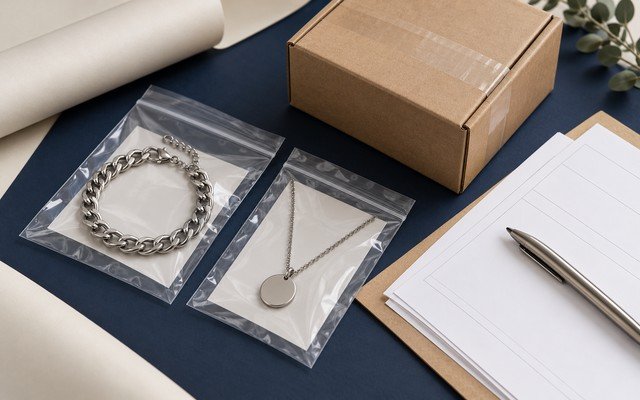
Months after delivery, a buyer may need to compare a returned bracelet with the original production. An unlabelled sample in a drawer offers little help. A useful retention program preserves both the physical piece and the context needed to interpret it.
Define the question the retained sample must answer
Decide whether the sample supports appearance comparison, construction identification, complaint investigation or another specific purpose. Different objectives may need different samples and records. Keep an approved development sample distinguishable from a piece retained from actual production.
Use the sample approval guide to identify the design reference. A reference sample describes what was approved, while a production retain records one selected item from a defined lot. Do not merge these roles without documenting the relationship. Decide in advance whether complete sales units, packaging or loose components are needed for the intended investigation.
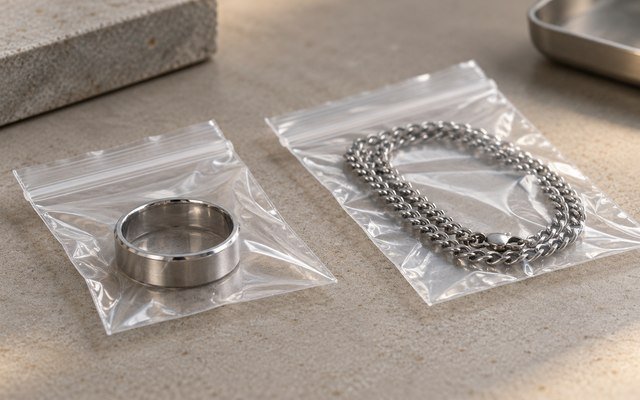
Make selection and identity traceable
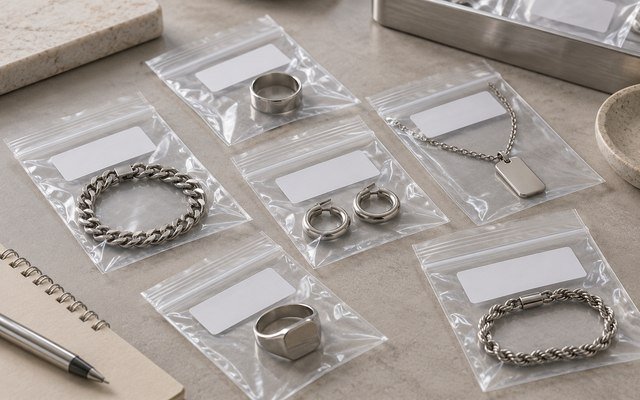
Record the SKU, variant, product revision, lot, selection date and person responsible. Explain how samples were selected and whether they represent different finishes, sizes or component sources. Retain the relationship between the piece and relevant production records.
The GS1 traceability framework supplies traceability background. Apply that framework to your own identifiers and events; a barcode without a reliable underlying record is not enough. Use the batch traceability guide to connect finished samples with components and shipment destinations. Do not claim that one arbitrarily selected piece represents every variant or every unexamined unit.
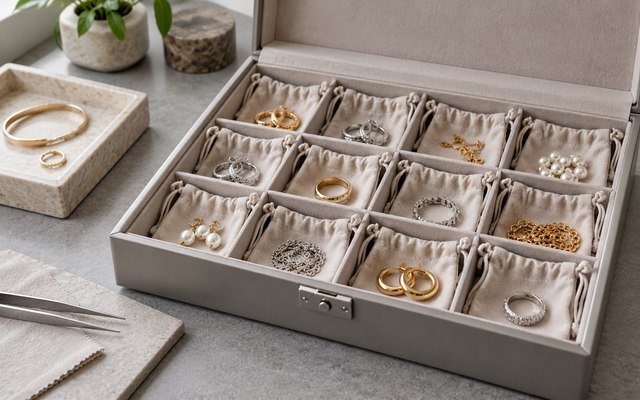
Protect the sample and document its condition
Store pieces separately using packaging compatible with their finish and construction. Keep original condition photographs and record relevant storage arrangements. Avoid uncontrolled polishing, repeated wearing or repair that changes the reference without a record. Where storage conditions matter to later interpretation, identify and monitor them appropriately.
The GIA jewelry care guidance provides general handling background. It does not define an unlimited shelf life for your retention sample. Physical pieces can change during storage, and a change should not automatically be assigned to the original production process. Preserve the packaging and paperwork required by the program’s purpose. Distinguish a pristine retain from a sample deliberately used for testing.
Control access, testing and review periods
Identify who may withdraw a sample, why it was used and whether it was altered or consumed. Record photographs and findings before destructive work. If the retain is returned to storage, update its status so later reviewers know it is no longer untouched.
The ISO quality management overview provides management-system context. Your retention period should reflect contractual, investigation and applicable market needs rather than an invented universal duration. Agree the review and disposal authority in advance. When a supplier or buyer changes the program, preserve the identity of existing retained pieces and any restrictions on their use. A clear access log often matters as much as the storage cabinet.
Buyer’s working record
Use these fields as a starting point and adapt the acceptance basis to the actual product. This is a proposed purchasing worksheet, not evidence of a completed Yleryler inspection.
| Field | Record | Decision purpose |
|---|---|---|
| Purpose | Comparison or investigation question | Choose the right sample type |
| Identity | SKU, lot, revision and selection | Preserve the production link |
| Storage | Separation, condition and photographs | Protect the reference |
| Access | Use, alteration and review authority | Keep an interpretable history |
Illustrative purchasing example
Hypothetical example: a buyer compares a worn returned ring with an unlabelled factory sample. The sample turns out to be from an earlier finish revision. A retention register would reveal the mismatch before either party drew conclusions about the delivered batch.
Approval and follow-up workflow
Start with a simple register that links each physical sample to its images and production references. Review completeness after each shipment. Keep development references, production retains and tested pieces clearly distinguishable. During an investigation, document the comparison method and limitations. A useful program makes evidence easier to interpret while avoiding the unsupported assumption that a retained sample guarantees whole-batch quality.
Frequently asked questions
Is an approved sample the same as a production retain?
No. They have different roles unless their relationship is explicitly documented.
How long should every jewelry sample be retained?
There is no universal period. Consider the program’s purpose, contracts and applicable requirements.
Can a retained piece prove an entire batch passed?
No. It is one item with a defined history; batch acceptance needs its own evidence.
Discuss your wholesale jewelry requirements
Planning a stainless steel jewelry order? Send Yleryler your drawings or SKU references, complete assembly details, intended quantities, finish, destination market and the requirements discussed above. Include the approved sample revision and any independent inspection or testing expectations so the project can be reviewed before a quotation is prepared. Contact Yleryler with your product brief.
Prepared by the Yleryler editorial team for B2B purchasing. Technical links checked on 13 October 2026. Linked sources support background concepts; the worksheets and hypothetical examples are proposed workflows. They do not certify a Yleryler product or replace product-specific assessment.