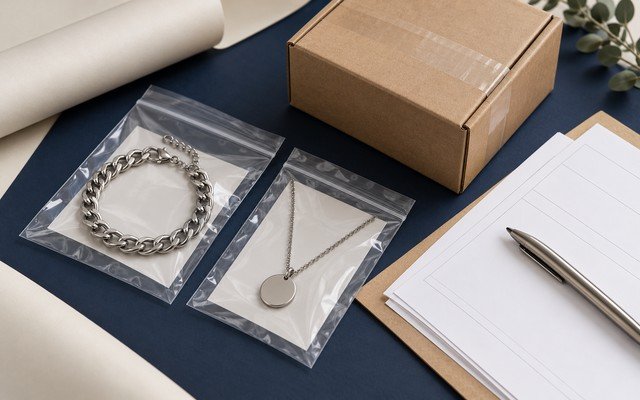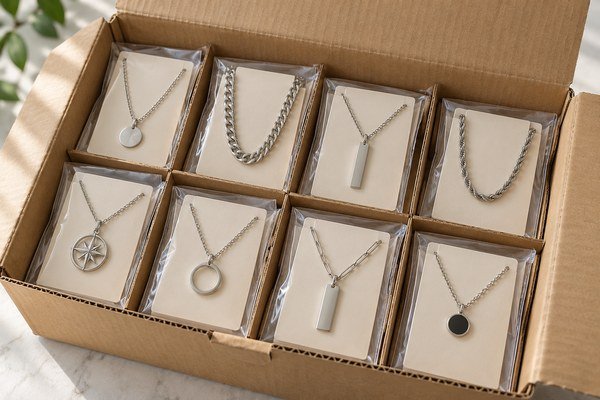
To plan a jewelry transit packaging test, define the actual shipping route, choose an appropriate test procedure with a qualified laboratory, pack representative finished products as they will ship, and agree damage criteria before testing. Inspect the jewelry as well as the carton. A strong empty box does not prove that chains, finishes and display cards will arrive correctly.
How can a wholesale buyer test packaging before discovering scratches during receiving? Treat the jewelry, inner protection, sales packaging and shipping carton as one system. The useful question is whether the product arrives in the condition your team needs, rather than whether the outer carton still looks acceptable.
1. Map the route and handling conditions
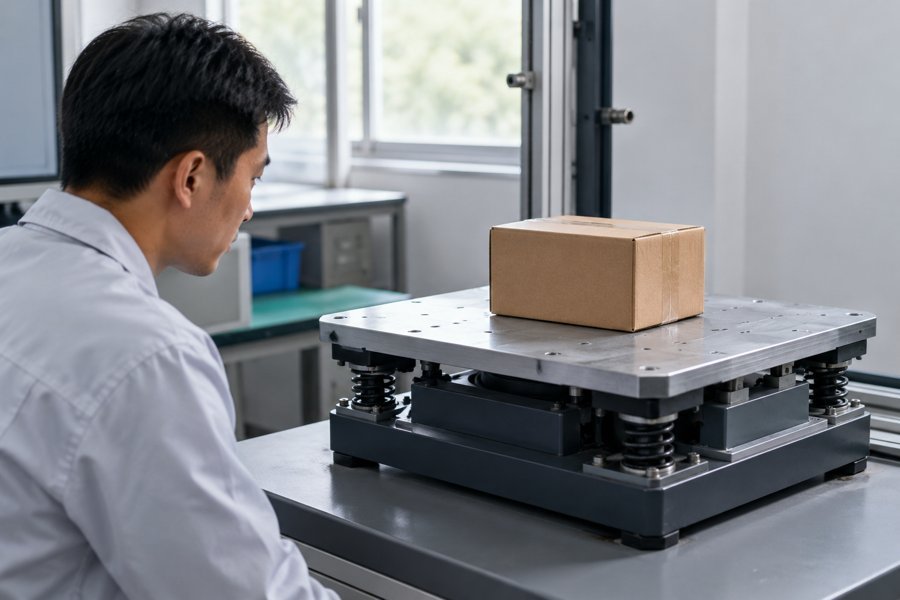
State whether the shipment moves as parcels, palletized freight or another defined arrangement. Record the actual pack size, carton dimensions, packed weight and any distribution-center repacking. Different routes may require different testing approaches.
The ISTA test procedure overview distinguishes procedure families and shipping contexts. Ask the laboratory to select the appropriate procedure and edition. Do not describe a casual drop from a desk as an ISTA test.
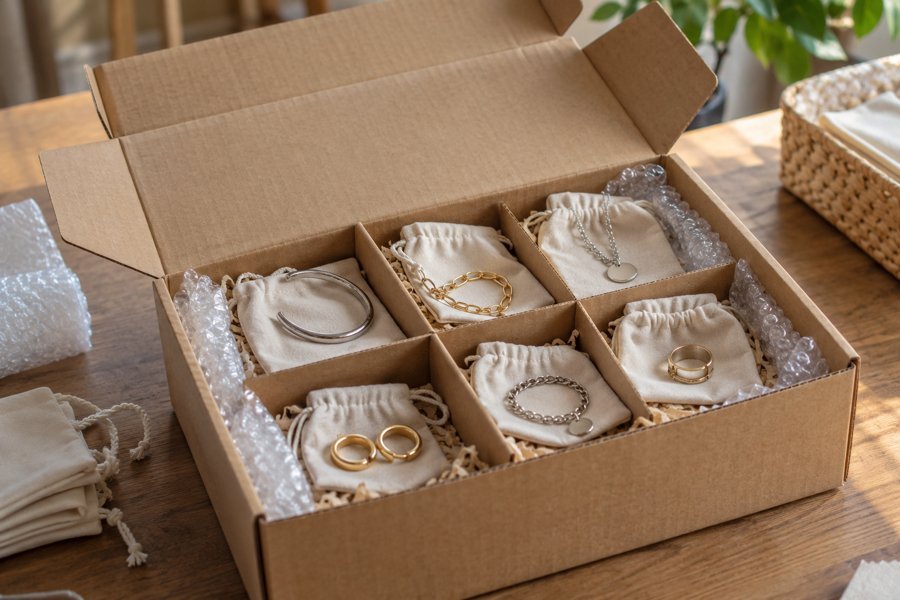
2. Use representative finished goods
Include the product variants most likely to expose packing weaknesses: long chains, protruding settings, heavy pendants, polished faces and delicate closures. Pack them with the approved materials and assembly method, not extra protection that will be omitted during production.
Coordinate this setup with the scratch and tangle prevention guide. Record separators, chain supports, bag size, display-card positions and carton fill. A packing photograph is useful only when the actual sequence is also documented.
3. Agree product-level damage criteria
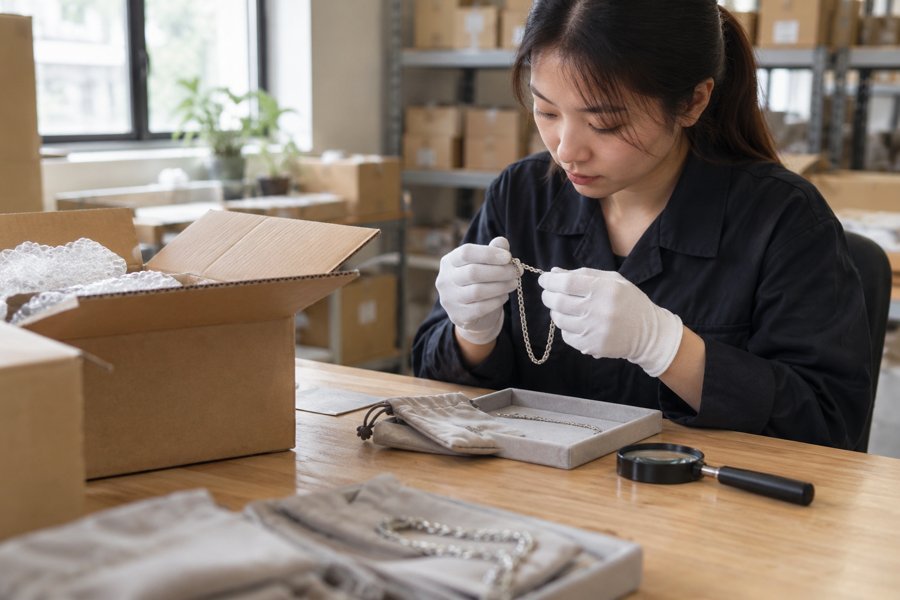
Define what would make an item unacceptable for sale or receiving: visible abrasion, bent posts, damaged cards, tangled chains, cracked decorations or closure failure. Distinguish these from allowed cosmetic changes to the shipping carton. Record the inspection method and lighting for appearance checks.
Use the receiving inspection checklist to align laboratory acceptance with warehouse decisions. If your warehouse checks different criteria, a laboratory pass may still leave an unresolved commercial issue.
4. Preserve the procedure and evidence
Retain the product and packaging revisions, packed weight, sample count, procedure reference, photographs and report. Have the laboratory explain any deviations and the limits of the result. ISTA’s design and testing guidance is a useful starting point for planning the work.
Follow the chosen procedure’s inspection sequence. Opening the package midway can alter the test system and invalidate the intended assessment. Ask the laboratory before modifying packing or inspecting contents during a formal test.
5. Review changes before the next shipment
A different pendant weight, carton source, inner divider, sales pack or pack quantity can alter the system. Compare repeat orders with the tested configuration and decide whether additional testing is needed.
The ISTA retesting guidance explains why changes and periodic review matter. Keep the change decision with your packaging record instead of assuming every later shipment is covered indefinitely.
Buyer’s working checklist
| Planning item | Specify before testing | Typical gap |
|---|---|---|
| Route | Parcel or freight handling and packed weight | Wrong procedure for the journey |
| Test system | Actual products, inner protection and carton | Stronger sample packing than production |
| Acceptance | Jewelry function, finish and sales-pack condition | Only outer-carton damage assessed |
| Continuity | Product and package revision | Old result reused after changes |
Practical buying example
Illustrative scenario: a necklace reaches the warehouse with an intact carton but its pendant has rubbed against the clasp. The correction may involve separating contact surfaces and retaining the chain, not simply choosing thicker outer board. Test the revised packing as a complete system.
Frequently asked questions
Can we test empty cartons?
An empty-carton test can answer a packaging-material question, but it cannot establish performance of the complete jewelry shipment.
Is one successful shipment enough?
It provides feedback from that journey, not equivalent evidence to a defined representative testing program.
Should packaging changes trigger review?
Yes. Assess whether the tested construction still represents the new product and packaging system.
Discuss your sourcing requirements
Send Yleryler your shipping route, carton configuration, retail presentation and receiving criteria. Request a packaging proposal that can be documented and assessed before bulk shipment. Contact Yleryler about your project.
Prepared for B2B sourcing and product development. External sources support the linked technical background; the purchasing checklists and examples are suggested workflows. Confirm the current requirements and methods for your destination market with the responsible laboratory or adviser.