A polished necklace can pass final inspection and arrive with surface marks because it moved against another piece inside the package. Jewelry packaging for wholesale must do more than look attractive in a sample photograph. It has to preserve the product through packing, transport, receiving and storage.
Separate surfaces that can rub, support chains in a suitable shape, keep identification readable and review the complete packed unit. Choose protection around the jewelry construction and distribution route, then verify the arrangement with representative samples.
This problem-solving guide follows a flat chain necklace, where uncontrolled movement or sharp folds can be particularly undesirable. Apply the same reasoning to pendants, earrings and bracelets.
Problem: metal touches metal during movement
Start by mapping where contact occurs. A pendant may slide along a chain, two earrings may rub inside a pouch, or a clasp may press against a polished face. The solution depends on that contact point.
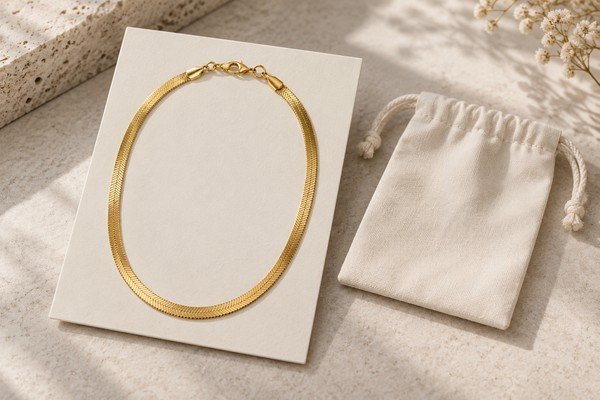
For a product such as Women’s Gold Stainless Steel Layered Necklace, approve the packed strand arrangement and unpacking sequence together with the necklace sample.
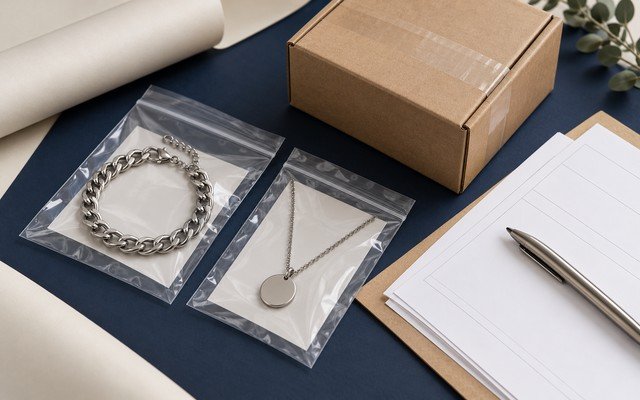
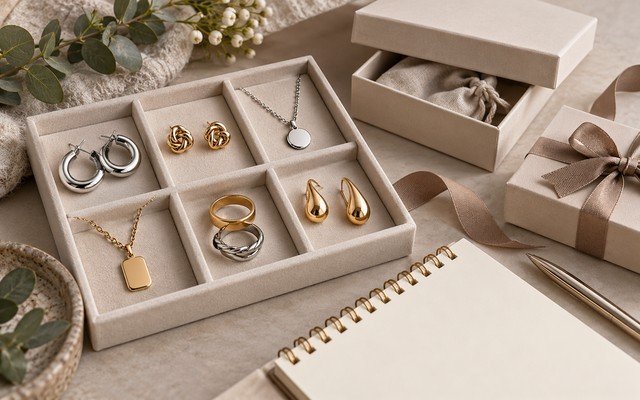
Use separate compartments, suitable sleeves or a fitted insert where needed. A soft-looking material is not automatically suitable; review cleanliness, shedding, abrasion and compatibility with the finished surface.
Ask the supplier to pack a complete sample using the intended materials. Shake-free photographs of loose packaging components cannot show how the jewelry will behave inside the closed package.
For formal transport-package evaluation, consult ISTA transport-packaging test procedures. Ask the laboratory to select a procedure for the complete packed product and intended distribution conditions.
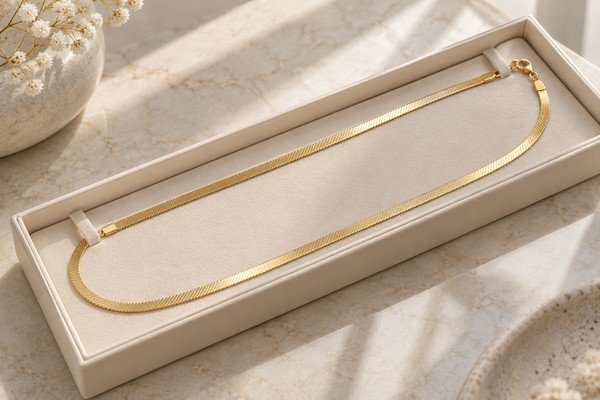
Problem: the chain is folded to fit a small box
Reducing package size may seem efficient until the jewelry is forced into an unsuitable bend. Check the natural layout of the chain and the space needed around the closure.
For a flat chain, use a support that avoids sharp folds and excessive pressure. For a delicate cable chain, consider how it is held so it does not knot during movement. Review the actual construction instead of applying one packing method to every necklace.
Confirm how the customer will remove the piece. A package that protects well but requires pulling jewelry through a tight slot may create a new handling problem at unboxing.
Problem: the packaging adds cost without adding useful protection
Separate decorative features from functional requirements. A heavy box can improve presentation for some channels, but it may also increase packed volume, storage demand and freight cost.
Compare at least two realistic options using the same product. Include insert, individual protection, branding, assembly labor and estimated carton dimensions. A lower box price alone does not establish a lower delivered packing cost.
| Channel | Packaging question |
|---|---|
| Wholesale stock | Can staff identify and count pieces without causing damage? |
| Retail display | Does the card or insert hold the product correctly? |
| E-commerce | Does the sales unit work with the actual shipping package? |
| Gift collection | Does presentation remain intact after normal distribution? |
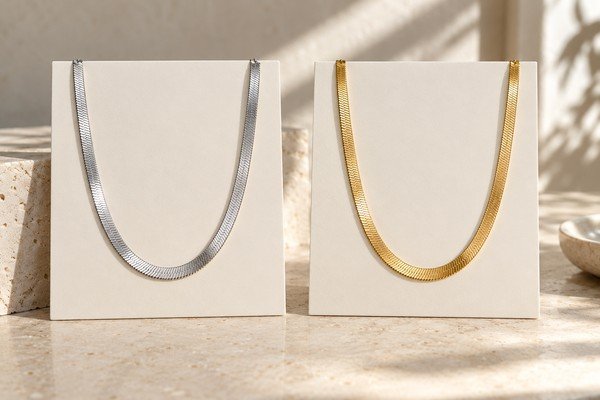
Problem: the right jewelry receives the wrong label
Define the relationship between product, pouch or box, and outer carton. Each label should identify the relevant variant clearly enough for the receiving team to distinguish similar finishes or lengths.
Approve the label artwork at actual size. Review contrast, text and placement after the unit is closed. If a barcode is used, test it with the intended receiving workflow rather than judging it only by appearance.
Keep the packing list aligned with the physical carton contents. Mixed cartons should describe their contents accurately; a broad collection name is not enough when the warehouse needs variant-level counts.
Problem: the sample pack differs from bulk packing
Record material names, dimensions, insert layout and packing sequence. Include dated photographs and identify the approved sample. “Same as sample” becomes difficult to verify if several versions are circulating.
Ask the supplier to flag substitutions before use. A replacement pouch, adhesive or insert may change protection even when the outer appearance looks similar.
Our private label jewelry guide connects packaging approval with branding, sample development and the full order specification.
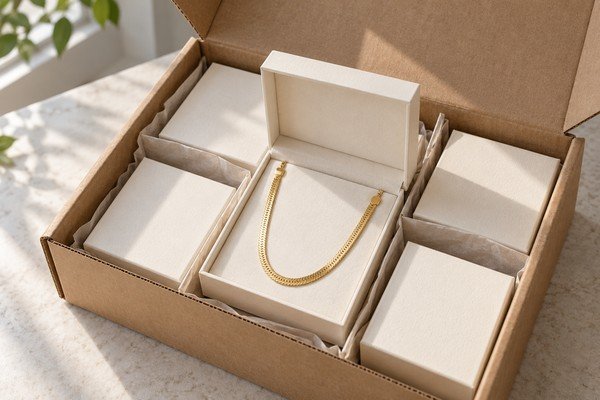
Review the complete shipping arrangement
Look beyond the individual jewelry box. Check how sales units are arranged in inner packs and master cartons, whether they move, and how cartons are closed and identified.
Where distribution testing is appropriate, choose a protocol with a packaging specialist that reflects the expected route and handling. Do not convert an informal drop demonstration into an unsupported claim that the package is shipping-proof.
On receipt, retain photographs of the unopened carton, internal arrangement and any damage. Separate packaging damage from manufacturing defects so corrective action addresses the actual cause.
My packing view: start with the likely movement and contact points, then select the simplest arrangement that controls them. Decorative additions should support the channel rather than hide weak protection.
Release packing as a documented configuration
Record the jewelry SKU, protective material, insert, label position and carton arrangement together. Photograph a packed unit before representative handling and again after opening. If the insert or pouch changes, review protection and removal again; a matching exterior box does not establish equivalent protection.
Reconcile identification using the packing-list guide. Retain the complete packed reference with the sample approval record.
Pack-out specification fields
Use these fields in your purchase order or sample review. Numerical values and IDs below are illustrative, not live product specifications, test results or confirmed commercial terms. Agree measurement methods, tolerances and acceptance criteria for your actual design.
| Field | Record or illustrative example | Verification before release |
|---|---|---|
| Product contact | Identify metal-to-metal contact and movement points | Choose separation and support based on the actual finished assembly |
| Inner pack | Pouch/card/insert reference and SKU position | Trial removal and re-packing; verify that the label stays readable |
| Outer pack | Units per carton and internal arrangement | Retain packing photographs and assess the route-specific handling plan |
Packaging questions
Is an individual pouch enough?
Sometimes, but examine whether components can rub or move inside it. The complete configuration matters.
Should every item use a rigid box?
No. Balance the product’s needs, sales channel, presentation and transport arrangement.
What should I send for a packaging review?
Contact Yleryler with the jewelry dimensions, finish, proposed packaging, shipping route and receiving requirements.
Images are AI-generated design illustrations. Confirm actual products and specifications against approved samples.