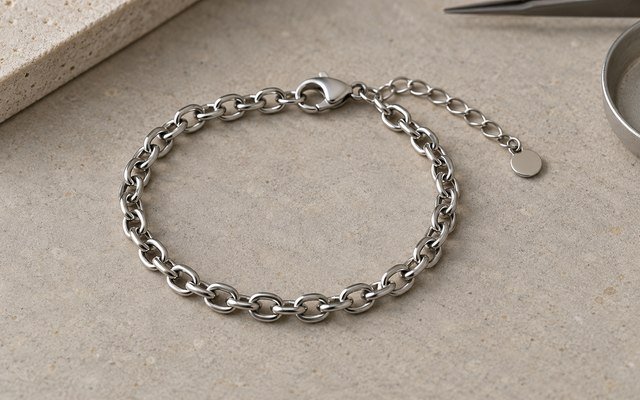
Specify bracelet extension chains using the finished base length, usable adjustment range, compatible clasp and link geometry, terminal details and measurement method. Nominal chain length alone is insufficient: the clasp must engage the intended links, and the complete assembly must retain the approved fit and appearance.
An extension chain can make a bracelet adjustable only if the usable positions and clasp work together. A quoted extra length may include a terminal charm or links the clasp cannot enter. Buying teams should approve the adjustment system as a complete assembly.
Distinguish total extension from usable adjustment
Define the bracelet’s shortest and longest closed configuration using an agreed measurement path. State whether your base measurement includes clasp and terminal rings. Record which extension links are intended as fastening positions and which elements are decorative only.
Use the bracelet fit planning guide as related context, while keeping chain-bracelet measurements separate from rigid-cuff geometry. Avoid transferring a size claim from one construction to another. Review physical samples across the intended positions. A tail that measures the specified length on a ruler does not prove the same adjustment range when the clasp, terminal ring and decorative tip are assembled.
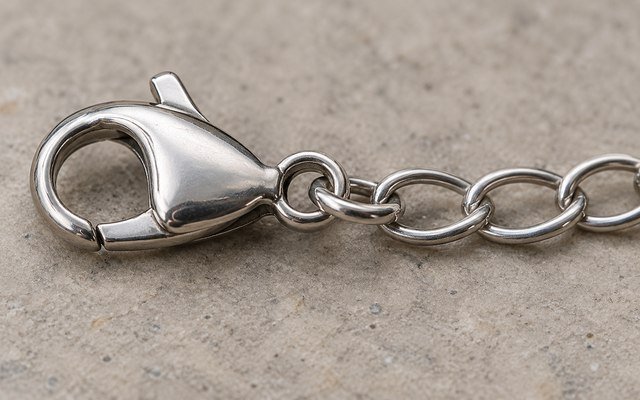
Check the clasp against the actual links
Confirm that the clasp opening and usable link opening are compatible. Inspect clearance, gate movement and access for fingers without forcing the parts. A change in link shape can affect operation even when the chain looks similar. Record material and finish requirements for the extension and its terminal elements separately.
The NPL callipers and micrometers guide provides measurement background. For small openings, select a method appropriate to the feature rather than estimating from a catalogue photo. Use the clasp selection guide to connect the extension to the closure. Verify every intended position with representative finished samples, and agree whether functional checks are sampled or completed on every unit.
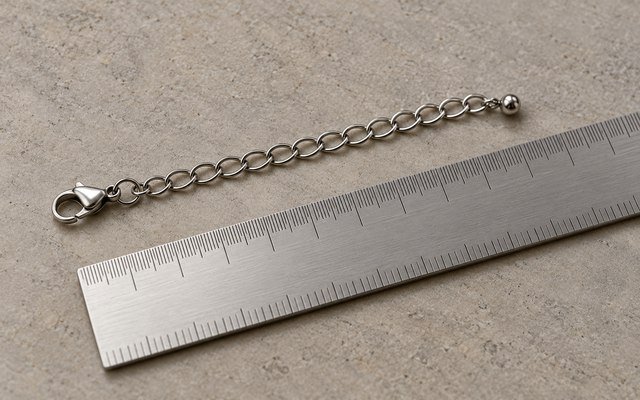
Control the tail, terminal charm and connection
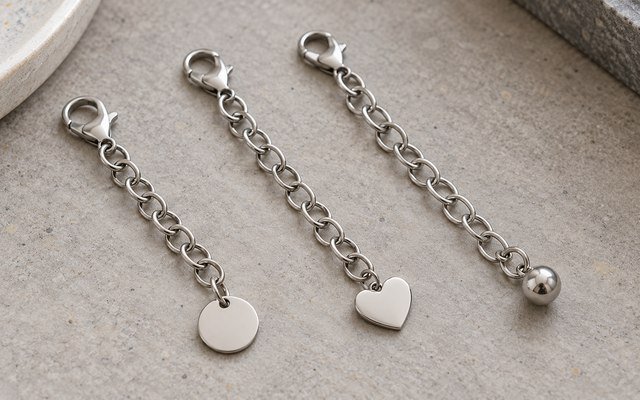
Review how the unused tail hangs at the shortest setting, whether it interferes with the clasp and whether a terminal charm changes balance or contact with clothing. Identify the joining method at both ends and confirm the approved orientation of any logo or decorative plate.
The TWI visual inspection guidance explains visual inspection’s role. Your bracelet-specific plan must add the relevant appearance and operational criteria. Photograph the shortest and longest configurations and any identified contact point. Do not infer connection strength from a shiny finish. If mechanical performance matters, define a suitable agreed method and decision rule with the technical team rather than inventing a universal pull force.
Preserve the approved adjustment specification on reorders
Keep extension component references, dimensions, clasp type, terminal details and approved configurations in the product record. When a supplier proposes a replacement link or clasp, review its operational effect before approval. A nominally equal length is not proof of equivalent fit.
The ISO quality management overview provides management-system context. Apply a clear review and sign-off workflow to the extension system without presenting that framework as certification of the product. Update packaging and care instructions when the construction changes. Ensure the sales listing describes the measured finished range consistently, rather than combining base and extension lengths from different measurement conventions.
Buyer’s working record
Use these fields as a starting point and adapt the acceptance basis to the actual product. This is a proposed purchasing worksheet, not evidence of a completed Yleryler inspection.
| Field | Record | Decision purpose |
|---|---|---|
| Base length | Measurement path and included fittings | Use one stated convention |
| Adjustment | Usable fastening positions | Verify clasp engagement |
| Terminal | Charm, ring and joining method | Review hanging behavior |
| Reorder | Component identity and revision | Recheck substitutions |
Illustrative purchasing example
Hypothetical example: the extension has the ordered total length, but the clasp cannot enter several flattened links. The usable adjustment range is smaller than expected. Resolve the link-clasp pairing and recheck the finished configurations before approving the size description.
Approval and follow-up workflow
Add short-configuration and long-configuration views to your sample approval pack. Record the actual measurement method and which links serve as adjustment points. Ask reviewers to operate the closure with the intended assembly rather than testing loose components separately. If the extension is shortened during development, review its terminal position, customer size description and packaging fit at the same time.
Frequently asked questions
Does extension length equal adjustment range?
Not always. Decorative terminals and unusable links can reduce the usable range.
Can a similar-looking clasp be substituted?
Only after reviewing compatibility, function and any affected specification.
Must the extension match the bracelet finish?
Specify the intended match or deliberate contrast and approve the complete assembly.
Discuss your wholesale jewelry requirements
Planning a stainless steel jewelry order? Send Yleryler your drawings or SKU references, complete assembly details, intended quantities, finish, destination market and the requirements discussed above. Include the approved sample revision and any independent inspection or testing expectations so the project can be reviewed before a quotation is prepared. Contact Yleryler with your product brief.
Prepared by the Yleryler editorial team for B2B purchasing. Technical links checked on 13 October 2026. Linked sources support background concepts; the worksheets and hypothetical examples are proposed workflows. They do not certify a Yleryler product or replace product-specific assessment.