Specify stainless steel jewelry weight tolerances by defining the complete sales unit, a target mass, permitted variation, weighing method and decision rule. Compare the same SKU, size and component revision. Weight can reveal variation, but it cannot independently prove steel grade, coating thickness, stone security or wearing comfort.
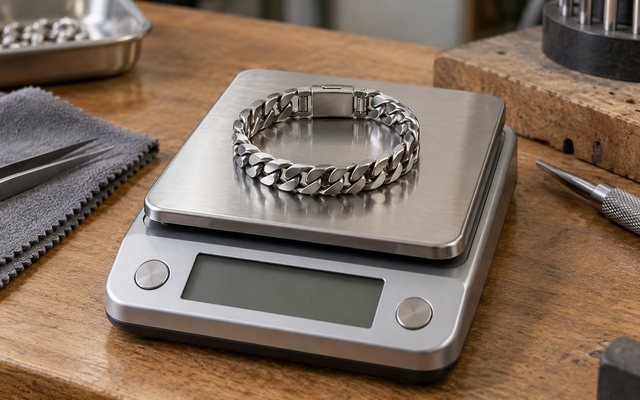
A bracelet may look identical to its approved sample while feeling noticeably lighter. Before calling this a defect, establish whether both pieces include the same clasp, extension and decorative components. This guide addresses finished-unit mass control, rather than shipping weight or assumptions about metal quality.
Define exactly what is being weighed
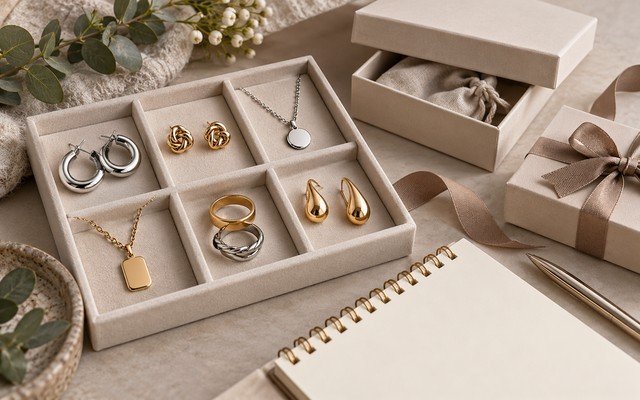
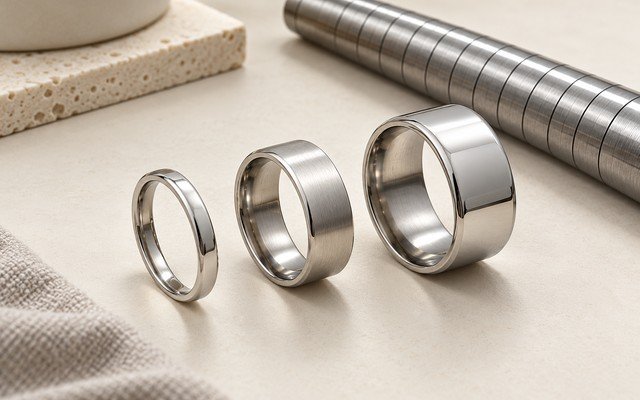
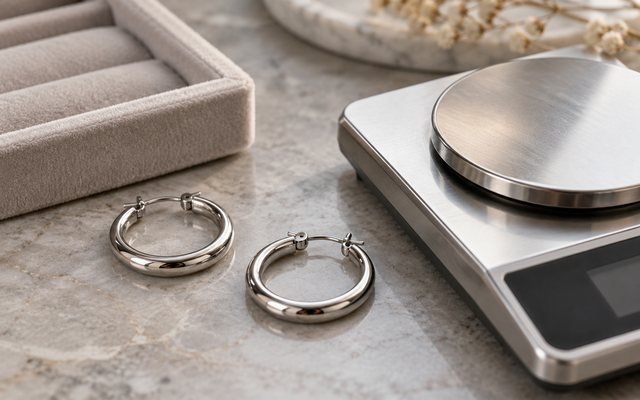
State whether the unit is one earring, a complete pair, a pendant without a chain or a finished necklace. Remove packaging unless packaging mass is explicitly part of the requirement. Include the same chain length, clasp, stones and extension position used in the approved reference. Ring sizes usually need separate records because a larger band can contain more material.
A single catalogue weight is therefore an incomplete acceptance rule. Record the SKU, size, finish and bill-of-materials revision alongside every result. Use the approved sample as a reference point, then examine representative production pieces before choosing a realistic tolerance. Do not copy a percentage from another product or treat the sample’s last decimal place as a manufacturing promise.
Make the weighing method repeatable
Choose a balance whose capability is appropriate to the decision. A display with many decimals does not automatically provide that accuracy. Set up a stable, clean weighing surface, check zero and tare, follow the instrument procedure and allow readings to stabilize. Specify whether repeat measurements are required and how unusual results are reviewed.
The NPL weighing practice guide discusses weighing practice. For your jewelry inspection, document instrument identification, verification status and relevant environmental conditions. A piece close to the acceptance boundary deserves a defined review, not repeated weighing until one favorable number appears. Agree how measurement uncertainty affects decisions with the responsible inspection team. This is particularly important when the proposed tolerance approaches the measurement system’s capability.

Set limits around function and process capability
Choose limits that support the buying objective. A mass range may help control consistency between earring pairs or detect a missing component. It is less useful if your concern is an uncomfortable edge or unreliable clasp. Those characteristics need their own checks. Connect mass to dimensions and construction rather than making it the only release criterion.
The NPL calibration overview explains traceable calibration. Calibration supports confidence in measurements; it does not define the correct jewelry tolerance. Obtain production evidence and agree limits before bulk release. When a supplier proposes a broad range, ask what causes the variation and whether different sizes or assemblies have been combined. An apparently stable average can hide individual units outside the approved range.

Investigate differences before assigning a cause
Recheck identity, sales unit, accessories and measurement conditions first. Then compare dimensions, component counts and construction records. A lighter necklace might have a shorter chain or different clasp; a heavier one might contain an additional decorative element. None of these possibilities is established by a weight reading alone.
Use the sample approval checklist to connect mass to the complete specification. If a discrepancy persists, record actual readings and affected quantities, hold the relevant lot when the agreed rule requires it and request a documented review. The ISO quality management overview supplies management-system background, not a product-specific tolerance. Keep any approved deviation separate from the original specification and identify who authorized it.
Buyer’s working record
Use these fields as a starting point and adapt the acceptance basis to the actual product. This is a proposed purchasing worksheet, not evidence of a completed Yleryler inspection.
| Field | Record | Decision purpose |
|---|---|---|
| Unit definition | One piece, pair or complete assembly | Match the purchased sales unit |
| Mass requirement | Target, lower and upper limits | Agree before inspection |
| Measurement | Instrument, checks and repeat rule | Use a suitable method |
| Disposition | Results, affected lot and approver | Apply the agreed decision rule |
Illustrative purchasing example
Hypothetical example: two bracelets have similar outer dimensions, but one includes a shorter extension chain. Comparing their mass before reconciling the components would create a misleading defect report. Restore a like-for-like comparison, then decide whether the mass result or the changed assembly violates the order.
Approval and follow-up workflow
Keep the reference sample and weighing record together. Before a repeat order, review any changes to chain length, clasp type, decorative parts or ring size mix. Apply the reorder specification record so an earlier mass approval does not silently apply to a revised construction. Retain individual results rather than only an average, and distinguish measured variation from a confirmed manufacturing cause.
Frequently asked questions
Is heavier stainless steel jewelry always better?
No. Mass reflects geometry and components. Quality also depends on construction, surface condition, function and the intended wearing experience.
Can weighing confirm a steel grade?
No. Use appropriate material evidence and analysis when alloy identification matters.
What tolerance should every jewelry supplier use?
There is no universal finished-jewelry mass tolerance. Agree product-specific limits and a capable measurement method.
Discuss your wholesale jewelry requirements
Planning a stainless steel jewelry order? Send Yleryler your drawings or SKU references, complete assembly details, intended quantities, finish, destination market and the requirements discussed above. Include the approved sample revision and any independent inspection or testing expectations so the project can be reviewed before a quotation is prepared. Contact Yleryler with your product brief.
Prepared by the Yleryler editorial team for B2B purchasing. Technical links checked on 13 October 2026. Linked sources support background concepts; the worksheets and hypothetical examples are proposed workflows. They do not certify a Yleryler product or replace product-specific assessment.