The sample arrives, the color looks attractive, and a launch deadline is approaching. It is tempting to reply “approved” after looking at two photographs. That message can leave both buyer and supplier uncertain about what was actually accepted.
Jewelry sample approval should identify the exact sample version, list the checks completed, record remaining changes and state whether bulk production may begin. Keep an approved physical reference whenever practical. A photo approval should describe its limits.
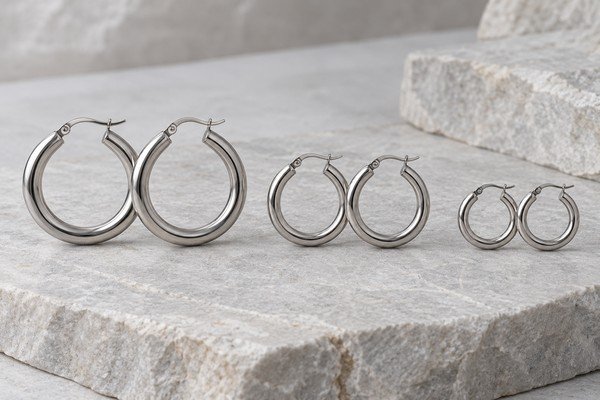
This checklist follows a pair of stainless steel hoop earrings from receipt to release. The same decision sequence can be adapted to rings, necklaces and bracelets.
Check 1: Is this the correct sample version?
Before examining the jewelry, verify the project reference, drawing revision, material specification, finish and date. If the supplier sends several alternatives, assign a different identifier to each one. “The gold pair” becomes ambiguous when there are multiple gold shades.
For a project based on Stainless Steel Cuff Bracelet, connect the signed sample record to the agreed opening, dimensions, finish and packing requirements before authorizing production.
For product-version control background, consult ISO 10007 configuration-management guidance. Link the signed sample decision to the exact drawing, components and packaging revision.
Record any temporary features. A sample may use a substitute clasp, unfinished logo or different packaging while another component is being developed. Those differences must remain visible in the approval record; they should not disappear when the sample is photographed.
Ask whether the sample represents the intended production process. A carefully modified prototype can establish shape without proving that the same result will be repeated efficiently in bulk.
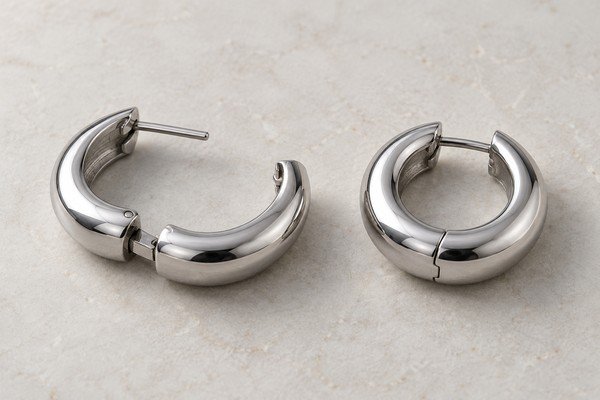
Check 2: Do the dimensions and functions match?
For hoop earrings, measure the dimensions defined in the specification. State whether diameter means inside or outside diameter. Review tube thickness, post position, weight and symmetry. Use the same measuring method on both sides of the pair.
Open and close the mechanism repeatedly under an agreed check procedure. Look for alignment problems, rough edges and inconsistent closure. Avoid inventing a universal force or cycle requirement: establish the method and acceptance criteria with the supplier for this design.
Keep function and appearance as separate approval decisions. A beautiful pair that does not close consistently is not ready merely because the finish was accepted.
Check 3: Is the finish acceptable under agreed conditions?
Examine the sample in neutral, consistent lighting. Review visible surfaces, recesses, edges and the area around the hinge. Compare the two earrings together before inspecting each individually.
Define which marks are unacceptable and how they will be viewed during inspection. A close-up photograph can help show a defect, but magnification should not silently change the inspection standard. Document the viewing distance, lighting and reference examples where useful.
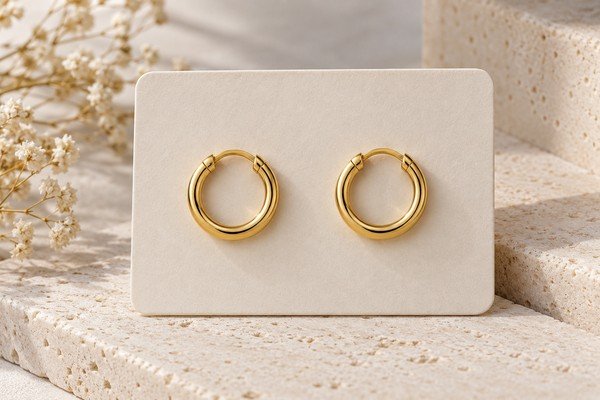
Check 4: Is the complete sales unit ready?
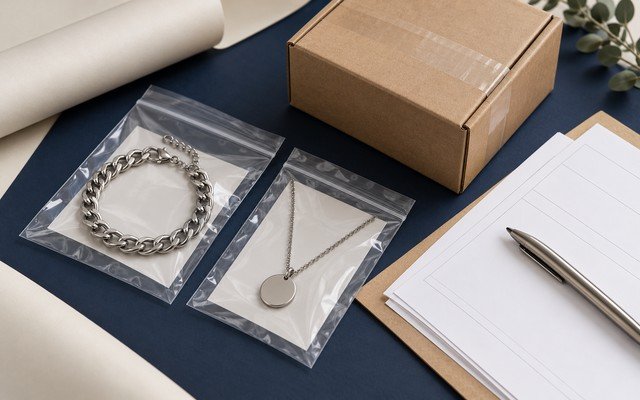
The jewelry is only one part of the approval. Mount the pair on the proposed card, place it in the pouch or box, and review the result as your receiving team will see it. Check orientation, protection, quantity and identification.
Try removing and replacing the earrings using normal handling. A card that bends the posts or a pouch that allows the pieces to scratch each other needs revision. Verify that any care information refers to the actual finish and construction.
If the order includes custom branding, check the logo at its real size. A large digital artwork preview cannot establish how legible the mark will be on a small curved surface. Our OEM jewelry guide outlines the wider specification process.
Check 5: Write a clear decision
Use three outcomes: approved, approved for a defined stage only, or revision required. Avoid “approved with changes” unless the document also explains which changes require another sample and which can be verified through other evidence.
| Approval record | Required entry |
|---|---|
| Identity | Sample ID and drawing revision |
| Accepted items | Dimensions, finish, function and packing reviewed |
| Open items | Specific change, owner and due date |
| Release | Who may authorize the next stage |
Name one person to consolidate feedback. Contradictory comments from purchasing, design and marketing can send the supplier through unnecessary revisions. Preserve earlier versions, but clearly mark which one controls production.
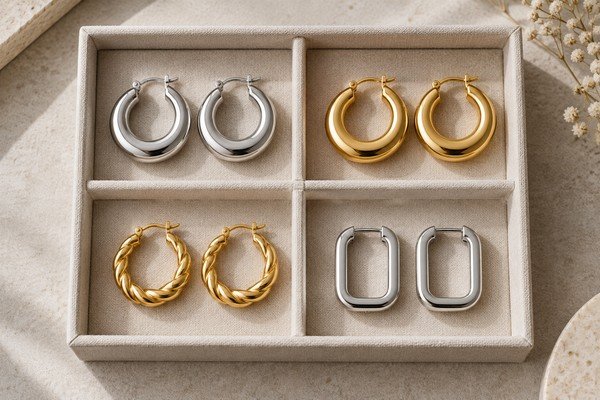
Check 6: Preserve a reference for the shipment
Keep the accepted sample protected and identifiable. Agree whether the supplier retains a matching reference. Attach approved drawings, packing instructions and dated photographs to the same record.
When the first production pieces are available, compare them with that reference before the entire shipment is packed. Sampling approval and shipment inspection answer different questions; completing one does not eliminate the other.
My recommendation: spend a little more time writing the release decision than writing a compliment about the sample. Clear approval protects the buyer’s expectations and gives the production team a usable target.
Write a release statement that identifies its scope
A useful template is: “Sample [ID], drawing [revision] and packing [revision] are accepted for [defined stage]. Open items: [list or none]. Production release: [authorized name and date].” Fill in the actual identifiers and keep the supporting checks attached. Do not reuse an approval for a changed clasp, finish or packing arrangement without assessing what the change affects.
Check small marks using the logo approval guide, then carry accepted references into the reorder specification.
Sample production-release wording
Use these fields in your purchase order or sample review. Numerical values and IDs below are illustrative, not live product specifications, test results or confirmed commercial terms. Agree measurement methods, tolerances and acceptance criteria for your actual design.
| Field | Record or illustrative example | Verification before release |
|---|---|---|
| Accepted configuration | SKU / CAD B / finished sample S02 | Name the actual approved material, finish and component references |
| Open items | List outstanding issues and permitted next stage | Do not let a color-only approval imply full mechanism approval |
| Authority | Named approver, date and written release | Keep the approved physical reference and correction evidence with the order |
Common approval questions
Can I approve from photographs?
You can approve visible design details, but photographs do not establish fit, feel or reliable mechanism operation. State what still needs physical checking.
Should every revision restart everything?
No. Assess what changed and which previous decisions remain valid. A new hinge may require renewed function checks even if the color stays the same.
Ask Yleryler to review your sample brief. Include the product reference, intended sales channel and the checks your team needs before production.
Images are AI-generated design illustrations. Confirm actual products and specifications against approved samples.
Can an approval leave packaging unresolved?
It can authorize only a defined stage if dependencies are understood. List packing as an open item and state what may proceed; do not present it as complete product release.