A polished CAD rendering can make a jewelry concept feel finished before its manufacturing questions have been answered. Buyers may approve the silhouette without discussing the underside, edge transitions or assembly route. Those omissions often surface only when the first sample arrives. A useful CAD review treats the rendering as a communication tool and asks what the manufacturer still needs to resolve before development moves forward.
Review jewelry CAD for dimensions, material distribution, underside access, edge treatment, component interfaces and intended finish. Confirm unresolved engineering questions with the manufacturer and approve a physical sample before treating the rendering as the final product.
Check 1: Separate visual approval from technical approval
Start by identifying what the image actually shows. A perspective rendering communicates shape and style, but it may not include dimensional tolerances or production details. Request relevant front, side and underside views with clearly identified measurements. Check whether the file revision matches the quotation and development brief.
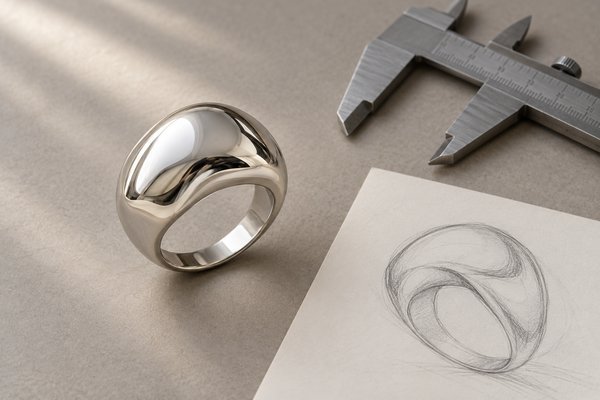
Use Gold Stainless Steel Blank Oval Signet Ring as a starting point for a signet-ring CAD brief, then mark requested face dimensions, band profile and engraving position on the development drawing.
See ISO 10007 configuration-management guidance for broader product-version control. Keep the CAD revision, open engineering questions and subsequent physical approval linked in the project record.
State which decisions you are approving. You might accept the overall silhouette while leaving the hollow underside or attachment method open for review. Record those remaining questions. Avoid a general message saying everything is approved when technical choices are still pending. Clear staged approval lets the supplier refine the construction without interpreting a visual preference as permission to ignore function.
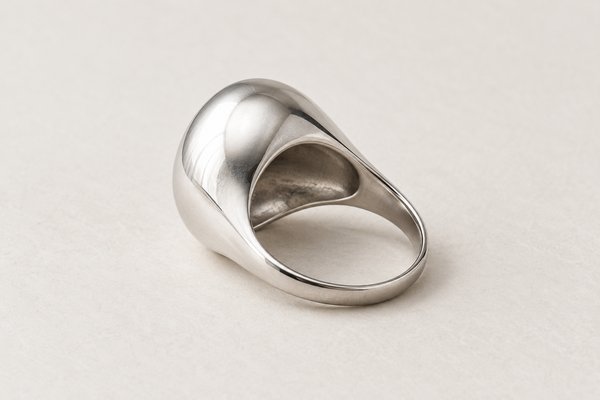
Check 2: Examine material distribution and hidden surfaces
A dome ring can be solid-looking from above while using a recessed underside. That choice changes the design's feel, manufacturing route and finishing access. Ask the manufacturer to explain the proposed construction and the tradeoffs for your intended product. Do not choose an arbitrary wall thickness based on a competitor photograph.
Review the surfaces a wearer will touch and the spaces a polishing tool must reach. Sharp internal transitions or inaccessible recesses deserve discussion before tooling. The supplier should identify areas that require revision or further trial. A CAD screenshot cannot establish finished comfort or actual weight, so reserve those decisions for a suitable physical sample.
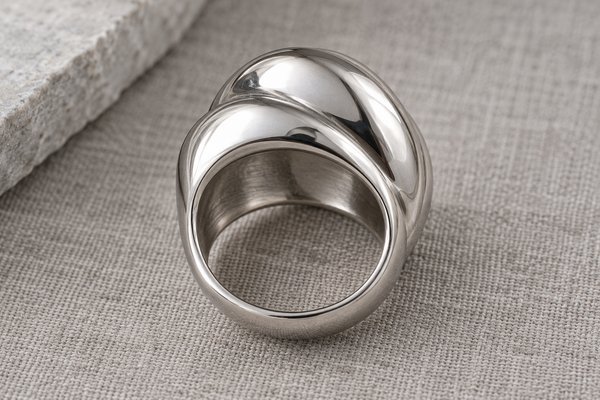
Check 3: Check interfaces and assembly
Where the design uses stones, hinges, posts, bails or separate links, request views that show how those parts relate. A decorative feature may hide an attachment point in the rendering. Ask which parts are integral, which are joined and what the planned assembly sequence is. Keep the answer in the development record.
Use the intended mating component whenever possible. A pendant designed without its chain end or a charm drawn without its receiving link can pass a visual review but fail the assembly trial. If another supplier provides the component, give both parties the same controlled reference. Assign responsibility for checking the complete assembly instead of leaving compatibility between separate approvals.
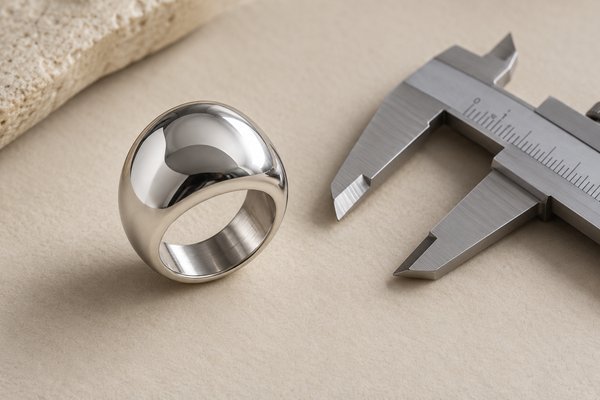
CAD-to-sample comparison row
Use these fields in your purchase order or sample review. Numerical values and IDs below are illustrative, not live product specifications, test results or confirmed commercial terms. Agree measurement methods, tolerances and acceptance criteria for your actual design.
| Field | Record or illustrative example | Verification before release |
|---|---|---|
| Feature | Bail opening / inner ring dimension / stone seat | Record nominal dimension, agreed tolerance and measuring method |
| Sample | Drawing B / sample S02 / actual measured value | Attach a scale or caliper view that identifies the feature |
| Release decision | Accept / hold / agreed correction | Name the owner and determine whether tooling or downstream processing changes |
Check 4: Define the sample questions before paying for development
List what the first sample must demonstrate: dimensions, wearing position, finish coverage, assembly and any functional review appropriate to the design. Confirm whether tooling, development and sample charges are separate. Keep quotation scenarios distinct from an actual instruction to start paid work.
Agree on revision handling as well. If the first sample reveals a problem, identify how changes will be recorded and when another sample is required. Retain the approved drawing revision alongside the final physical reference. Your receiving team should be able to trace the delivered product to that version, rather than relying on an attractive rendering whose construction was later altered.
A practical buyer exercise
Run a review meeting around five questions: what can be measured, what touches the wearer, what must assemble, what cannot yet be verified, and what the first sample will answer. Assign an owner to each unresolved point and request a revised drawing where the decision changes geometry.
For a sculptural ring, this may include the underside shape, contact edges and approximate weight target, with final weight checked on the sample. Close the meeting with a written approval scope. This avoids treating silence about a hidden feature as acceptance and makes the next development step concrete.
CAD release checklist for purchasing teams
| Gate | Evidence needed |
|---|---|
| Dimensions | Named measurements and agreed tolerances on the current drawing |
| Hidden surfaces | Underside, contact edges and proposed material distribution |
| Interfaces | Chain ends, bails, posts, hinges or connecting components as applicable |
| Release | Approved revision, open questions and scope of the next sample |
A render communicates appearance but does not prove the finished mechanism or process. Link the drawing to the physical sample approval record and resolve branding through the logo artwork handoff.
Buyer FAQ
Does CAD approval replace sample approval?
No. CAD communicates geometry and design intent; a physical sample is needed to evaluate the finished construction and relevant function.
Should buyers specify every engineering dimension?
Provide the requirements that matter, then ask the manufacturer to recommend feasible construction. Record and review the recommendation instead of guessing.
Match a CAD revision to the physical sample
Use one revision-controlled comparison sheet before authorizing tooling changes: drawing revision, sample ID, nominal dimensions, measured sample dimensions, edge treatment, component fit, surface finish and open issues. Photograph any clearance or profile concern next to a caliper reading, then mark the decision as accepted, accepted with agreed correction, or not accepted. The CAD render explains design intent; only the measured sample and signed specification establish production acceptance.
What should a tooling release identify?
Identify the drawing revision, critical measurement requirements, tooling scope, sample reference and unresolved questions. State the authorized development stage separately from finished-product approval.
Plan your wholesale project
For the next approval step, see our custom jewelry production timeline. Request a pre-tooling CAD review with drawings, material, functional fit requirements and proposed sample milestones.
Images in this article are illustrative product concepts; they are not photographs of an approved sample or inspection evidence.