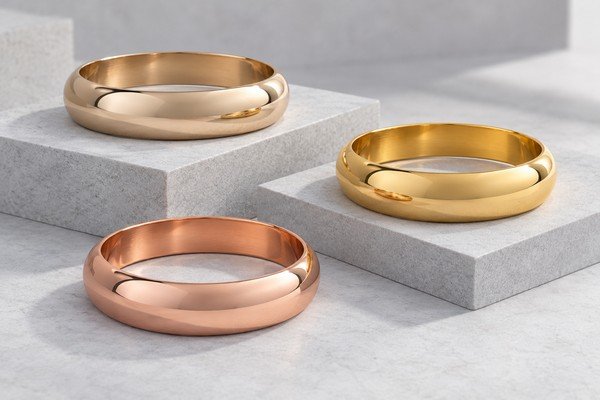
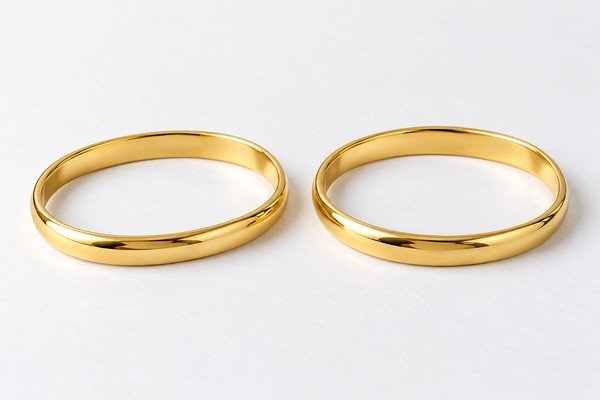
A buyer approves a warm gold-tone bangle, then receives a reorder that looks slightly cooler beside the remaining stock. Each batch may look attractive on its own, but the collection no longer appears coordinated. PVD jewelry color consistency is therefore a purchasing specification issue, not simply a choice between gold and silver.
Use an identified physical color reference, agree the viewing conditions and acceptable variation, and compare complete finished products. Reconfirm the reference before repeat production, especially when shape, surface finish or component sources change.
This guide is written for brands building coordinated stainless steel collections. It focuses on managing appearance; a color match alone does not prove coating durability or a particular gold content.
Start by replacing the color name with a reference
Terms such as champagne gold, light gold and 18K gold color are useful starting descriptions. They are not sufficient acceptance criteria. Two suppliers can use the same description for visibly different results.
For a bangle project such as Stainless Steel Bangle, retain an identified physical finish sample and use it when reviewing later batches or proposed color changes.
Select a physical master sample and assign an ID. Record its product geometry, base surface finish and approval date. Protect it from unnecessary handling, abrasion and chemicals so it remains useful during later comparisons.
If several people approve color, arrange for them to compare the same reference. A buyer looking at a laptop image and a supplier looking at a phone image may be making different decisions without realizing it.
Compare like with like
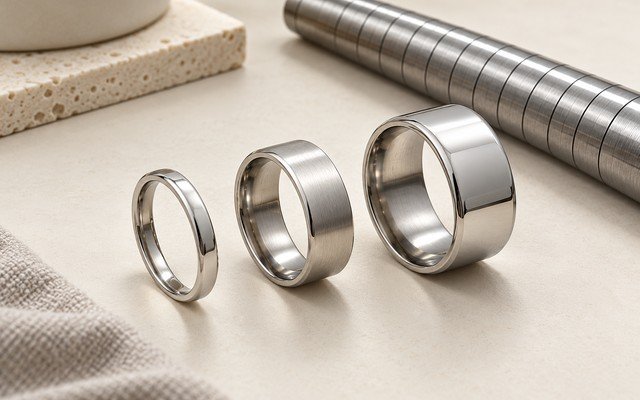
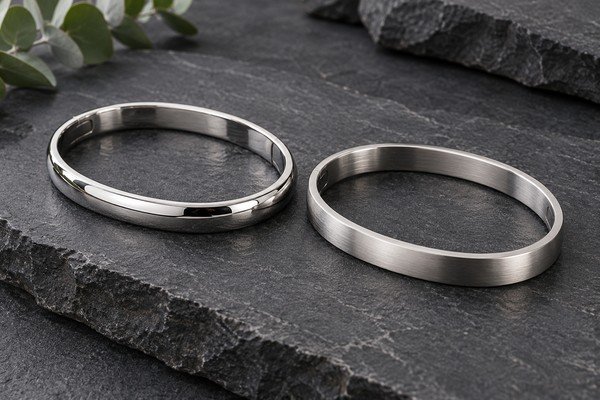
A brushed bangle scatters light differently from a polished one. Curved and flat surfaces can also look different under the same lighting. This makes a matching exercise more complicated than placing unrelated pieces beside a color photograph.
Consult CIE colorimetry reference for technical color-measurement background. Agree a suitable method for the reflective jewelry surface before adopting a numerical color limit.
Compare samples with the intended production finish. For a coordinated set, also review the necklace, clasp, pendant and earrings together. A matching pendant does not guarantee that its chain or small connecting parts will appear identical.
Ask the supplier to identify changes in polishing, coating route or component sourcing before production. Those changes may require a new appearance check even if the purchase order still uses the same color name.
Create a simple viewing routine
Use a neutral background and stable lighting. Keep the reference and candidate in the same orientation, then rotate both to inspect the full surface. Avoid making a final decision from strongly colored surroundings or mixed lighting.
Where instrumental color measurement is proposed, agree the equipment, measurement geometry, locations and acceptance method with the relevant specialist. A numerical limit copied from another product is not automatically useful on small reflective jewelry.
| Comparison item | Record to retain |
|---|---|
| Reference | Master sample ID and condition |
| Lighting | Agreed viewing environment |
| Surface | Polished, brushed or other approved finish |
| Decision | Accepted, held or revised with dated comments |
Troubleshoot before rejecting or accepting
If two bangles look different, first check whether the comparison conditions changed. Clean handling marks using the agreed care method, examine both against the same background, and verify the sample identities.
Next, compare surface texture and shape. If those match, ask the supplier to review the relevant production records and retained samples. Photographs can document the concern, but keep the physical pieces available when the difference is subtle.
Do not solve a shade mismatch by renaming it after delivery unless the buyer intentionally accepts a new variant. That decision affects photography, existing stock, customer expectations and future reorders.
Keep color and performance claims separate
A finish can match the master visually yet still need its own performance review. Conversely, a finish may meet agreed performance criteria while looking wrong for the collection. Document these as distinct requirements.
Request evidence that applies to the actual product and coating configuration when performance or market-specific claims are important. Do not treat “PVD” as an unlimited promise of scratch resistance, permanent color or suitability for every exposure.
Our custom jewelry manufacturing guide explains why finish, construction and intended use should be discussed together during development.
Write a repeat-order color brief
Before each replenishment, send the master reference ID, previous order number and approved finish specification. Identify whether the new goods will be displayed alongside old stock. Ask for a representative approval sample when a process or component changes.
Keep batch references with receiving records. If a customer later reports a mismatch, the team should be able to identify which order supplied each piece rather than comparing undated photographs.
My sourcing view: consistency becomes easier when the buyer defines what must match and the supplier knows how that match will be judged. A small reference system is more useful than repeatedly asking for “the same gold.”
Record the disposition of a shade mismatch
Identify the candidate batch and the master sample, then record the viewing conditions and affected components. Decide whether to hold, revise or accept a defined alternative. If an alternative is accepted, give it its own reference so later orders are not compared against two conflicting masters.
Separate shade from texture using the finish selection guide. For mixed-color products, attach the component color map to the approval record.
Record a PVD color comparison that can be repeated
Label the physical master finish sample, candidate production batch, substrate condition and component type. Place matching components beside the retained reference under the same lighting and viewing geometry; document both the face and curved edges because reflections can change the perceived shade. Record pass, conditional acceptance or hold with the responsible approver. Color approval and wear or corrosion testing are separate decisions; a visual match cannot establish coating performance.
PVD master-reference control
Use these fields in your purchase order or sample review. Numerical values and IDs below are illustrative, not live product specifications, test results or confirmed commercial terms. Agree measurement methods, tolerances and acceptance criteria for your actual design.
| Field | Record or illustrative example | Verification before release |
|---|---|---|
| Reference | Physical master ID, base texture and geometry | Retain capture date and finish reference; a digital color code is supplemental |
| Comparison | Master and batch samples under agreed lighting | Compare like geometry and all visible assembly components |
| Decision | Accept / conditional acceptance / hold | Record approved appearance limits; assess durability claims separately |
Questions from brand teams
Is a digital color code enough?
It can support communication, but it should not replace an agreed physical reference for reflective finished jewelry.
Can different jewelry shapes match perfectly?
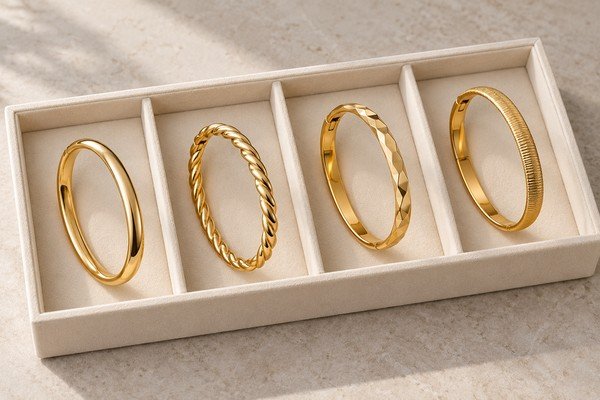
They may still appear different because of geometry and surface texture. Review the collection together and agree acceptable appearance before ordering.
What should I provide for a new finish?
Contact Yleryler with the product images, preferred physical reference, surface finish, quantity and existing pieces that must coordinate.
Images are AI-generated design illustrations. Confirm actual products and specifications against approved samples.