A two-tone bracelet can create a strong collection identity, but the design brief needs more than gold and silver. Buyers must identify which links carry each finish, how the colors meet and what should happen on the underside. Without that detail, two suppliers can deliver visually different pieces while both believe they followed the same request. Treat the color boundary as part of the design geometry.
Define two-tone jewelry through a component color map, boundary location, underside coverage and approved finished reference. Review the full assembled piece under consistent lighting, especially where differently finished parts touch or move.
Choose component separation or a boundary on one surface
First ask how the manufacturer proposes to create the two-tone appearance. Separate gold-colored and silver-colored components are different from two finishes on one continuous surface. The available route depends on the design and supplier capability. Request a sample or process explanation rather than assuming every boundary can be placed anywhere.
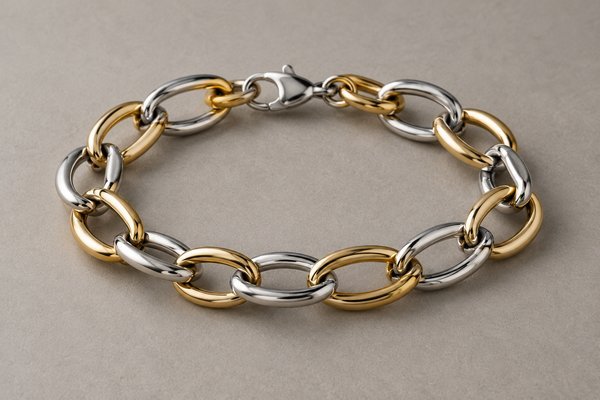
Two-Tone Stainless Steel Bracelet is a starting design for a two-tone collection. Mark the intended color of each component and the transition boundary on the sample record.
See CIE colorimetry reference for color-measurement background. Approve the two-tone boundary and each finish on the assembled sample under the agreed viewing conditions.
Compare the options for the intended look, assembly and inspection. A component-based design may make the color map clearer, while a surface boundary may create a different visual effect. Do not claim one route is always better. The useful choice is the route that can reproduce your approved design with a practical inspection method and acceptable commercial conditions.
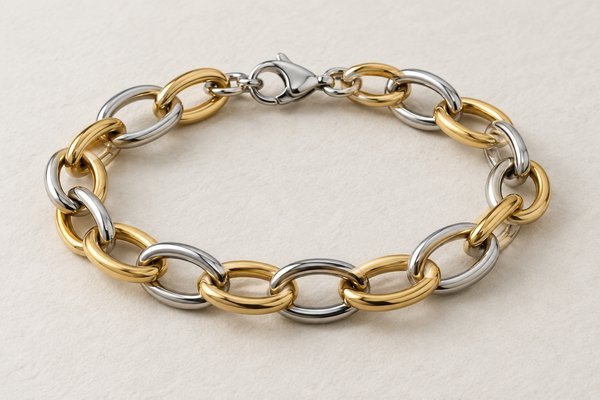
Draw a color map that includes hidden views
Mark each component or surface on the drawing. Specify front, back, inner area and any visible edge. An interlocking bracelet can rotate, so an underside that appears hidden in a flat photograph may become visible during wear. Decide whether that change is intentional and show it in the brief.
Use named reference samples for the colors. A screen image is helpful for layout but limited for shade approval. Keep the material and finish description attached to the reference identity. Where the range uses several products, check whether the same gold-colored finish is expected across all of them or whether the design intentionally uses different tones.
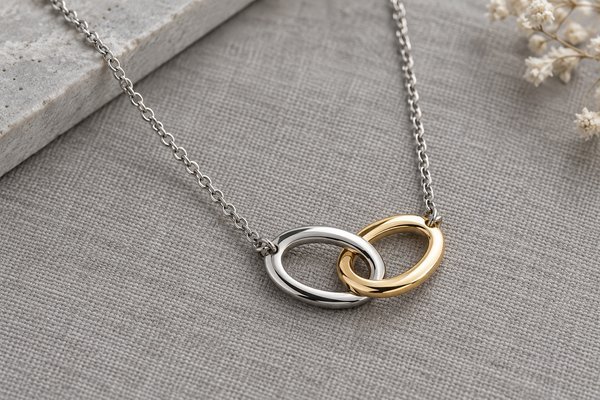
Review the boundary at normal and close viewing distances
Look first at the complete piece from a realistic product-viewing distance. Then examine the junctions closely. A sharp boundary can be technically neat yet visually misplaced, while a subtle irregularity may become obvious on a broad flat surface. Agree on the viewing conditions and reference rather than inspecting every piece through an undefined magnification.
Record areas that are difficult to finish or assemble consistently. If the supplier proposes a geometry change, compare it with the original design intent. Avoid accepting a revised boundary through a cropped photograph alone. Check the whole piece, including the back and moving interfaces, so the local improvement does not introduce another visual problem.
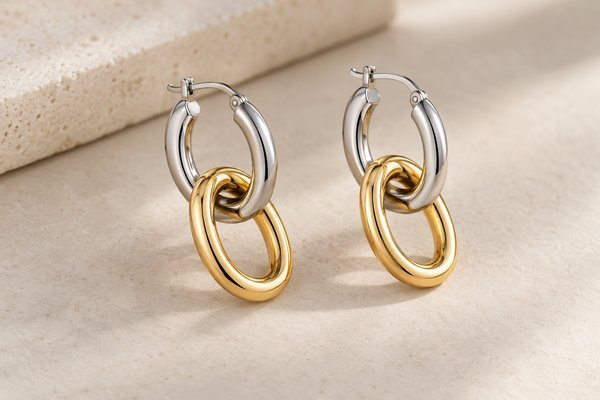
Control assembly and repeat orders
For designs with separately finished parts, identify the assembly sequence and the checks performed after assembly. Contact between links can affect what is visible, so a loose component approval should be followed by a finished-product review. Keep the component map and assembled sample together in the SKU record.
When placing a reorder, confirm that the map, shade references and boundary details remain current. A substitution of one component may alter the proportion of gold and silver across the piece. Ask the supplier to flag such changes before production. The record should explain the intended relationship between colors, not merely repeat the phrase two-tone in the product description.
Build a component color map
| Location | Decision to document | Review view |
|---|---|---|
| Central links | Exact gold and silver sequence | Complete front view |
| Closure area | Color of clasp and end components | Both ends laid flat |
| Moving interfaces | Which surfaces become visible | Bracelet rotated naturally |
| Underside | Intentional finish coverage | Rear and side views |
If link count changes with length, review the sequence again. Ask another person to identify each finish from the map; hesitation indicates that the instructions need more detail.
Record changes at the color boundary
Identify which component changes when a two-tone sample is revised. Record front and rear coverage, edge transitions and assembly orientation on one dated drawing. If components are coated separately, review the completed assembly so a hidden joining area does not become an unexpected visible color line.
Use the surface finish guide to distinguish texture from shade, then attach the accepted color map to the repeat-order specification.
Two-tone component sequencing example
Use these fields in your purchase order or sample review. Numerical values and IDs below are illustrative, not live product specifications, test results or confirmed commercial terms. Agree measurement methods, tolerances and acceptance criteria for your actual design.
| Field | Record or illustrative example | Verification before release |
|---|---|---|
| Visible face | Component positions 1–3 silver; 4–6 gold — illustrative | Assign numbered positions on the actual design |
| Moving joint | State visible finish on side and underside | Check the finished assembly throughout normal movement |
| Length variant | New link count or size revision | Recheck the color sequence and end components for each released variant |
Buyer FAQ
Can every pattern be made in two colors?
Feasibility depends on geometry and the proposed production route. Request a design-specific recommendation and finished sample.
Do separate component samples complete approval?
No. Review the assembled product too, because orientation and contact between parts can change the visible color relationship.
Can a color sequence be reused on every bracelet length?
Check each length. A changed link count can move the boundary or change the end component; update the numbered component map and review the finished variant.
Plan your wholesale project
For the next approval step, see our PVD jewelry color consistency guide. Discuss your two-tone design with color-boundary drawings, metal finish preferences, component layout and order quantity.
Images in this article are illustrative product concepts; they are not photographs of an approved sample or inspection evidence.