A custom rotating charm needs a defined rotation axis, disc and frame dimensions, usable finger access, clearance through the motion, an axle-retention method, attachment details and an agreed functional test. A front-view drawing is not enough. Approve the finished assembly in its actual use position before authorizing tooling or bulk production.
What turns a rotating charm concept into a useful manufacturing brief? The key is to describe the motion and the user’s contact with the assembly, not only its decorative appearance. A disc that looks balanced in a render can rub the frame, expose an uncomfortable edge or become difficult to turn once attached to a bag.
1. Describe the complete movement envelope
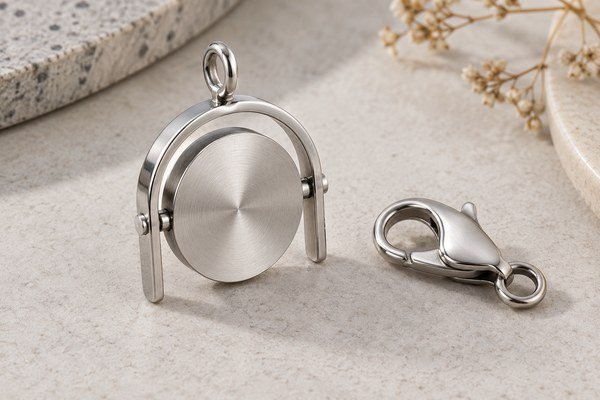
Specify whether the disc rotates about a horizontal or vertical axis and whether full rotation is required. Identify the frame opening and the surfaces used to push the disc. Provide front, side and section views that show the axis relationship to the disc thickness and surrounding frame.
Use the jewelry CAD review guide to record the dimensions and unresolved engineering questions. Do not invent a universal clearance. The workable gap depends on geometry, manufacturing variation, finishing and the retention system, and must be established through prototype review.
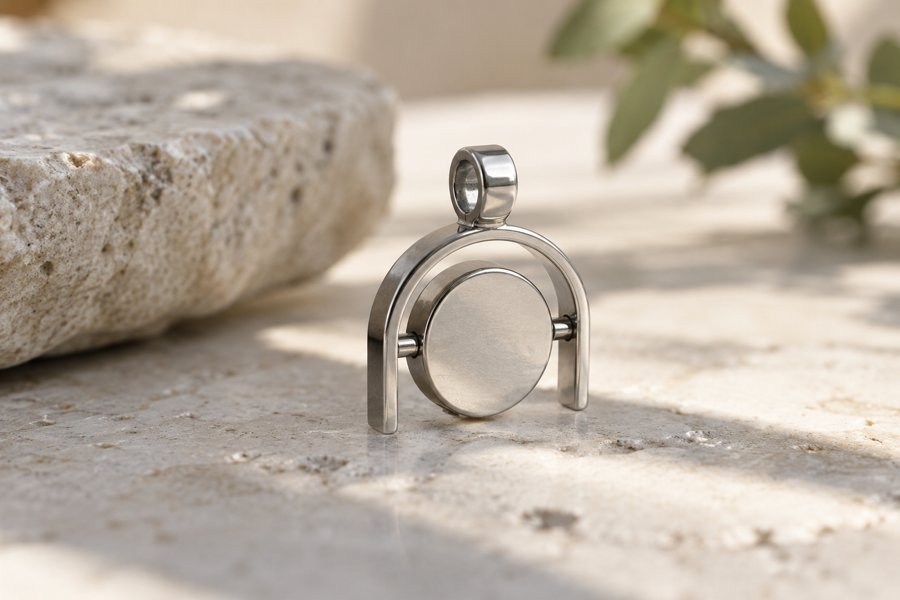
2. Check access and edges in the intended position
Attach the prototype to the proposed chain or clip. Check whether a finger can move the disc without forcing contact with a sharp edge or trapping a nail between parts. Examine the reverse and underside as carefully as the presentation face.
Distinguish a decorative bag charm from jewelry intended for prolonged skin contact. Consult the applicable ECHA substance restrictions with the laboratory when deciding the chemical-testing scope. Intended use must be documented rather than assumed from the product name.
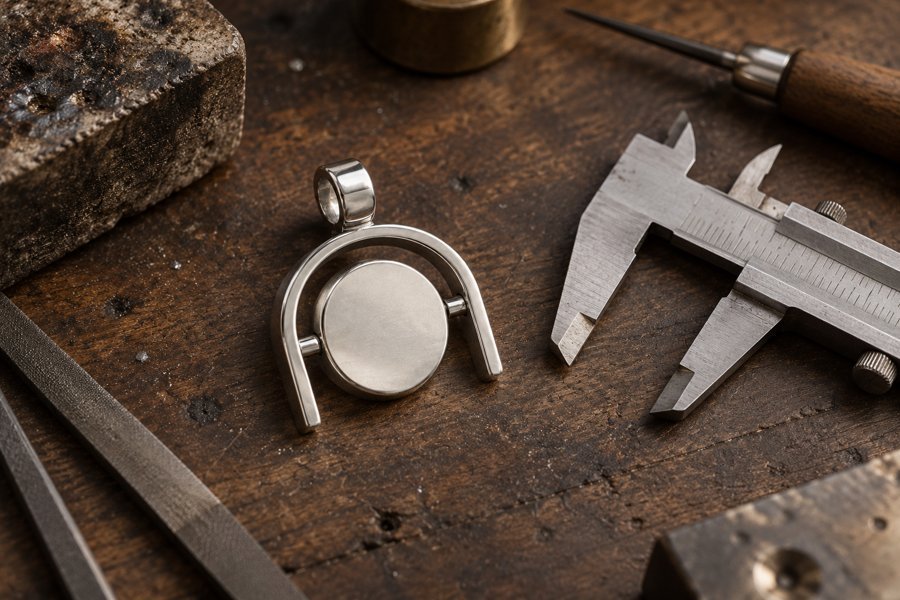
3. Define retention and surface-treatment sequence
Ask how the axle is retained and how the supplier will inspect that retention. Confirm which parts are polished or coated before assembly and which operations occur afterward. Surface treatment can change usable clearance, and an otherwise smooth prototype may behave differently after finishing.
Record the approved assembly and tooling revision in the tooling revision register. Include engraving position on both faces so the artwork orientation remains correct when the disc turns. Review the complete item instead of approving isolated decorated components.
4. Agree a functional test before producing a batch
Define the rotation action, orientation, number of cycles, handling condition and end-of-test acceptance criteria together with the manufacturer. Consider rubbing, increased resistance, axle movement, visible wear and attachment integrity. The appropriate cycle count must reflect the project; this article does not prescribe a validated durability standard.
Use the ILAC directory to locate the relevant accreditation body when independent laboratory work is needed. A laboratory’s scope should match the requested test. Separate an internal prototype trial from independently verified testing.
The FTC substantiation policy is useful when reviewing claims such as long-lasting rotation. A demonstration video shows that one assembly moved at that moment; it is not lifetime evidence.
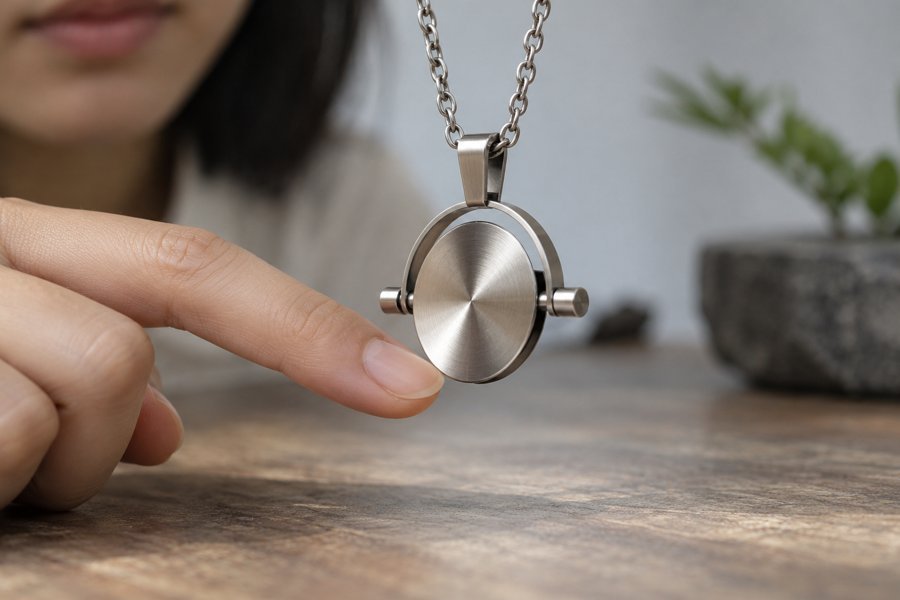
Buyer’s working checklist
| Specification | What to define | Prototype check |
|---|---|---|
| Disc and axis | Diameter, thickness and axis location | Full motion without unintended contact |
| Frame access | Opening and finger-contact surfaces | Comfortable operation in use position |
| Retention | Axle or pivot retention and inspection | No unacceptable looseness after trial |
| Decoration | Finish and two-sided engraving orientation | Clearance and artwork after finishing |
Practical buying example
Illustrative development scenario: a buyer requests an open-bottom frame so the disc can be pushed from underneath. The sample review must check that opening with the final clip attached, not just the loose disc on a desk. If finishing creates rubbing, revise the construction and approve the new sample before bulk production.
Frequently asked questions
Can a supplier quote from one picture?
A preliminary range may be possible, but an accurate quotation needs dimensions, construction, finish, quantity and attachment details.
Should engraving be approved before assembly?
Approve the artwork first, then verify the orientation and appearance on the assembled prototype.
Does smooth rotation guarantee durability?
No. Smooth initial motion and durability after an agreed trial are separate acceptance questions.
Discuss your sourcing requirements
Send Yleryler reference images or a video, intended use, approximate dimensions, finish, engraving files and quantity per design. Request engineering review and prototype acceptance criteria before paid tooling is approved. Contact Yleryler about your project.
Prepared for B2B sourcing and product development. External sources support the linked technical background; the purchasing checklists and examples are suggested workflows. Confirm the current requirements and methods for your destination market with the responsible laboratory or adviser.