A custom jewelry order can become difficult to repeat when the buyer has a sample but no clear record of the tooling that produced it. A changed stone seat, logo location or band profile may be discussed across several messages without one agreed production reference.
A custom jewelry tooling record should connect the product SKU, drawing revision, tooling reference, sample approval and subsequent changes. Keep commercial tooling arrangements separately documented, and identify which version is authorized for production. A tooling payment alone does not establish that every later sample is approved.
1. Create the record before the first sample
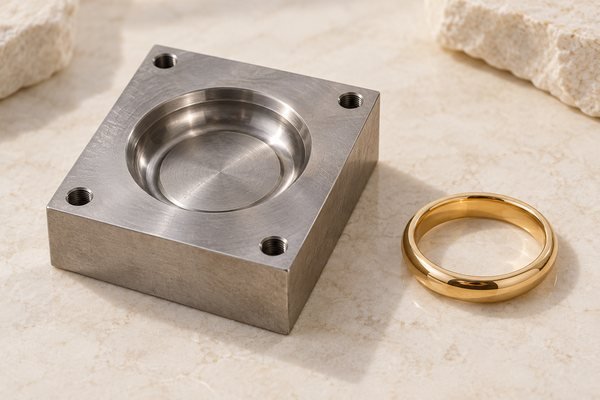
Ask the supplier to identify the proposed tooling scope by product and process. One finished design can require several tools or fixtures, while a family of variants may share some components. Do not assume a single quoted tooling fee corresponds to one physical mold.
Record the tool or fixture reference supplied by the manufacturer, the related component and the drawing revision used to make it. If a supplier cannot provide an internal identifier, agree a buyer-facing reference that can still be traced consistently in correspondence.
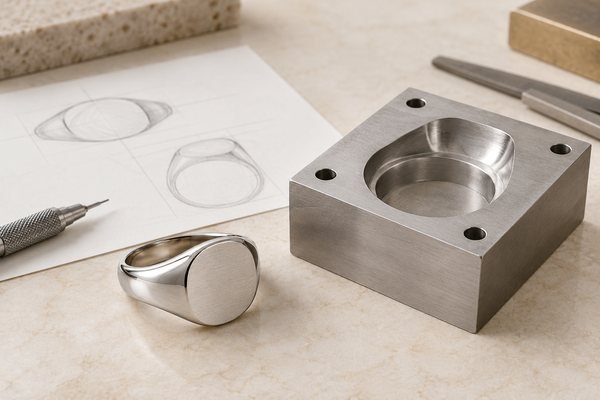
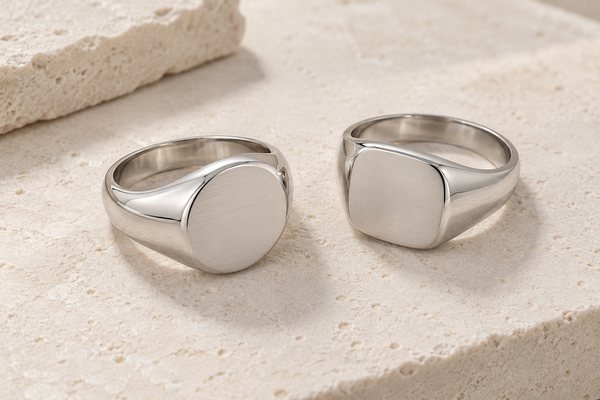
For a signet-ring project, Gold Stainless Steel Blank Oval Signet Ring is a useful starting design to discuss. Record any requested changes to its face, engraving area and dimensions in the tooling revision record.
For a broader framework for controlling product versions, see ISO 10007 configuration-management guidance. Keep the tooling reference connected to the version released for production.
2. Separate tooling scope from product approval
A tool may produce a component that still requires polishing, assembly or other finishing. Record what the tool controls and which operations happen afterward. This helps the buyer understand why a tooling-stage sample can differ from the finished approval sample.
Treat sample approval as its own decision. Confirm dimensions, appearance and assembly on the relevant finished product before production release. Keep the tooling quotation, development status and finished sample approval connected without treating them as interchangeable milestones.
3. Record every requested design change
For each change, write the old condition, requested condition, affected component and proposed revision. Attach marked drawings where possible. A message such as make it smaller leaves uncertainty about which dimension or feature should change.
Ask the supplier to state whether the change requires tool modification, a new tool or a downstream process adjustment. Confirm cost and timing implications before authorizing the work. Avoid updating the production drawing while leaving the tooling record attached to an older revision.
Engineering change decision: tool rework or new mold?
A drawing change does not automatically mean a new mold. Have the engineer classify it as a downstream finish/process adjustment, a feasible local tool or insert rework, or a change requiring new tooling. The decision depends on tool construction, material, cutting or casting process and required geometry. Obtain written feasibility approval before committing to a revision.
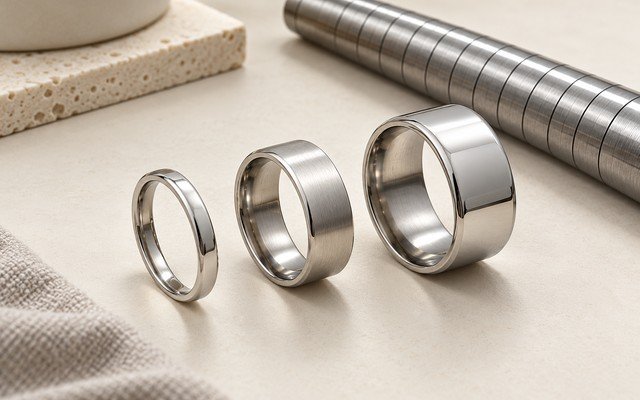
For ring designs, identify critical dimensions such as inner diameter, band thickness, stone-seat depth and logo position. Record the nominal dimension, project-specific tolerance, inspection method and actual sample measurement. Do not assume universal tolerances across processes. Compare polished and assembled samples—not only unfinished parts—with the signed CAD drawing.
Commercial release checklist: request an itemized quotation identifying tooling rework or new-tool fees, revised sample cost, any unit-price effects, additional sample days and the impact on the bulk production schedule. Approve cost and timing before changing the released drawing.
4. Confirm which version is released
Keep a clear status for each reference: development, awaiting approval, released or superseded. A superseded sample can remain useful for comparison, but should not be used as the current production target.
Before a repeat order, ask the supplier to confirm the released tool and drawing references and whether any maintenance, replacement or process change affects the result. Review a fresh sample where the change could alter the product. Administrative traceability supports consistency but does not replace inspection.
5. Use a revision register for reorders
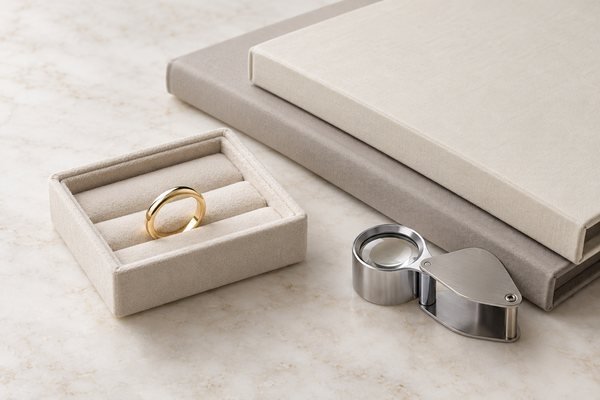
The template below can serve as a tooling and sample register. Add the supplier contact, approval date and commercial reference. If several ring sizes or component variants are involved, use separate rows linked to the relevant product family.
Retain photographs of the approved sample with its revision label. Keep any tooling access, storage or transfer arrangements in a separate written agreement appropriate to the project. This operational register tracks references and approvals; it does not determine legal ownership rights.
Copyable custom jewelry tooling revision register
Copy these fields to a spreadsheet. Use one row for each affected product/part revision and link related sizes or cavities under a common product-family ID. Agree actual acceptance criteria and revision charges with the supplier.
| Register field | Required record |
|---|---|
| Product SKU / component | Design, variant, size and affected part |
| Tool ID / tool type | Mold, insert, fixture and manufacturer reference |
| CAD drawing revision | Controlled file name, version, dimensions and issue date |
| Sample ID / approval | Sample number, finish, inspection results and approver |
| Change description | Old vs new geometry with marked drawing |
| Tooling action | Process adjustment, tool rework or new mold; engineering reason |
| Commercial impact | Tooling and sampling fees, unit-price impact, approved quotation |
| Lead time impact | New sample, bulk-production and dispatch milestones |
| Inspection and disposition | Critical measurements, observed findings, rework/pass decision |
| Production release | Released drawing/tool/sample IDs; sign-off and superseded revision |
Production release rule: approve one matching combination of the CAD revision, tooling ID and finished sample. Mark older versions superseded; retain them for traceability. Keep tool ownership, storage, access and transfer terms in a separate written agreement.
Practical example — hypothetical
In a hypothetical ring project, the buyer requests a lower stone seat after reviewing a prototype. The supplier modifies the relevant tooling, but an old drawing remains attached to the reorder email. The revision register exposes the mismatch: the approved sample belongs to the newer drawing. The team corrects the release reference before production. This is a workflow example, not a verified customer history or a statement about tooling rights.
Illustrative engineering change decision: for the hypothetical lower stone seat, compare the proposed depth with remaining wall thickness and stone retention. Determine whether tool rework is feasible or new tooling is required; record the quote and timing, issue CAD revision B, inspect a revised sample, obtain written buyer approval and mark the old release as superseded. This is a process illustration, not a verified Yleryler production case.
Frequently asked questions
Is a tooling payment the same as sample approval?
No. Payment and development authorization are commercial milestones. The buyer should separately approve the relevant product sample and identify the revision authorized for production.
Should each ring size have a tooling reference?
Use enough detail to trace every size and component to its applicable tool or process. Some references may be shared, but the supplier should explain that relationship rather than leaving it assumed.
When should tooling records be reviewed again?
Review them before reorders and whenever dimensions, components, processes or tooling change. Confirm the released version and request additional sampling where the change may affect the finished product.
Related buyer resources
CAD review before tooling · repeat-order specification control · itemized jewelry quotation
Discuss your wholesale project with Yleryler
For a custom jewelry tooling or jewelry mold revision quotation, send the original and revised CAD, material, size variants, target tolerances, quantities and desired sample date. Ask for separate custom jewelry tooling costs, sample fees, estimated lead-time impact and the revision approval process.
Request a Product-Specific Wholesale Quote
Images are AI-generated product concepts for educational illustration, not photographs of actual Yleryler stock, tooling or customer orders. Dimensions and product performance must be reviewed using the actual approved sample.