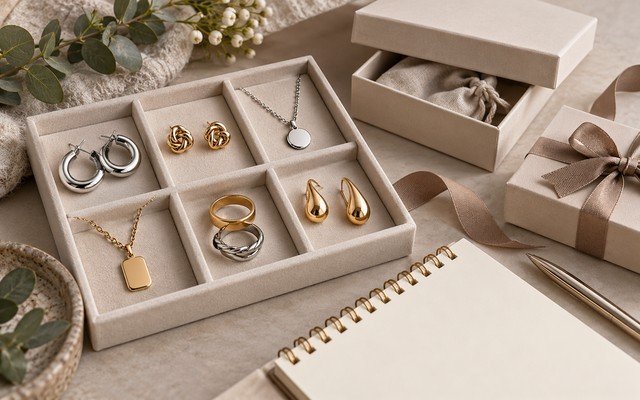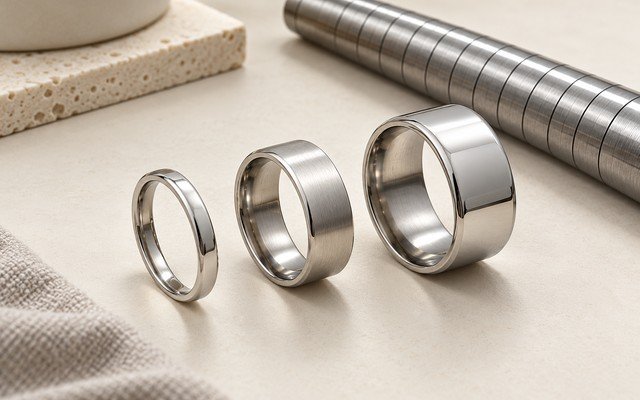
Gold-tone describes a color appearance; it does not by itself prove that stainless steel jewelry contains a gold layer, identify the gold fineness or establish coating thickness. A wholesale specification should separate the base material, coating process, coating composition and approved color reference before the retail description is written.
This distinction matters when the same item appears in a quotation, packaging card and online listing. A vague supplier abbreviation can become a much stronger consumer claim as information passes between teams. The buyer should approve one supported material description and control how it is used.
Separate color, process and composition
A warm yellow surface can be described by appearance, but appearance alone does not establish chemistry. Similarly, PVD describes a deposition process family rather than a complete coating composition. A process name does not independently prove that the deposited layer is a specified gold alloy.
Request the base material and the coating system as separate specification fields. Ask what evidence supports any claim about gold content or fineness. Where a coating thickness is important, identify what is being measured and how the measurement applies to the relevant component.
Do not infer these answers from a photograph. Lighting, background and editing can change perceived color, while the chemical identity of a very thin surface layer is not visible in an ordinary product image.
Images are editorial illustrations, including AI-generated concepts. They are not photographs of verified production, test results or approved customer samples.

Translate supplier shorthand into an approved description
A supplier's internal color code can be useful for production, but it is not necessarily suitable retail wording. Clarify whether a label such as 18K refers to a target color, a documented gold-alloy layer or another specification. Resolve the ambiguity in writing before purchase approval.
The FTC Jewelry Guides and the US rules addressing gold-content representations are important references for products marketed in that jurisdiction. They address misleading descriptions of gold presence and coatings. UK hallmarking guidance provides a separate national framework; the two systems should not be combined into one universal labeling rule.
For example, gold-tone stainless steel may be a suitable appearance description where that is all the evidence supports. A statement about an actual gold coating requires additional facts and appropriate qualification. This example illustrates a drafting distinction, not automatic approval of wording for every market.
Keep the substrate visible in the buying record
The base material remains important even when the visible surface is gold-colored. Record whether the main body, chain, clasp, jump rings and decorative pieces use the same material. A statement about the pendant should not silently become a claim about every component in a necklace.
Use component-level rows when necessary:
- Main body: agreed stainless steel specification.
- Connecting components: identified material and finish.
- Coating: documented process and composition description.
- Appearance: approved physical reference and review conditions.
- Retail wording: authorized version for the intended market.
This structure also helps when a component is replaced during a reorder. A visually similar connector may have a different substrate or coating, so appearance approval alone should not close the change review.

Review marks, packaging and online copy together
An accurate product paragraph can still be undermined by an unsupported stamp, a misleading hangtag or an image containing a precious-metal claim. Review all of these together. A consumer may read the short title or badge without opening the full materials section.
UK government guidance explains that gold-plated base-metal articles cannot be hallmarked as precious-metal articles under its framework. Do not add a precious-metal hallmark or a sterling-silver description to a stainless steel item simply because the surface is gold-colored. Ask the importing brand to review the market-specific meaning of any proposed mark.
Keep ordinary product identifiers separate from material quality marks. A model number, brand logo and care symbol serve different purposes. The artwork approval should identify each proposed marking and the evidence supporting it.
Make repeat orders use the same claim controls
Store the approved description alongside the coating specification and physical reference. When a supplier proposes a coating change, review appearance, evidence and wording before release. Do not let a new coating recipe inherit an old marketing sentence by default.
A useful hypothetical approval sequence is to finalize the steel construction, confirm the coating information, approve the color sample and then release the label text. Commercial photography follows the approved description; it should not be used to invent additional material claims.

Gold-tone jewelry descriptions: what each term tells the buyer
| Term | Meaning to verify | Evidence to request |
|---|---|---|
| Gold-tone | Appearance or color, not a verified gold quantity | Approved color sample and truthful listing copy |
| Gold-color PVD | A process and finish description; coating composition can vary | Coating specification, process record and approved finish |
| Gold-plated | A precious-metal coating claim subject to applicable local labeling rules | Coating composition and relevant substantiation |
| 18K gold PVD | A potentially ambiguous commercial phrase | Clarify whether it describes color, actual gold composition or another specified process |
Illustrative listing approval
A brand orders a yellow-gold-color stainless steel bracelet. Its listing should not imply solid 18K gold merely because a supplier called the finish “18K color.” Approve separate fields for substrate, finish process, measured claims and consumer-facing wording before mass printing packaging.
FAQ
Does PVD automatically mean real gold plating?
No. The process name alone does not establish the composition of the deposited coating. Ask for the actual coating specification and evidence supporting any gold-content statement.
Can stainless steel jewelry be called vermeil?
Do not use that term for a stainless steel base. It has a specific precious-metal meaning in relevant markets, including a sterling-silver base under the US Jewelry Guides. Review the applicable wording with the importing brand.
Does a color sample prove coating thickness?
No. A physical reference helps control appearance. Thickness and composition require suitable documentation or measurement, with the tested item and method clearly identified.
Editorial review and buyer-use limitations
This article is published by Yleryler for wholesale stainless steel jewelry sourcing and OEM/ODM specification review. The practical examples are illustrative, not verified customer orders, product certificates or legal advice. Buyers should verify material, technical claims and market-specific requirements against their actual approved specifications and the authoritative sources linked below. No individual professional qualification or independent third-party review is claimed.
Sources and further reading
These references support the material, regulatory or buying principles discussed above. Product-specific purchasing recommendations are practical guidance; an industry reference does not certify a supplied item. Sources reviewed on October 22, 2026.
- eCFR 16 CFR 23.3: representations about gold content
- FTC: Jewelry Guides and disclosure resources
- UK Government: hallmarking guidance notes
Related buying guides and product options
For the next purchasing step, read How to Specify and Verify PVD Jewelry Coating Thickness and PVD Jewelry Color Consistency: Control Shades Across Repeat Orders. Explore our stainless steel necklace pendant collection and contact Yleryler for an OEM/ODM sourcing review. Include your product type or drawings, estimated quantity, stainless steel grade and finish, destination market, required evidence or testing, preferred delivery terms and target date. We can then clarify the quotation scope and product-specific approval criteria. Material grade, process, evidence, MOQ, pricing and delivery are confirmed for the actual quotation and approved specification.