Recycled stainless steel jewelry is jewelry made with stainless steel for which a defined recycled-material claim can be supported. The important buying question is not whether stainless steel can be recycled, but what evidence connects the claim to the metal and components in the actual order. A general industry recycling figure does not establish the recycled content of a particular necklace, ring or bracelet.
For wholesale buyers, the strongest starting point is a narrow statement with a clear boundary: which material, which component, which production period and which calculation or custody system? This approach keeps a useful sourcing attribute from becoming an unsupported promise on every product page.
Separate three different questions
Recyclability describes whether material can be recovered through an appropriate recycling route. Recycled content concerns material already incorporated into, or attributed to, the supplied product under a defined system. A broader environmental claim concerns impacts that may involve production energy, transport, finishing and product life. These questions require different evidence.
worldstainless explains stainless steel recycling at industry level. Its figures help buyers understand the material cycle; they should not be copied onto an individual jewelry specification as a verified percentage. A steel grade identification result answers another question again: composition alone does not reveal the history of the feedstock.
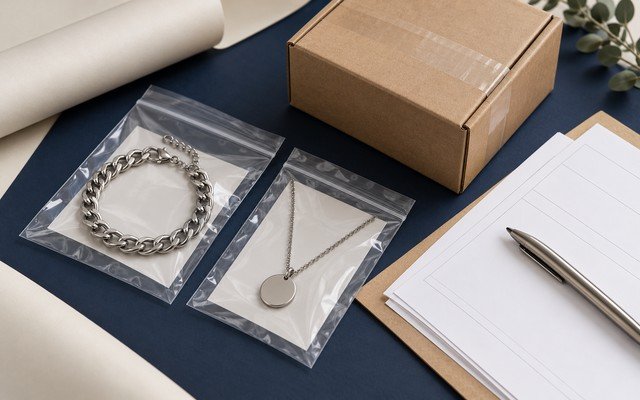
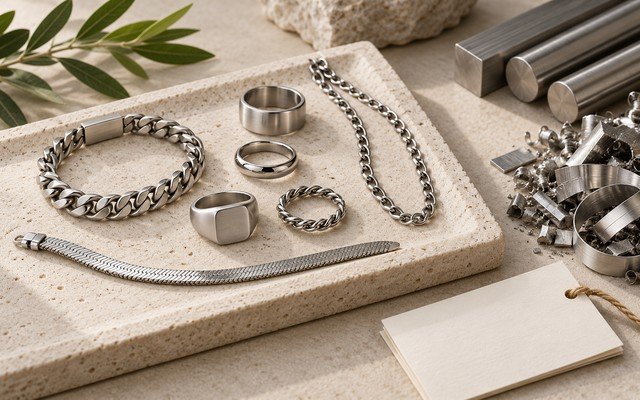
Images are editorial illustrations, including AI-generated concepts. They are not photographs of verified production, test results or approved customer samples.
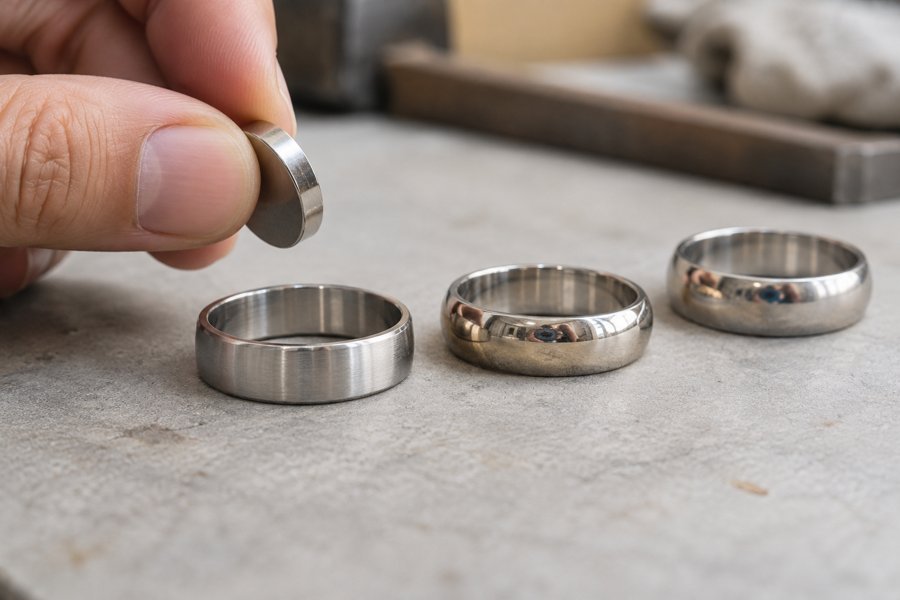
Define the claim boundary before requesting documents
Start with the bill of materials. A necklace can include a main chain, pendant, jump rings, clasp spring, decorative inserts and a coating. Evidence covering the main chain does not automatically cover the remaining components. Packaging should also be considered separately from the jewelry.
Write the boundary in the purchasing record. Identify whether the proposed claim concerns the stainless steel input, a specified component or the complete assembled item. Record whether the statement is based on physical segregation, an allocation approach or another documented method. Do not describe these approaches as interchangeable without understanding the scheme and the buyer's intended market.
Ask the supplier to explain the period and quantity to which its evidence applies. A document describing company policy is different from a record linked to a particular material purchase. Both may be useful, but they support different statements.
Request an evidence chain that can be followed
A practical evidence package should let a reviewer move from the customer order back toward the material source without guessing. It may include a material supplier declaration, the relevant claim methodology, purchase references, component identification and the finished production lot. The exact package depends on the claim and supply arrangement.
Use these questions when reviewing it:
- Does the named supplier match the purchase record?
- Is the stated material or component identifiable?
- Are the relevant dates and quantities included?
- Is any certification scope current and applicable to this supply?
- Can the finished order be connected to the supporting input record?
A certificate logo on a catalog cover is not that connection. If a supplier cites a certification scheme, check what it certifies, which organizations are covered and whether the offered transaction needs additional documentation.
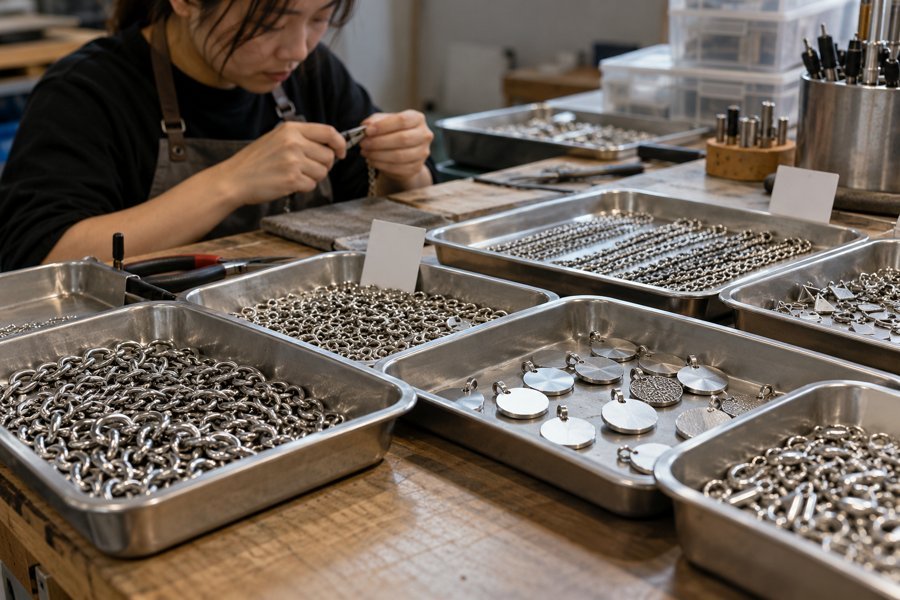
Use precise wording on labels and product pages
The FTC Green Guides distinguish environmental claims and emphasize substantiation and appropriate qualification. ISO 14021 provides a framework for self-declared environmental claims. Neither reference makes a finished jewelry item compliant merely because its supplier mentions the standard.
Prepare the proposed wording alongside its supporting documents. If the evidence concerns one component, identify that component. If it supports only an input-level statement, avoid presenting it as a measured percentage of the complete item. Do not add broad claims such as environmentally harmless or zero impact to a limited recycled-material statement.
The same discipline applies to images. A green badge or recycling symbol can communicate more than the adjacent sentence. Review the overall product page, hangtag and packaging so their combined message stays within the evidence boundary.
Build claim review into repeat orders
Treat a change in material source as a reason to review the claim again. An unchanged product photograph does not show whether the same supporting material arrangement still applies. Record who approves the wording and what documents must be renewed before a reorder is released.
For example, imagine a brand planning a small pendant collection with an externally purchased chain and clasp. The buyer could approve the design first, then release the recycled-material statement only after the component evidence is complete. This is a hypothetical purchasing workflow, not a report about a completed Yleryler order.
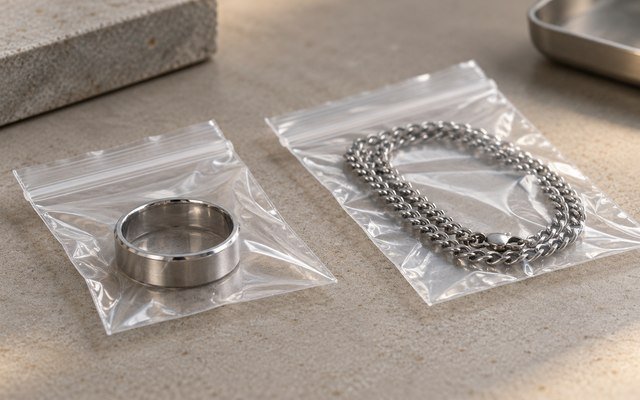
Recycled-content claim verification checklist
A recycled claim is meaningful only when the buyer can identify the exact material and evidence boundary. Use the following purchase-order review rather than accepting a broad sustainability slogan.
| Question | Evidence to request | Common gap |
|---|---|---|
| Which component contains recycled material? | Component-specific bill of materials and supplier declaration | A claim for the entire assembled item |
| What percentage and calculation basis? | Defined weight basis, method and reporting period | Unexplained percentage or mass balance |
| How is traceability maintained? | Purchase, batch and processing records linked to the claimed material | General certificate without lot relevance |
| What may be stated to consumers? | Evidence-backed wording approved for the destination market | Unqualified environmental benefit claims |
Illustrative buyer scenario
A necklace uses a stainless steel pendant, chain and purchased clasp from different supply streams. Evidence for recycled content in the pendant does not automatically establish the recycled share of the whole necklace. The buyer should request component weights and claim scope before approving labels. This is a hypothetical example, not a verified product claim.
FAQ
Does 316L prove recycled content?
No. A grade designation concerns material composition and related specification requirements. It does not independently establish recycled feedstock content or the claim method used for a finished jewelry order.
Can one supplier declaration cover an entire collection?
Only if its scope and supporting records actually cover the relevant materials, components, production periods and claim boundaries. Review these details rather than assuming that similar-looking products share the same evidence.
Should we postpone a product launch if the claim is unverified?
The commercial decision depends on the project. One practical option is to launch with accurate material and finish descriptions while withholding the unverified environmental statement until its evidence and wording have been reviewed.
Editorial review and buyer-use limitations
This article is published by Yleryler for wholesale stainless steel jewelry sourcing and OEM/ODM specification review. The practical examples are illustrative, not verified customer orders, product certificates or legal advice. Buyers should verify material, technical claims and market-specific requirements against their actual approved specifications and the authoritative sources linked below. No individual professional qualification or independent third-party review is claimed.
Sources and further reading
These references support the material, regulatory or buying principles discussed above. Product-specific purchasing recommendations are practical guidance; an industry reference does not certify a supplied item. Sources reviewed on October 22, 2026.
- worldstainless: recycling and the material life cycle
- FTC Green Guides: substantiating environmental claims
- ISO 14021:2026: self-declared environmental claims
Related buying guides and product options
For the next purchasing step, read What Should a Jewelry Batch Traceability Record Include? and How to Verify a Jewelry Supplier's Laboratory Test Report. Explore our stainless steel necklace pendant collection and contact Yleryler for an OEM/ODM sourcing review. Include your product type or drawings, estimated quantity, stainless steel grade and finish, destination market, required evidence or testing, preferred delivery terms and target date. We can then clarify the quotation scope and product-specific approval criteria. Material grade, process, evidence, MOQ, pricing and delivery are confirmed for the actual quotation and approved specification.