A stainless steel jewelry care card should identify the product or collection, give cleaning and storage instructions appropriate to its complete construction, explain relevant coating or decorative limitations, and provide a contact route for problems. Avoid universal promises about water, scratches or skin tolerance unless the finished product has evidence supporting those exact claims.
What should a care card explain when a necklace combines a stainless steel chain, a decorative finish and a glued ornament? Instructions for bare steel alone may not suit the complete necklace. A useful card gives the wearer a short routine while giving the brand a consistent reference for customer service.
1. Start with the weakest relevant component
List the parts that could change the care recommendation: coatings, glued decorations, stones, enamel, moving joints and absorbent packaging materials. Confirm cleaning compatibility with the supplier before approving consumer instructions. A steel base material does not establish the behavior of everything attached to it.
The worldstainless cleaning handbook offers material-level background. Its guidance is not a blanket approval for every finished jewelry assembly. Use it to inform questions, then validate the routine on the actual construction.
2. Write a routine the customer can follow
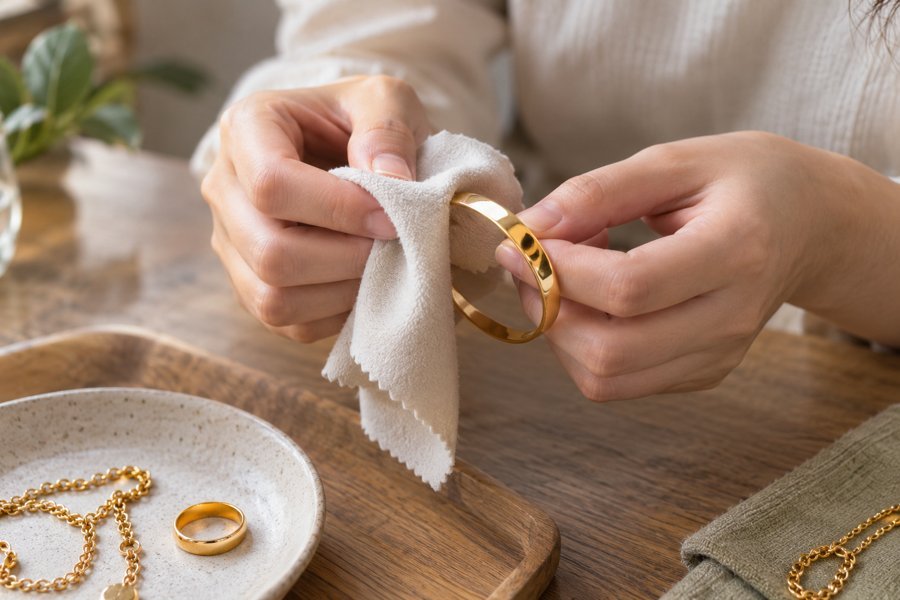
Describe handling in a sensible order: inspect the piece, follow the approved cleaning method, dry as directed and store separately from items that could rub against it. Avoid leaving the choice of aggressive cleaners or abrasive polishing materials to guesswork. The card should distinguish ordinary care from repair.
Where the supplier has validated it for the finished item, a routine might use a soft cloth and a compatible mild cleaning solution. Do not prescribe ultrasonic cleaning, chemical dips or repeated immersion without checking stones, adhesives and coatings. Test the wording as well as the process: another person should be able to follow it without oral instructions.
3. Keep marketing and care instructions consistent
Compare the card with the product page and packaging. A card warning against exposure cannot quietly repair an unsupported product-page promise of unlimited exposure. Review both together using the FTC Jewelry Guides, which address accurate jewelry representations.
The FTC substantiation policy provides a separate reference for evidence behind objective claims. Keep wording such as scratch-resistant distinct from scratch-proof, and do not treat a material name as proof of finished-product performance.
4. Version the card with the collection
Give the card a revision reference and connect it to the relevant products. If an adhesive, coating or decorative element changes, review the instructions before using the old print run. The purchasing team should know which card belongs to which assembly and language version.
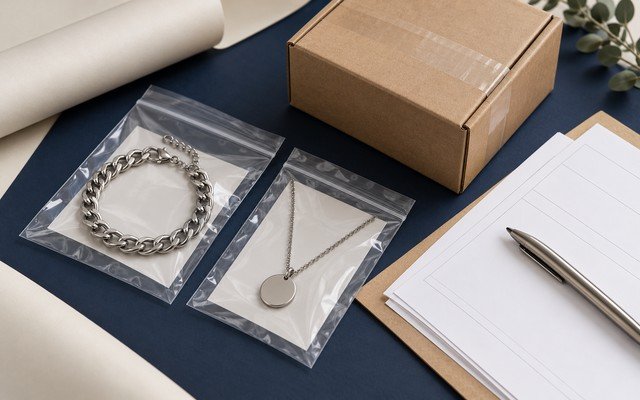
Use the SKU and packing-list system to prevent packing the wrong card. Coordinate the card’s physical size and placement with the wholesale packaging plan, especially when paper edges or loose inserts could contact polished surfaces.
Buyer’s working checklist
| Card element | Useful wording approach | Approval evidence |
|---|---|---|
| Cleaning | Describe the validated method and drying step | Trial on the complete item |
| Storage | Explain separation and handling | Packaging and surface review |
| Limitations | State relevant coating or component precautions | Supplier confirmation and testing |
| Product reference | Collection code, revision and contact | Link to the approved product record |
Practical buying example
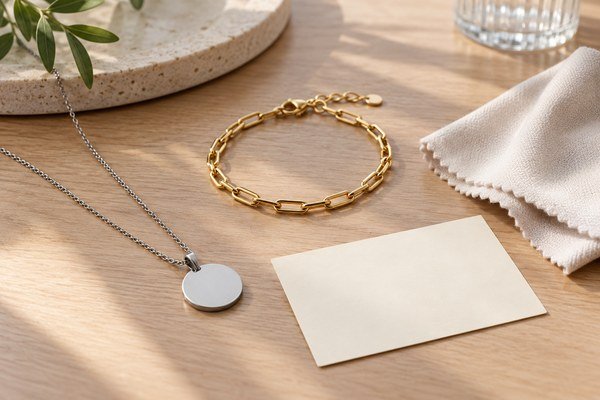
Illustrative card review: two necklaces share a chain, but one has an adhesive-set decoration. Do not issue identical immersion instructions solely because the chains match. Review the decoration and bond first, then approve separate instructions if the finished constructions need them.
Frequently asked questions
Can one card serve every product?
Only when the instructions are appropriate to all covered constructions. Document the covered styles and review changes.
Should care instructions include a warranty?
Keep routine care and commercial warranty terms distinct. Have the responsible business review the terms for its market.
Does a care card prove water resistance?
No. Instructions explain handling; performance claims require their own suitable evidence.
Ready-to-adapt stainless steel jewelry care card
The short text below is a sample for retailer review, not a universal instruction certified for all coatings, stones or adhesives. Validate the wording against the final assembled SKU before printing.
STAINLESS STEEL JEWELRY CARE
Wipe gently with a clean, soft cloth after wearing. Avoid abrasive rubbing and harsh cleaning chemicals. Store pieces separately in a dry place to limit contact scratches. Do not use polishing compounds, ultrasonic cleaners or chemical dips unless approved for this specific product. Follow any additional instructions for stones, enamel, glued decorations or special finishes.
For questions about unexpected changes in appearance, contact your retailer and include the product identification.
Adapt the care card to the finished product
| Product construction | Care-card review point |
|---|---|
| Uncoated stainless steel | Confirm the recommended wiping and cleaning method for the completed assembly |
| Gold-tone or other PVD finish | Avoid blanket scratch-proof, waterproof or permanent-color promises; verify cleaner compatibility |
| Glued stones or ornaments | Review moisture, immersion and cleaning against the adhesive and setting |
| Enamel or mixed-material decoration | Check decorative surfaces and joints before approving chemicals or brushing |
OEM/ODM printing and packaging approval checklist
For private-label jewelry, approve the care card together with the product sample and packing specification. Record the brand logo and contact channel, covered SKU list, card dimensions, paper/finish and placement, language(s), wording version, approval date and artwork file revision. Ensure the card itself cannot rub a polished surface in transit. A product-specific warning should not contradict the warranty or product-page claims.
Example RFQ handoff: “Please review this English care-card draft for our PVD necklace collection. We need a bilingual card, branded artwork, separate packaging per SKU and confirmation of any care limitations created by stones, adhesive or coating.” This is a proposed workflow, not a statement that testing is already complete.
Discuss your sourcing requirements
Planning private-label stainless steel jewelry? Send Yleryler your SKU list, finish and decorative-component details, draft care text, brand logo, card size, languages, packaging artwork and estimated quantity. Review the final wording and physical placement against the approved sample before printing. Request an OEM/ODM jewelry and care-card review.
Prepared for B2B sourcing and product development. External sources support the linked technical background; the purchasing checklists and examples are suggested workflows. Confirm the current requirements and methods for your destination market with the responsible laboratory or adviser.