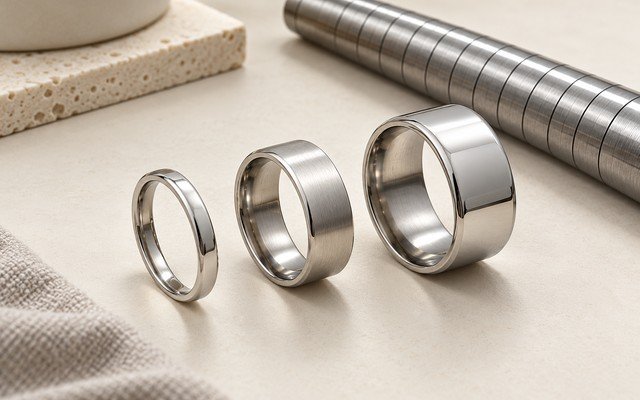
Stainless steel jewelry HS classification should be based on the actual article, its materials and the importing country's current tariff rules. The words stainless steel are not enough to determine a final customs code or duty rate. Wholesale buyers should prepare a clear product information file and have the classification confirmed for the destination market.
Heading 7117 is an important reference point for imitation jewelry, including certain base-metal articles. It should be treated as a starting point for review rather than a universal answer for every accessory, component or mixed-material product sold in a jewelry catalog.
Understand what an HS heading does and does not tell you
The World Customs Organization publishes the Harmonized System nomenclature, while importing jurisdictions maintain their own tariff schedules and further subdivisions. A code copied from a supplier's past shipment may therefore be incomplete or inappropriate for the current destination and article.
The USITC Harmonized Tariff Schedule and HMRC's UK Trade Info classification pages provide official national reference points. The applicable treatment must still be checked against the product facts, relevant notes and current measures. This article does not assign a binding code or quote a duty rate.
Separate classification from valuation, origin, import taxes and carrier charges. These subjects interact in the landed-cost calculation, but one does not answer all the others. A commercial quotation that lists a code is not a complete customs assessment.
Images are editorial illustrations, including AI-generated concepts. They are not photographs of verified production, test results or approved customer samples.
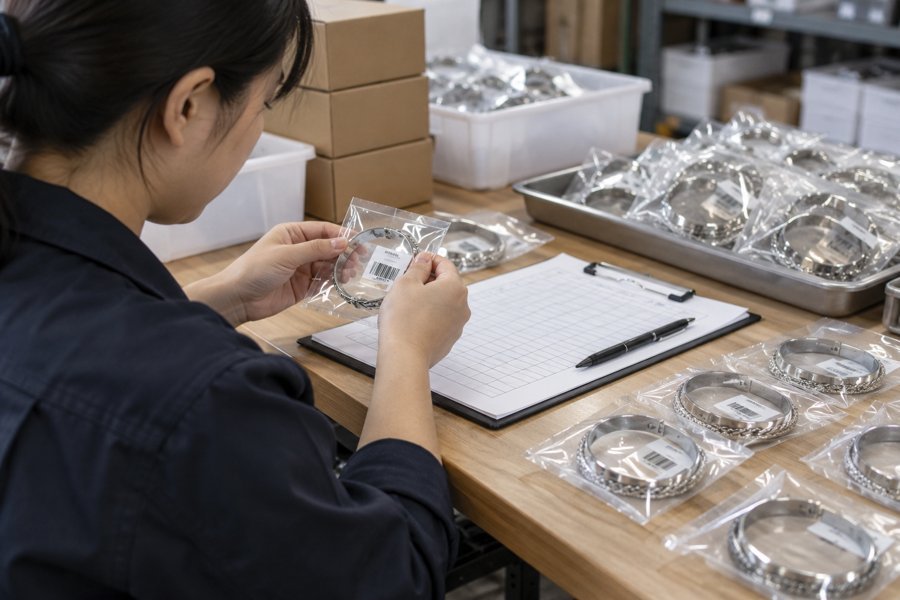
Describe the product as an article, not a keyword list
Prepare a plain description of what the product is and how it is supplied. Is it a finished necklace, a bracelet, a pair of earrings, a loose chain length or a separate decorative component? Is it intended as personal adornment, or does it have another primary function?
List the materials actually present. Identify the base metal, surface treatment and any stones, pearls, glass, leather, textile or other inserts. If the product contains precious metal or a material that could affect classification, provide the relevant facts rather than simplifying the invoice to metal accessory.
Include clear photographs and a component breakdown when the construction is not obvious. A customs reviewer should not have to infer whether a photographed charm is a complete wearable item or only one part of an assembly.
Create a classification review packet
A useful packet brings together the product facts in one place. It should be consistent with the commercial invoice, packing list and purchasing specification rather than offering a different description for each document.
Include these fields:
- Supplier and buyer product references.
- Item type and intended use.
- Main materials and decorative components.
- Whether the item is finished, unfinished or a component.
- Photographs and relevant construction notes.
- Destination country and proposed classification for review.
- Reviewer, decision date and any ruling reference.
If the customs adviser requests a physical sample, link it to the same product version. A different sample with a similar name can create a misleading basis for the decision.

Keep commercial documents consistent
The invoice description should identify the supplied goods accurately without unnecessary promotional claims. Terms such as luxury, premium or waterproof rarely explain the physical article to a customs reviewer. Use the agreed product identity, materials, quantities and units instead.
Pay particular attention to pairs and sets. The purchasing unit, packed unit and declared quantity should be understandable across the documents. Do not let one spreadsheet count individual earrings while another counts pairs without a clear conversion and explanation.
For a hypothetical shipment containing necklaces and ring sets, the buyer could maintain separate product rows with the applicable review outcome for each article type. A single broad row for jewelry assortment may conceal facts that the customs adviser needs to evaluate.
Recheck when the product or destination changes
Classification work should be retained, but it should not become an unchecked permanent field. A change from a bare metal pendant to a product incorporating different decorative materials may justify another review. A new destination also requires attention to its national tariff structure and procedures.
Ask the importer or customs adviser whether an advance or binding ruling is appropriate where uncertainty has meaningful consequences. Other companies' historical declarations may help identify questions, but they should not be treated as protection for a different article or shipment.

Customs classification packet: buyer checklist
| Item | Document or detail | Why it matters |
|---|---|---|
| Article identity | Photograph, use and product description | Classification depends on the actual finished article |
| Composition | Substrate, plating and other materials | Supports material-based distinctions where relevant |
| Construction | Sets, detachable elements, stones and components | May influence how the import article is assessed |
| Destination | Import country and applicable tariff version | National tariff subdivisions and rates differ |
| Formal confirmation | Broker review or binding ruling where appropriate | Reduces reliance on an unsupported supplier code |
Illustrative import scenario
A stainless steel necklace with a decorative pendant is not classified solely by typing “316L necklace” into a tariff search. The importer should describe the finished article and destination and obtain country-specific review. This guide intentionally does not assert a universal HS subheading or duty rate.
FAQ
Is every stainless steel necklace classified under the same code?
Do not assume so. Classification depends on the article, construction, materials, relevant legal notes and national tariff subdivisions. Have the finished product facts reviewed for the destination market.
Can the factory guarantee the buyer's final duty rate?
A factory quotation alone cannot establish every importing-country measure or tax. The importer should confirm classification and current treatment with its customs adviser before relying on a landed-cost estimate.
Should the invoice use a vague description to simplify clearance?
No. Clear and consistent descriptions make review easier. Supply the factual article type and material details requested by the importer, customs adviser and relevant authorities.
Editorial review and buyer-use limitations
This article is published by Yleryler for wholesale stainless steel jewelry sourcing and OEM/ODM specification review. The practical examples are illustrative, not verified customer orders, product certificates or legal advice. Buyers should verify material, technical claims and market-specific requirements against their actual approved specifications and the authoritative sources linked below. No individual professional qualification or independent third-party review is claimed.
Sources and further reading
These references support the material, regulatory or buying principles discussed above. Product-specific purchasing recommendations are practical guidance; an industry reference does not certify a supplied item. Sources reviewed on October 22, 2026.
- WCO: Harmonized System nomenclature and Chapter 71
- USITC: official Harmonized Tariff Schedule
- HMRC UK Trade Info: heading 7117
Related buying guides and product options
For the next purchasing step, read Jewelry SKU Management: Match Products, Labels and Packing Lists and Stainless Steel Jewelry Quotes: Compare the Full Order Cost. Explore our stainless steel bracelet bangle collection and contact Yleryler for an OEM/ODM sourcing review. Include your product type or drawings, estimated quantity, stainless steel grade and finish, destination market, required evidence or testing, preferred delivery terms and target date. We can then clarify the quotation scope and product-specific approval criteria. Material grade, process, evidence, MOQ, pricing and delivery are confirmed for the actual quotation and approved specification.