Hollow stainless steel jewelry needs construction-specific QC because thin walls, seams and internal spaces introduce checks that appearance and weight alone cannot resolve. Buyers should confirm the design, inspect accessible joins and surfaces, review handling and cleaning behavior, and agree suitable functional or destructive checks when necessary.
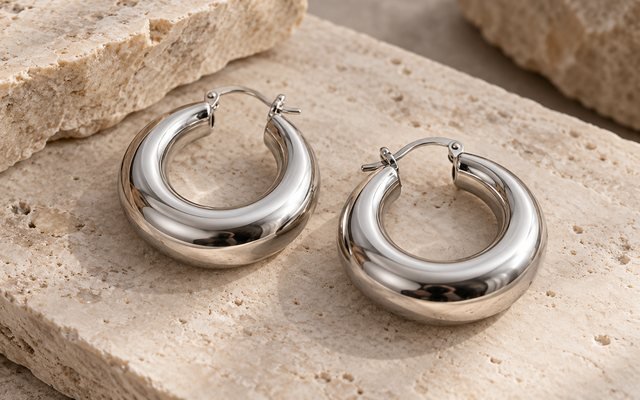
A large hollow hoop can feel light and comfortable while presenting different risks from a solid component. Low mass is not itself a defect. The purchasing question is whether the approved hollow construction remains consistent, clean, functional and appropriate for its intended use.
Confirm the construction before comparing quotations
Ask whether the decorative body is hollow, solid or assembled from several parts. Request a drawing or construction explanation that identifies seams, openings, attachment points and any inaccessible cavity. Specify the declared material of the post, pin and closure separately. A photograph rarely establishes these details.
Compare quotations only after both suppliers are addressing the same construction. Hollow and solid versions may differ in mass, tooling, handling and repair options. Those differences do not prove that either option is superior. Connect the selected design to the CAD review process, then confirm the actual prototype. A rendered cutaway is a design explanation, not evidence that a production batch matches the drawing.

Look beyond the polished outer face
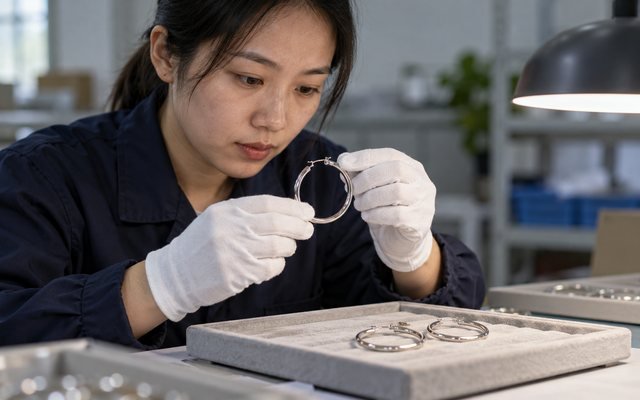
Inspect accessible seam locations, attachments, surface depressions and areas around closures. Agree viewing conditions and reference examples so inspectors can distinguish an intentional joint from an unacceptable opening or finish irregularity. Handle the product consistently; uncontrolled squeezing can create damage rather than reveal an existing problem.
The TWI visual inspection guidance describes visual inspection’s role. Its industrial guidance does not prescribe jewelry acceptance limits. Your plan should identify surfaces that can be examined and characteristics that cannot be confirmed visually. If wall thickness or internal assembly matters, ask a competent technical party which method is suitable for that geometry. Do not use total mass as a substitute for local wall-thickness evidence.
Review seams and internal spaces separately
A smooth seam can still require investigation when functional evidence is missing. Conversely, a visible seam may be an intentional feature of the approved design. Request the joining method and the evidence needed for the particular connection instead of accepting a universal promise that every join is strong.
The TWI weld testing overview outlines several weld assessment methods. Very small jewelry components require a method chosen for their dimensions and material. Also ask how manufacturing residues are removed and whether internal spaces can retain liquid during care or use. Where relevant, review drying and storage instructions. Do not claim waterproof performance from the appearance of a closed shell; finished-assembly evidence is needed for that claim.
Define handling and packing around the chosen geometry
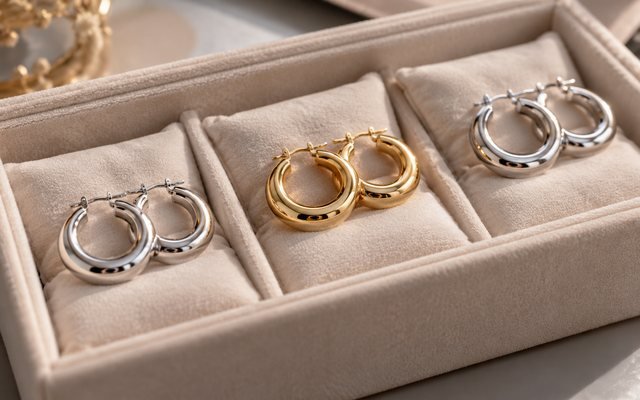
Assess representative samples using agreed handling conditions. Thin decorative forms may need support during inspection and separation during transport. Set criteria for dents, distortion, closure operation and visible seam changes. Avoid inventing a universal squeeze force or drop height that has not been evaluated for the design.
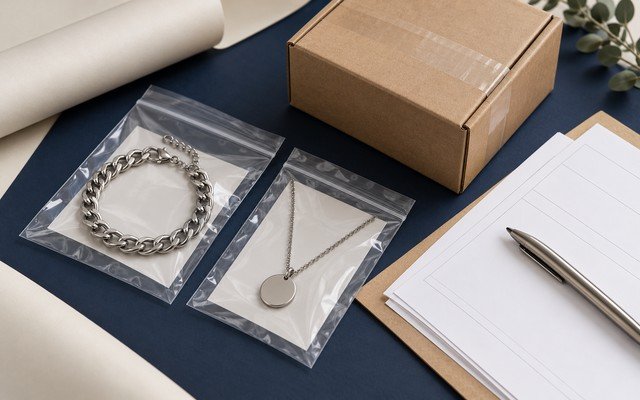
Use the wholesale packaging guide to plan contact separation and support. The GIA jewelry care guidance provides general care context; final instructions must suit the complete jewelry assembly. Keep the appearance reference, construction drawing and handling evidence linked. If the buyer changes the body diameter or attachment location, review whether the earlier checks still cover the revised item.
Buyer’s working record
Use these fields as a starting point and adapt the acceptance basis to the actual product. This is a proposed purchasing worksheet, not evidence of a completed Yleryler inspection.
| Field | Record | Decision purpose |
|---|---|---|
| Body | Hollow or solid; drawings and revision | Avoid like-for-unlike comparison |
| Seams | Location, appearance and joining method | Separate visual and functional evidence |
| Interior | Cleaning, openings and drying concerns | Review actual construction |
| Packing | Support, separation and movement | Protect the approved geometry |
Illustrative purchasing example
Hypothetical example: a hollow hoop passes the approved appearance check but develops a visible depression when packed under a tight insert. Investigate the packing pressure and handling sequence before concluding that a solid hoop is required. Review the revised packaging with representative finished pieces.
Approval and follow-up workflow
Approve hollow products as complete assemblies. Record outer dimensions, individual mass where useful, seam references, closure behavior and packaging. Identify any destructive checks in advance and retain the results against the actual sample revision. Production approval should answer the selected construction questions; it should not depend on a polished hero photograph or an unsupported claim of universal durability.
Frequently asked questions
Does hollow mean poor quality?
No. Suitability depends on the design, manufacture, use conditions and agreed checks.
Can weight prove uniform wall thickness?
No. Overall mass cannot establish local wall thickness or internal join quality.
Should every hollow piece receive destructive testing?
Not necessarily. Choose checks and sampling according to the product and agreed risk assessment.
Discuss your wholesale jewelry requirements
Planning a stainless steel jewelry order? Send Yleryler your drawings or SKU references, complete assembly details, intended quantities, finish, destination market and the requirements discussed above. Include the approved sample revision and any independent inspection or testing expectations so the project can be reviewed before a quotation is prepared. Contact Yleryler with your product brief.
Prepared by the Yleryler editorial team for B2B purchasing. Technical links checked on 13 October 2026. Linked sources support background concepts; the worksheets and hypothetical examples are proposed workflows. They do not certify a Yleryler product or replace product-specific assessment.