A magnet test cannot uniquely identify a stainless steel jewelry grade because magnetic response depends on the steel family, structure and processing, not only its grade label. Use material records and suitable chemical analysis when grade verification matters. Even composition testing must be selected carefully when the distinction depends on elements the instrument cannot measure.
Why does one stainless steel jewelry component attract a magnet while another barely reacts? That observation is a prompt for investigation, not a final grade decision. A buyer who accepts or rejects material using magnet strength alone can make the wrong decision in either direction.
1. Understand what the magnet observes
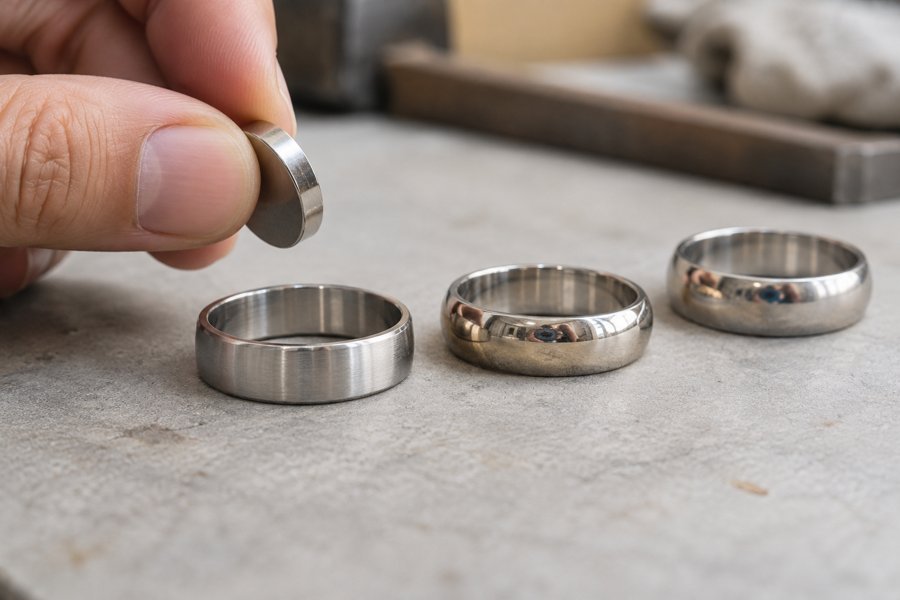
Magnetic attraction describes a physical response. It does not report the full elemental composition, the condition of the material or the identity of every part in an assembly. A clasp can also contain a component whose response differs from the decorative body.
worldstainless’s physical-properties guidance distinguishes stainless steel families by magnetic behavior. Processing can also change the response of some steels. A simple pass-or-fail magnet rule therefore loses important information.
2. Ask for the material identity chain
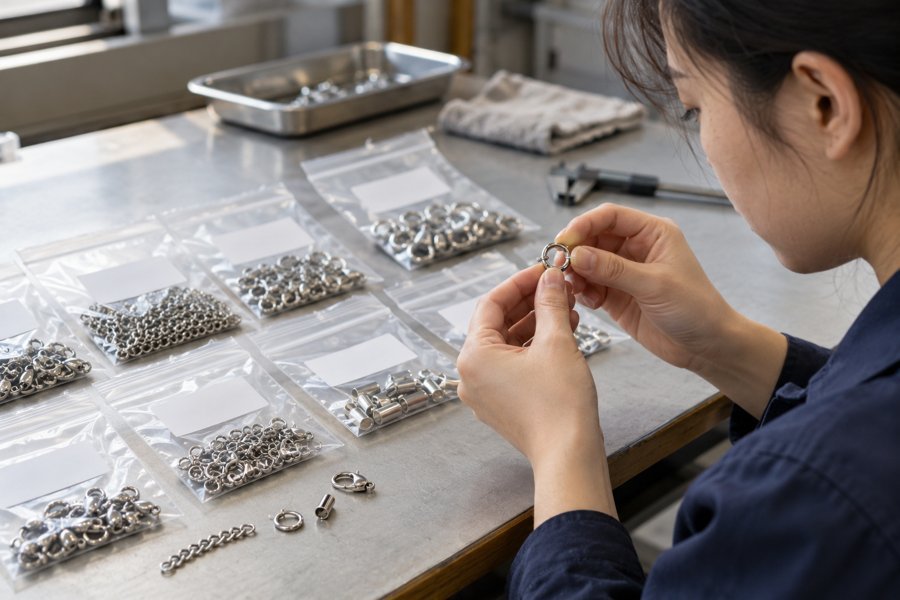
Request the declared material for each relevant component, the supporting source record and the relationship between that record and the finished batch. A mill document is useful only if the supplier can explain how it connects to the material actually used.
Create component references in the reorder specification record. If grade verification is essential to the purchase, include the evidence and acceptance requirements in the order rather than requesting them after production.
3. Choose analysis for the specific distinction
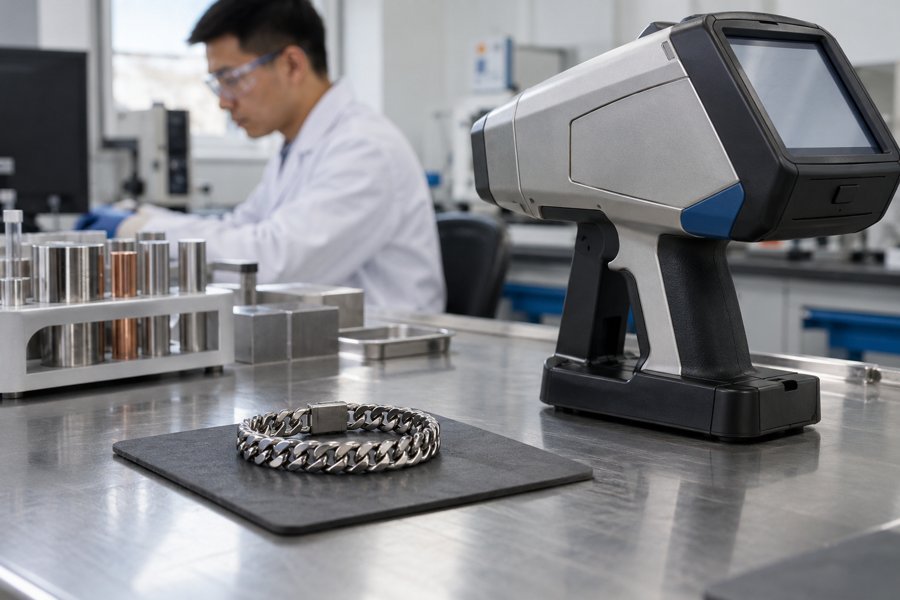
Ask the laboratory which elements need measurement and how it will handle the component geometry and surface coating. Some instruments are useful for alloy-family screening but cannot resolve every grade distinction. Confirm capability before interpreting the result.
Thermo Fisher’s comparison of XRF, LIBS and OES explains a relevant limitation: handheld XRF does not measure the carbon needed to distinguish certain low-carbon grade variants. Do not turn a partial elemental reading into a broader conclusion.
A coated surface can also complicate measurement of the underlying material. Ask how the method separates coating and substrate contributions, whether sample preparation is needed and what uncertainty or limitations will appear in the report.
4. Keep material identity separate from product acceptance
Knowing the alloy does not automatically prove coating durability, nickel release, clasp function or comfort. Define those acceptance questions independently. A supplier cannot replace a missing functional check by showing a favorable material reading.
For suitable independent work, use the ILAC accreditation directory and review the relevant laboratory scope. Connect results to the approved finished sample and batch rather than to an untracked loose piece.
Buyer’s working checklist
| Evidence | Useful for | Important limitation |
|---|---|---|
| Magnet response | Quick observation and sorting questions | No unique grade identification |
| Material source record | Declared composition and supply reference | Needs linkage to the actual batch |
| Suitable chemical analysis | Measured elemental composition | Capability depends on method and elements |
| Finished-product checks | Function, appearance and specified testing | Material identity alone is insufficient |
Practical buying example
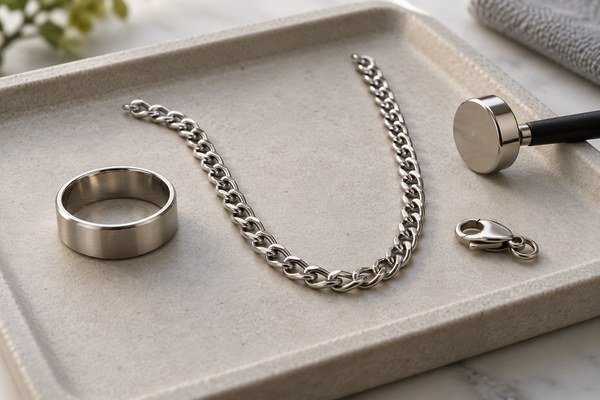
Illustrative investigation: a buyer notices attraction near a necklace closure but not along the chain. Record the observation by component, check the construction and decide whether composition testing is needed. Do not label the entire necklace incorrect solely from that one observation.
Frequently asked questions
Does magnetic attraction mean the item is not stainless steel?
No. Some stainless steel families are magnetic, and processing can influence the response.
Does no attraction prove a particular grade?
No. A magnet does not provide a unique chemical fingerprint.
Can handheld XRF resolve every stainless steel grade?
No. Confirm the elements needed and the instrument’s capabilities with the laboratory.
Discuss your sourcing requirements
Tell Yleryler which material requirements are essential and what verification your purchasing program needs. Agree component-level documentation and appropriate analysis before accepting the final specification. Contact Yleryler about your project.
Prepared for B2B sourcing and product development. External sources support the linked technical background; the purchasing checklists and examples are suggested workflows. Confirm the current requirements and methods for your destination market with the responsible laboratory or adviser.