Stainless steel jewelry can scratch because corrosion resistance and resistance to mechanical marking are different properties. A PVD finish can change surface behavior, but it does not make every finished assembly scratch-proof. Investigate the contact surface, coating system, handling and packaging before deciding whether a mark is a defect, use damage or contamination.
Why can a polished bracelet show a line after handling even when its finish is described as durable? Durable is an incomplete purchasing requirement unless it identifies the behavior and conditions being assessed. A buyer needs to distinguish the visible finding from the cause before asking the supplier for a correction.
1. Describe the mark before diagnosing it
Record where the line appears, when it was first noticed and whether it changes after the approved cleaning routine. Photograph the area under repeatable lighting. Do not apply abrasive polishing before documenting the finding; the attempted cleaning could alter the original evidence.
Distinguish removable transfer or residue from a persistent indentation, texture change or loss of surface color. These observations do not identify the mechanism conclusively, but they help the supplier and laboratory choose the next investigation instead of guessing from a compressed photograph.
2. Separate corrosion behavior from contact damage
The worldstainless properties overview provides background on material behavior. For a finished jewelry item, surface treatment, geometry and contact conditions must also be considered. A material’s corrosion reputation is not a scratch-proof specification.
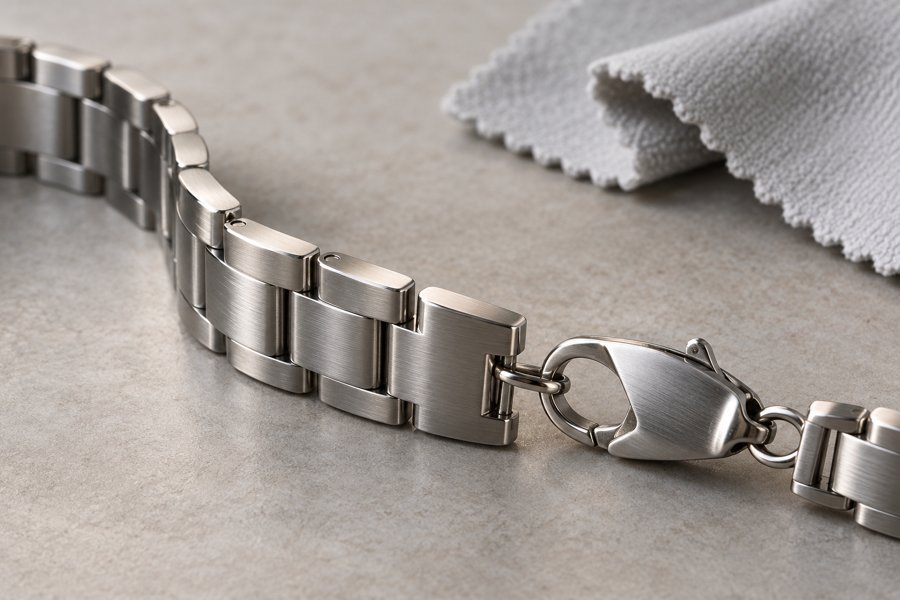
Inspect places where parts touch during movement: adjacent bracelet links, pendant backs, clasps and display-card contact points. A highly reflective finish can also make light marks visually prominent. Define the assessment distance and lighting before deciding what the buyer will accept.
3. Review packing and handling first
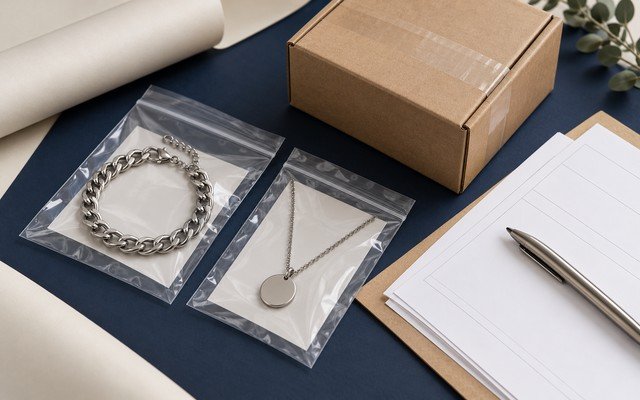
Separate polished surfaces that rub during shipping or storage. Check whether the closure can contact the pendant, whether chain supports remain in place and whether jewelry is moved loose during inspection. The corrective action may be a packing or handling change rather than a different base material.
Use the wholesale packaging guide and the receiving inspection process to identify where evidence should be collected. Photograph goods before unpacking and preserve relevant packing when damage is suspected.
4. Define appropriate cleaning and surface assessment
The worldstainless cleaning handbook gives material-level background, but finished coatings and decorative components require their own compatibility review. Do not recommend aggressive cleaners or abrasive polishing solely because the substrate is stainless steel.
Ask whether the coating system was assessed for the intended contact and care conditions. Keep coating thickness, adhesion, abrasion response and appearance as separate evidence fields. One favorable measurement cannot settle all four questions.
5. Use precise commercial language
Agree acceptable and unacceptable reference examples before production. If the brand uses scratch-resistant wording, define the evidence and use conditions supporting it. Avoid a universal scratch-proof promise based on a material name or deposition process.
The FTC Jewelry Guides address accurate representations of jewelry characteristics, including durability. Review claims together with packaging, care instructions and the finished-product evidence rather than approving each in isolation.
Buyer’s working checklist
| Observed finding | First evidence to collect | Possible next question |
|---|---|---|
| Line after receiving | Unpacking photos and contact location | Did packed surfaces rub? |
| Change after cleaning | Cleaner, cloth and before/after images | Was the routine compatible? |
| Repeated mark at a joint | Movement video and contact surfaces | Does geometry create contact damage? |
| Local color loss | Marked area and coating record | Does the finish need technical analysis? |
Practical buying example
Illustrative investigation: a pendant arrives with a curved mark matching the clasp’s shape. Compare the packed positions and contact surfaces before changing the coating specification. If the packing allowed contact, revise separation and assess the revised system. Do not declare a cause until the evidence supports it.
Frequently asked questions
Does PVD mean scratch-proof?
No. Assess the complete finish system and intended conditions instead of treating the process name as a guarantee.
Should buyers reject every visible line?
Use agreed appearance criteria and reference examples. The decision depends on the finding and specification.
Can ordinary polishing restore every coated piece?
No. Abrasive polishing can change a coating. Obtain product-specific care or repair guidance first.
How coating properties differ: thickness, adhesion, hardness and abrasion
These are separate characteristics, and none by itself guarantees a scratch-free finished product. Coating thickness describes deposited layer dimension; adhesion concerns coating-to-substrate bonding; hardness measures response under a defined indentation or scratch method; abrasion testing assesses change during specified repeated contact. Require the actual method, tested specimen, result and acceptance criterion before comparing suppliers.
Why polished, brushed and sandblasted jewelry show marks differently
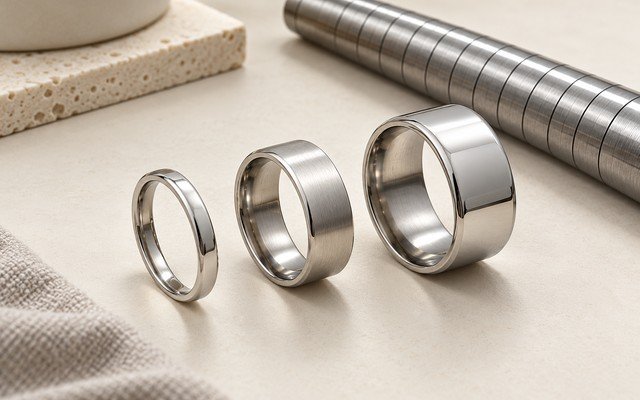
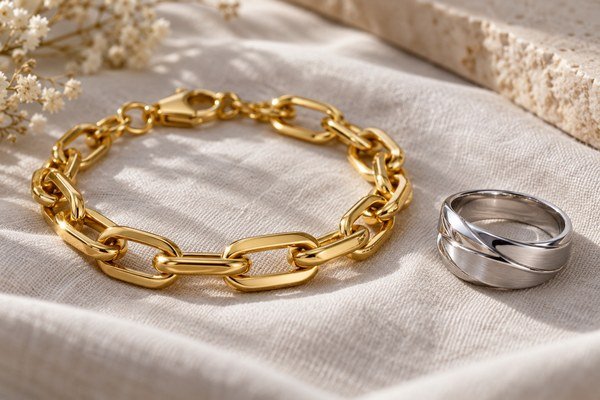
A mirror-polished surface reflects light sharply, making fine marks more conspicuous under some lighting. Brushed finishes have directional texture that can conceal or accentuate marks depending on direction. Sandblasted finishes scatter reflections, but contact can polish local high spots and create visible shiny patches. These appearance tendencies do not establish which finish has greater intrinsic abrasion resistance.
How to reduce PVD jewelry scratches during shipping
Prevent direct contact between finished pieces and hard components. Keep clasps, pendants and chain ends separated with coating-compatible packaging; immobilize goods without excessive compression; check rubbing points after vibration or handling trials; and compare arrival photos with approved pre-dispatch photos. Agree scratch acceptance examples and inspection lighting before production.
Relevant product finishes for buyer review
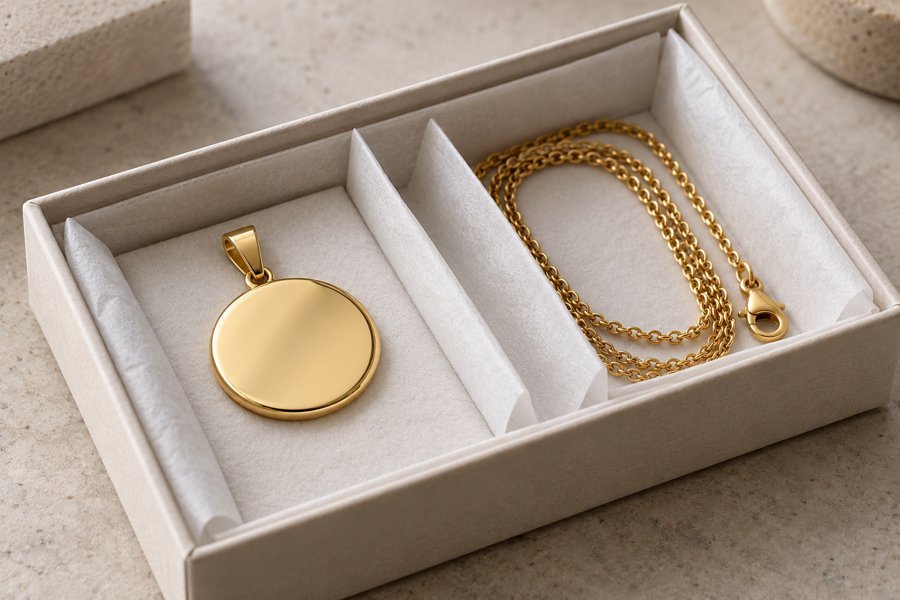
Compare the appearance and packaging needs of a gold-tone dog tag necklace and a black-finish dog tag necklace. Their listings are product examples, not published scratch-test outcomes. For a quotation, send your finish target, intended use, artwork, packaging configuration, order volume and required surface-test criteria.
Scratch identification: buyer’s evidence and decision table
A visible line alone does not identify the failure mechanism. Use controlled photographs and the approved inspection criteria before assigning responsibility; do not rub, polish or chemically clean a suspected defect before documenting it.
| Observed condition | Evidence to collect | Interpretation / next check |
|---|---|---|
| Possible surface residue or metal transfer | Before/after photographs using a supplier-approved nonabrasive method | A removable mark is not necessarily loss of coating |
| Visible groove or indentation | Raking-light photograph, location, contact history | Determine whether substrate deformation or coating damage occurred |
| Local color change | Reference comparison and marked location | Assess transfer, wear-through or coating variation; do not diagnose by color alone |
| Flaking or lifting edge | Magnified image and lot history | Request adhesion/coating investigation rather than routine polishing |
| Repeated marks at clasp or joint | Movement video and component contact map | Evaluate contact geometry and separation during packing |
Define the visual inspection conditions before production
Agree a written appearance standard covering clean product condition, lighting type and direction, examination distance, viewing time, surfaces included, approved limit samples and who can authorize deviations. There is no universal viewing distance or defect-count threshold for every jewelry style. Record stricter controls for high-visibility polished faces or critical parts when needed; ensure the acceptance basis is documented before the lot is inspected.
Production controls that address scratch risk
Polishing: check substrate finishing and surface preparation before coating. Cleaning: control residues and handling before deposition. PVD preparation and deposition: follow the approved process and verify relevant appearance, adhesion and thickness requirements independently. Final handling and packaging: prevent metal-to-metal contact, separate clasps and chain ends, and check finished assemblies after simulated handling when appropriate. These are recommended control points, not a claim that every batch has completed a named test.
Which test measures which coating property?
| Property | Typical evidence | What it cannot establish alone |
|---|---|---|
| Thickness | Suitable layer-specific thickness method | Real-world lifetime or scratch immunity |
| Adhesion | Specified adhesion test on a relevant specimen | Abrasion resistance in use |
| Hardness | Method- and load-defined hardness result | Finished-assembly scratch performance |
| Abrasion / wear | Specified contact, load, cycles and endpoint | Performance under every customer’s conditions |
Discuss your sourcing requirements
For a wholesale jewelry project or finish investigation, send clear photographs, affected SKUs, finish targets, sample or order revision, quantities, inspection criteria, packaging configuration and when the marks were discovered. Request a documented review of likely contact points and suitable corrective actions rather than assuming a universal scratch-proof coating. Discuss your jewelry finish and QC requirements with Yleryler.
Prepared for B2B sourcing and product development. External sources support the linked technical background; the purchasing checklists and examples are suggested workflows. Confirm the current requirements and methods for your destination market with the responsible laboratory or adviser.