A charm and a bracelet can share a catalogue page without being mechanically compatible. The attachment loop may not clear the link, a charm can face sideways, or the assembly method may differ from what a retailer expects. For a modular wholesale range, compatibility is a product-system decision. Define the receiving bracelet and the attachment route before multiplying the number of charm designs.
Review charm bracelets as complete assemblies. Specify the receiving link, charm loop opening, attachment hardware, assembly method and intended orientation. Test each approved combination rather than assuming that matching color or material makes all charms interchangeable.
Define the receiving bracelet first
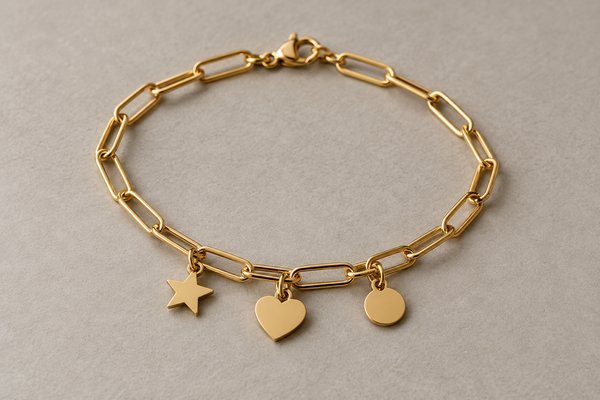
Select the bracelet construction and the links intended to receive charms. Record their shape, usable opening and relevant dimensions. A broad paperclip link, fine cable link and dedicated charm carrier create different attachment conditions. Do not evaluate the charm loop in isolation from the part it must connect to.
Use Stainless Steel Charm Bracelet as a starting point for your charm assortment. Confirm each charm loop, receiving link and attachment method on the actual assembly before expanding the range.
For background on measurement records, see NIST guidance on metrological traceability. Identify the usable opening and the mating component when documenting charm attachment compatibility.
Ask whether the bracelet is intended for factory assembly, retailer assembly or customer interchange. That decision changes the useful attachment method. Keep the expectation explicit in the brief. A closed attachment suitable for a factory-built product should not automatically be marketed as a quick consumer-swapping system. The actual mechanism must support the intended description.
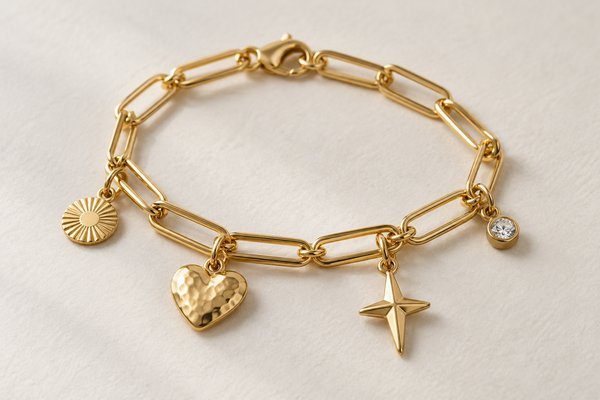
Check the loop and attachment hardware
Identify which component passes through which opening. A jump ring, clasp-style connector and integral charm loop can each introduce another dimension. Inspect the complete route using the finished components, including coating and edge treatment. A drawing helps define the target, while the sample confirms that assembly works as intended.
Review the attachment closure against the agreed method. If a connector is opened during assembly, ask who performs that step and how the closed condition is checked. Avoid inventing a strength claim from a successful manual pull. If load performance matters to your product brief, discuss a controlled method and appropriate criteria with the manufacturer.
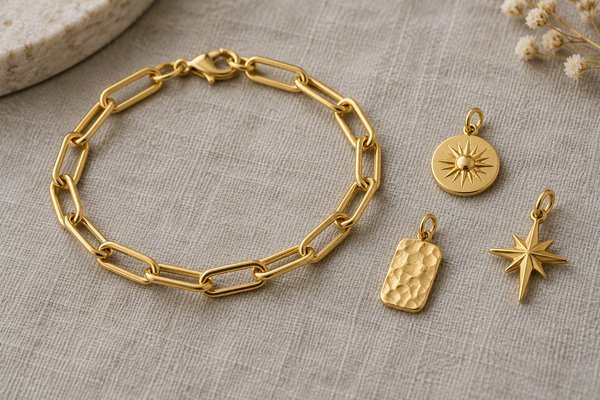
Observe orientation and movement
Place the assembled bracelet in its natural wearing position and watch how each charm faces. A front-facing charm in a flat photograph may rotate during movement. Decide whether rotation is acceptable or whether the design needs a different loop position. Review the back finish if it is likely to become visible.
Compare charms together as well as individually. Closely spaced pieces can overlap, catch or obscure one another. The combination may need different spacing or a simpler assortment. Use a physical trial to resolve the arrangement instead of relying on a digital layout. Record approved combinations so future additions are reviewed against the same receiving system.
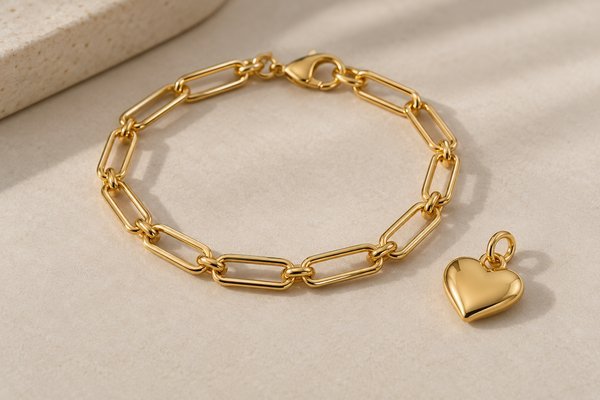
Build a compatibility record for the range
Use a matrix with charm SKUs along one axis and bracelet variants along the other. Mark only combinations that have been reviewed. Keep the relevant loop, link and connector references beside the matrix. A blank cell should mean unreviewed rather than assumed compatible.
For new charms, apply the same checks before adding them to the range. If a bracelet component changes, reassess affected combinations. Include the assembly responsibility and supplied hardware in the purchase order. This gives retailers a clear answer about what is included and prevents a visually coordinated range from becoming a collection of incompatible parts.
A compatibility matrix for the opening range
| Combination | Review required | Record outcome |
|---|---|---|
| Core bracelet + star charm | Passage, closure and orientation | Approved only after assembly review |
| Core bracelet + heart charm | Movement and interaction with nearby links | Record any catching point |
| Core bracelet + round charm | Connector and visible back finish | Identify the reviewed hardware |
These rows describe an example review plan, not verified compatibility. Mark untested combinations as unreviewed. Have another reviewer recreate the assembly with the written instructions and supplied parts before extending the range.
What should trigger a fresh compatibility review?
Recheck affected combinations when the receiving link, connector, coating route or charm-loop position changes. A replacement connector that looks similar may have a different usable opening. Keep untested combinations out of the retailer compatibility list until the finished assembly has been reviewed.
Use the reorder specification record to track component revisions, and the sample approval checklist to identify the combinations released for production.
Charm compatibility release fields
Use these fields in your purchase order or sample review. Numerical values and IDs below are illustrative, not live product specifications, test results or confirmed commercial terms. Agree measurement methods, tolerances and acceptance criteria for your actual design.
| Field | Record or illustrative example | Verification before release |
|---|---|---|
| Receiving component | Bracelet link ID and usable internal opening | Measure the actual passage rather than judging the outside link size |
| Connector | Connector ID, wire thickness and closing method | Check access, closure and movement on each intended combination |
| Released combination | Bracelet revision + charm revision + connector ID | Record orientation, interference findings and approver; list untested pairs as unreviewed |
Buyer FAQ
Are all paperclip bracelets compatible with the same charms?
No. Link geometry, loop size and attachment hardware vary. Review each intended combination.
Does matching metal color establish compatibility?
It establishes a visual relationship only. Mechanical fit, closure and orientation need separate checks on the finished assembly.
When must a charm combination be reviewed again?
Recheck affected combinations when a bracelet link, charm loop, connector or finish changes. Record the released component IDs together rather than approving the charm in isolation.
Plan your wholesale project
Explore our wholesale stainless steel bracelet collection to compare relevant product designs before preparing your specifications and quotation request.
For the next approval step, see our chain clasp selection guide. Request a charm-and-bracelet fit review with loop dimensions, link thickness, charm weight and target MOQ.
Images in this article are illustrative product concepts; they are not photographs of an approved sample or inspection evidence.