A pendant looks centered in its front-view drawing, but the physical sample tilts or frequently shows its reverse. Buyers sometimes respond by changing the chain before checking the suspension point and the pendant’s three-dimensional construction. A front drawing alone cannot explain how a necklace will hang.
Custom pendant balance should be reviewed on the actual chain by assessing the suspension point, bail geometry, weight distribution, reverse profile and normal movement. Define the desired resting orientation and compare finished samples. Do not promise that a pendant will never rotate during wear.
1. Describe the desired hanging position
State whether the design should usually face forward, rest at an angle or move freely. Include front, side and reverse references. A sculptural pendant may intentionally rotate, while a logo pendant may need a clearer preferred presentation.
Identify the position at which length will be measured and the extension setting used in the trial. Necklace length affects where the pendant rests, so compare samples under consistent conditions. Keep the chain and pendant references attached to the review record.
2. Review the suspension point in three dimensions
Check where the bail or connector sits relative to the pendant body. Its front-to-back position can matter as much as its left-to-right position. Ask for a side view when the attachment is concealed behind the decorative face.
For a pendant development discussion, Women’s Silver Stainless Steel Teardrop Pendant Necklace provides a teardrop design reference. Review the selected chain, bail position and finished sample together before agreeing how it should hang.
Record the usable bail opening and contact surfaces. A chain that sits tightly against an internal corner may restrict movement differently from a looser connection. Confirm the actual chain end can pass through the opening before evaluating how the assembled necklace hangs.
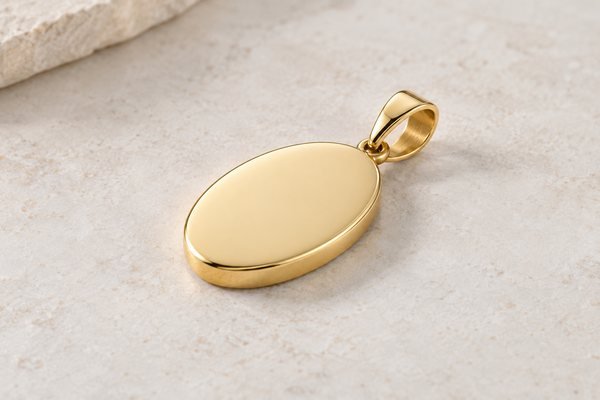
3. Look at the reverse and weight distribution
Review cavities, stone seats, raised back details and edges that can touch clothing or skin. Uneven thickness or an offset decorative feature can influence the resting position. Treat these as design factors to investigate rather than assigning a cause from one photograph.
Check that any proposed correction preserves the intended appearance and comfort. Moving a bail, changing the reverse or adding thickness can alter tooling, weight and cost. Request an updated drawing and physical sample when the change affects the complete assembly.
See NIST guidance on metrological traceability for measurement background. Record the actual sample mass and trial setup when comparing pendant balance; these records do not establish a universal wearing outcome.
4. Compare samples under a repeatable trial
Use the same chain, length setting and normal movement sequence for comparison. Record the resting view, any visible tilt and situations in which the pendant turns. Photographs and short videos are useful because movement can be hard to describe in a message.
A practical wearing trial is not a universal performance guarantee. Different clothing, body shapes and movements can change presentation. Approve a defined observation rather than an absolute claim such as always front-facing or never flips.
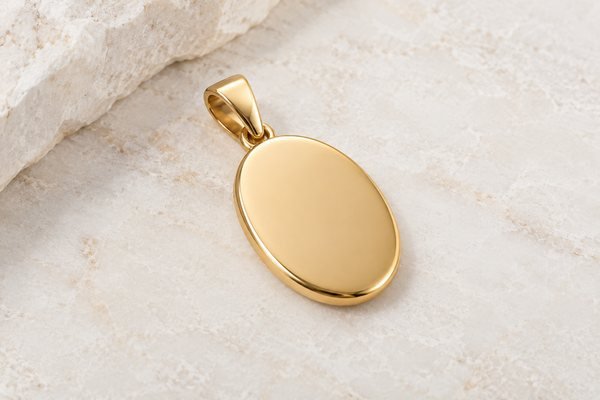
5. Keep balance approval in the product record
Copy the table below into your development file and add the sample revision and reviewer. Record the proposed change and the result of the repeat trial. This keeps aesthetic preference connected to the physical configuration that produced it.
Check the production sample against the approved bail position, reverse profile and chain reference. If any component changes during a reorder, review the effect on orientation. Avoid carrying forward an old front-view photograph as the only approval evidence.
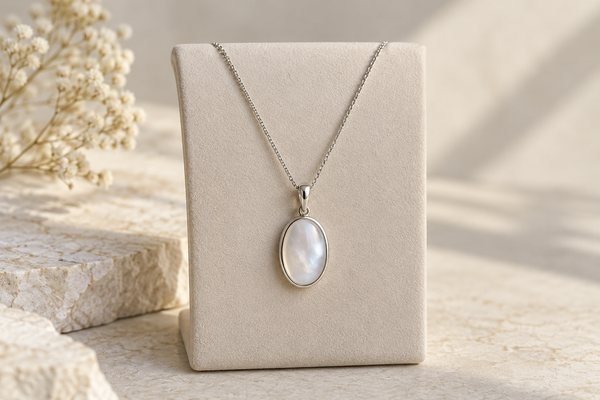
Copyable buyer review template
Copy these headings into your working spreadsheet. Add the product SKU, sample revision, date, reviewer, findings, responsible person and final decision. Example fields are planning aids; acceptance criteria must be agreed for your actual product.
| Trial field | Record | Compare against |
|---|---|---|
| Assembly | Pendant and chain reference | Approved configuration |
| Suspension | Bail position and contact geometry | Drawing/side view |
| Resting view | Front, side and observed tilt | Desired presentation |
| Movement | Normal trial sequence and observations | Reviewed physical sample |
Practical example — hypothetical
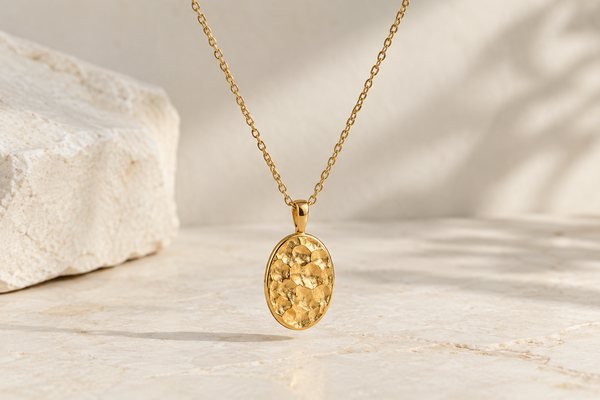
A hypothetical brand develops an oval pendant with a bail attached behind the top edge. During a consistent chain trial, the sample leans forward more than intended. The team reviews the side drawing, proposes a revised suspension position and tests the next physical sample on the same chain. The decision records the improved resting view without claiming that rotation has been eliminated. This is an illustrative design example, not a verified client case.
Pendant balance trial record
Use these fields in your purchase order or sample review. Numerical values and IDs below are illustrative, not live product specifications, test results or confirmed commercial terms. Agree measurement methods, tolerances and acceptance criteria for your actual design.
| Field | Record or illustrative example | Verification before release |
|---|---|---|
| Geometry | PD-01 / drawing B / front, side and reverse | Record bail position, usable opening, pendant dimensions and finished mass |
| Controlled trial | One identified chain at one extender setting | Compare initial resting position and position after the same handling sequence |
| Revision | Change one suspension or reverse feature at a time | Keep photos and observations for both versions before approving the finished assembly |
Frequently asked questions
Can a pendant be guaranteed never to flip?
An absolute guarantee is usually unsuitable because movement, clothing and wearer conditions vary. Define the preferred resting orientation and review it using a consistent trial on the intended chain.
Does a larger bail automatically improve balance?
No. Opening size, attachment position and contact geometry all matter. A larger opening may change movement without solving an offset suspension point. Review the complete assembly.
Should balance be checked before or after finishing?
Review early prototypes to identify geometry issues, then confirm the finished sample. Final components, stones and surface treatment may change the assembly or its contact behavior.
Related buyer resources
pendant bail sizing · necklace length planning · jewelry product photo brief
Discuss your wholesale project with Yleryler
Send Yleryler front, side and reverse references, pendant dimensions, stone details, intended chain, preferred hanging position, finish and quantity. Include a short video of any existing sample issue so we can review the design before quoting revisions.
Request a Product-Specific Wholesale Quote
Images are AI-generated product concepts for educational illustration, not photographs of actual Yleryler stock, tooling or customer orders. Dimensions and product performance must be reviewed using the actual approved sample.