Layered necklace photographs can hide the work needed to make a collection usable. Different pendants shift the visual drop, extensions change the wearing position, and customers do not all have the same proportions. For a wholesale buyer, choosing three catalogue lengths is only the beginning. The more useful task is to define how each necklace is measured and how the proposed combinations behave when worn together.
Plan wholesale necklace lengths using one documented measurement method, a clear extension range and a physical layering review. Compare pendant drop and chain interaction as well as nominal length, and present combinations as examples rather than universal fit promises.
Make the length measurement reproducible
Ask whether the stated length includes the clasp and how the extension is reported. A chain described as a base length plus extension should have both values defined. Record the endpoints used for measurement and avoid mixing methods across suppliers. If a pendant is fixed in line with the chain, clarify whether it contributes to the stated total.
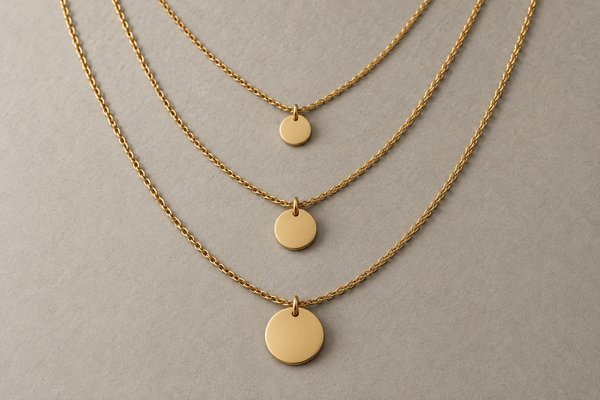
For a layered collection, review Women’s Gold Stainless Steel Layered Necklace and record the finished strand lengths, extension setting and pendant drop of the exact sample selected.
For measurement background, consult NIST guidance on metrological traceability. Define the necklace endpoints and extension setting consistently across the specification and line sheet.
Keep the specification easy for receiving staff to follow. A photograph of the laid-out necklace with the measurement endpoints identified can help. Use a physical reference for the approved design, and review any connector changes that could alter the usable length. A small difference at each end can matter when the range is built around closely spaced layers.
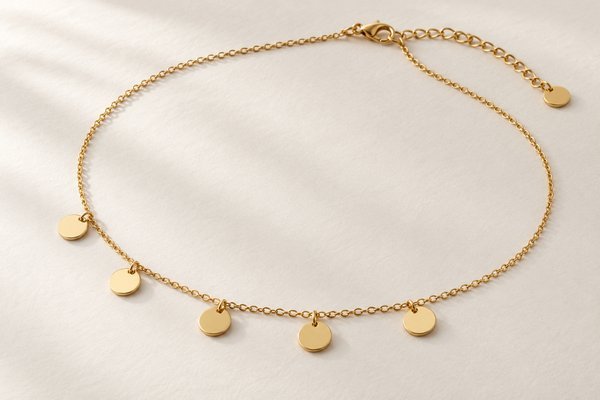
Plan the visual spacing between layers
Choose the role of each necklace: close accent, middle focal piece or longer drop. Consider pendant dimensions and weight alongside chain length. Two necklaces with different nominal lengths may still place their pendants close together, particularly when the shapes are tall or one piece has an integrated front section.
Review the combination on more than one suitable display or fit reference. Document the setup rather than treating one mannequin image as evidence for every wearer. The goal is a deliberate relationship between layers. If a pendant obscures another piece, decide whether to change the chain, pendant scale or suggested pairing. Make that decision before producing the full range.
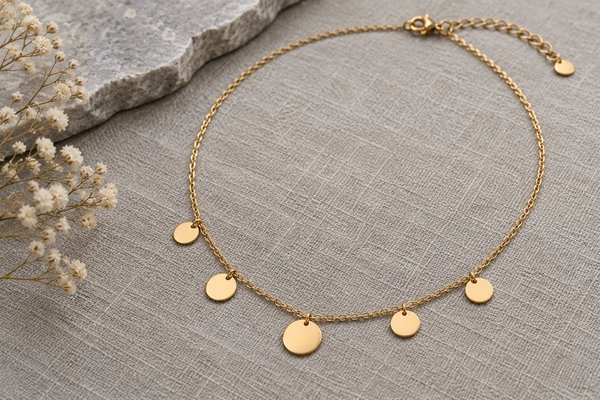
Observe chain interaction during movement
Lay the pieces together and then review their behavior through a reasonable wearing trial. Different chain structures and pendant weights can interact differently. No necklace system can be assumed to remain untangled in every situation. Use the review to identify obvious catching points or combinations that behave poorly under the conditions you examined.
Inspect the extension and end fittings too. A long extension can become part of the visible arrangement or interfere with another closure. If the pieces are sold as a set, approve the set together. If retailers choose individual pieces, provide the combinations you have actually reviewed and avoid implying that any item in the catalogue is compatible with every other one.
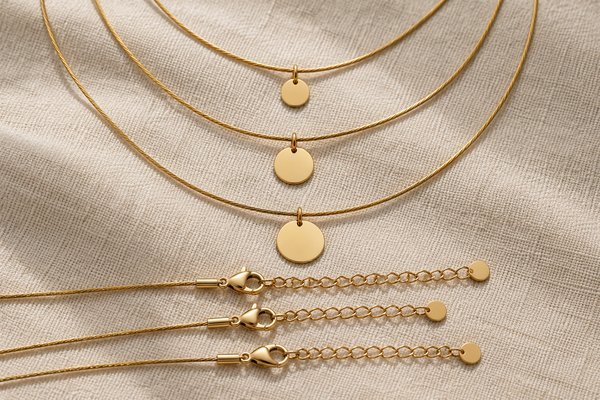
Turn the review into useful product information
Show the base length, extension and pendant dimensions clearly in the wholesale line sheet. Keep the same definitions in the website listing and packaging information. A picture can demonstrate a styling idea, while the measurements let a retailer understand what is being ordered. Do not rely on a model photograph as the only fit information.
Photograph each piece individually as well as in the proposed layered combination. Record the lengths used in that image. For repeat orders, review changes to chains, pendants and connectors together because they can alter the visible spacing. This keeps your styling guidance tied to the product rather than to an old promotional photograph.
A practical buyer exercise
Create a pairing sheet with one row per proposed combination. Record the measured base lengths, extension settings, pendant heights and observations from the review. Ask a merchandising colleague to recreate the arrangement using only that sheet.
If the result differs, improve the instructions or simplify the combination. This exercise often reveals missing details, such as whether the photograph used the shortest or longest extension setting. Keep the reviewed pairing as a suggested styling option and retain separate measurements for every SKU so retailers can plan other combinations responsibly.
Necklace length measurement record
| Measurement | Record consistently |
|---|---|
| Base length | Defined endpoints, including or excluding clasp as agreed |
| Extension | Usable added length and the selected fastening point |
| Pendant | Separate pendant drop from chain length |
| Layering | Actual samples, selected settings and movement observations |
Keep measurements in millimeters or centimeters with the unit stated. A styled photograph cannot establish chain length. Review pendant and chain fit before comparing layers, and use consistent product views for the line sheet.
Necklace length listing example
Use these fields in your purchase order or sample review. Numerical values and IDs below are illustrative, not live product specifications, test results or confirmed commercial terms. Agree measurement methods, tolerances and acceptance criteria for your actual design.
| Field | Record or illustrative example | Verification before release |
|---|---|---|
| Base | 45 cm — illustrative | Measure between agreed endpoints at the shortest fastening setting |
| Extension | 5 cm — illustrative; listed separately | Confirm usable added length and the actual fastening positions |
| Pendant drop | Measured separately from chain length | Photograph the complete sample at the listed setting; assess layering on actual pieces |
Buyer FAQ
Is a fixed gap between lengths enough for layering?
No. Pendant height, chain construction, extension setting and wearer proportions also affect the visible spacing.
Should the extension be included in the headline length?
Use a clear, consistent convention. State the base and extension separately when that makes the usable range easier to understand.
Does 45 cm + 5 cm describe a 50 cm fixed necklace?
No. It describes a nominal base and extension in an illustrative specification. Confirm the measurement endpoints and usable fastening positions before listing the product.
Plan your wholesale project
Explore our stainless steel necklace collection to compare relevant product designs before preparing your specifications and quotation request.
For the next approval step, see our stainless steel chain clasp selection guide. Submit your necklace length plan with chain measurements, pendant sizes, extension options and quantities by SKU.
Images in this article are illustrative product concepts; they are not photographs of an approved sample or inspection evidence.