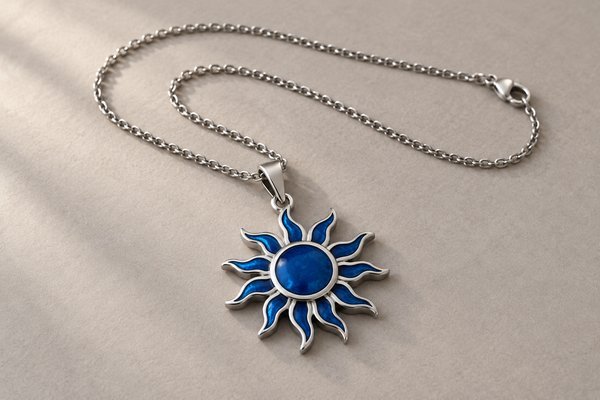
Enamel gives a jewelry collection a recognizable color story, but a small pendant contains several decisions that a flat logo cannot show. The recess depth, metal border and fill appearance influence the result. Buyers who approve only the shade may later disagree with the supplier about edges or coverage. A better sample review connects the artwork, the metal form and the finished color treatment.
Approve custom enamel jewelry by reviewing the actual production method, recess geometry, fill level, border cleanliness, color reference and finished assembly. A digital color value helps communication but should be supported by a physical finished sample.
Check 1: Confirm the proposed color process
Ask the supplier what material and process are proposed for the colored area. The word enamel can be used broadly in commercial conversations, so make the actual route explicit in the quotation and specification. If the supplier suggests an alternative color treatment, request a comparison that addresses your design requirements.
Explore Women’s Gold Stainless Steel Oval Enamel Pendant Necklace when discussing an enamel pendant project. Specify the color reference, fill boundary and approved sample rather than treating the catalogue image as final color approval.
Keep appearance and performance claims separate. A glossy colored area does not by itself establish resistance to impact, chemicals or wear. If you intend to make a performance claim, discuss a suitable evaluation method for the exact finished product. For an initial design review, identify the proposed process and focus on whether the sample demonstrates the agreed visual result.
For EU-bound enamel jewelry, review applicable chemical restrictions separately from visual sample approval. Use the official ECHA REACH restricted-substances list as a starting point and ask a qualified laboratory to confirm the requirements for the exact materials and finished product. An approved color sample is not evidence of chemical compliance.
Check 2: Review recesses and metal borders
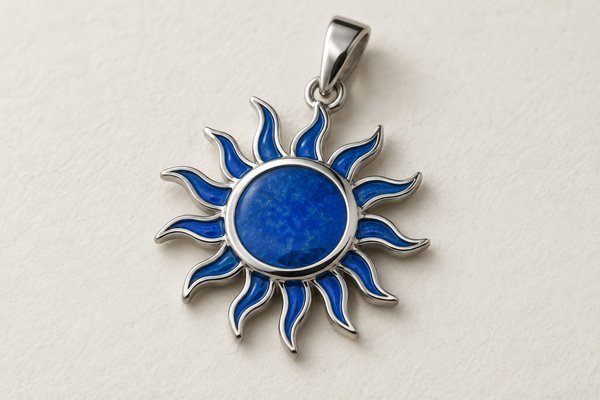
Resolve narrow borders and small color areas during the jewelry CAD design review, before tooling and sample approval.
The metal frame controls where the color sits. Look at the width and continuity of the border, especially around narrow points and small internal shapes. A design with fine detail may need adjustment to produce a clean result. Ask the manufacturer to explain which elements are feasible instead of insisting that a tiny pendant reproduce every pixel of a large artwork.
Check the front at normal viewing distance, then inspect the edge transitions more closely. Record whether the desired surface is recessed, approximately flush or another agreed appearance. Do not use those words without a sample reference. Two fills can share the same shade while looking different because their relationship to the metal border changes.
Check 3: Approve color under consistent conditions
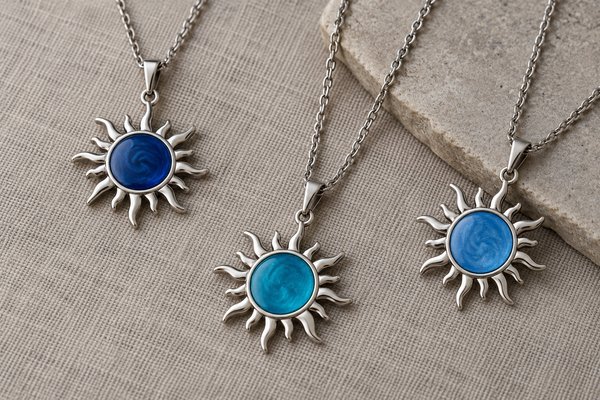
Start with the brand's color target, then request a physical sample made through the proposed route. Compare it under consistent lighting and note the approved reference identity. Screen settings, camera exposure and surrounding metal reflections can all affect what a photograph communicates. Avoid approving a subtle shade difference through a compressed message image alone.
If the collection includes several colors, label each sample individually. Specify where each color belongs and how the supplier will prevent mix-ups during assembly and packing. Keep color names aligned with SKU records. A marketing label such as ocean blue can be retained, but it should point to a controlled sample rather than being the only instruction given to production.
Check 4: Inspect the complete pendant, not only the colored front
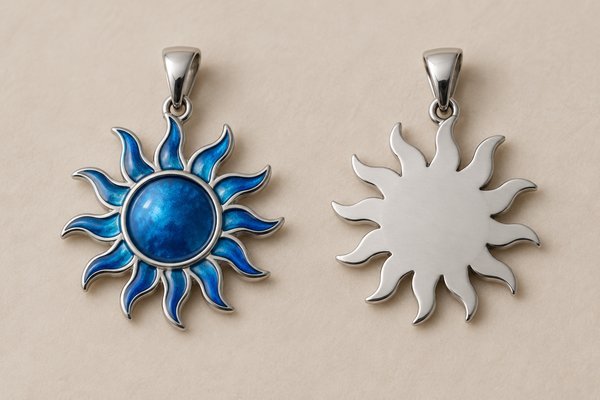
Look for unwanted material outside the intended colored area, inconsistent coverage and obvious visual defects against the agreed sample. Review the back, bail and chain assembly as well. A clean front does not resolve a sharp rear edge or a pendant that hangs incorrectly. Include the color process within the overall sample approval record.
Agree how rejected pieces will be handled and whether any rework requires another inspection. Do not assume a repaired colored area will match the original appearance. For repeat orders, retain a protected reference and compare new samples through the same setup. If the process or color material changes, review the result before treating it as an equivalent substitution.
Enamel jewelry sample approval checklist
| Check | Review | Approval record |
|---|---|---|
| Color | Compare under the same lighting. | Retained reference sample and color ID. |
| Fill | Check coverage, bubbles and intended surface level. | Approved profile; marked defect examples. |
| Borders | Inspect overflow, gaps and fine details. | Close-up photos with accepted boundaries. |
| Assembly | Review back edges, bail fit and hanging position. | Complete assembled sample. |
| Rework | Reinspect repaired areas before acceptance. | Written accept, revise or reject decision. |
These are buyer-defined checkpoints, not universal defect limits. Agree the viewing conditions and acceptable variation with the supplier, then include them in your jewelry sample approval record.
A practical buyer exercise
Prepare a sample comparison page with four photographs: full front, border detail, side profile and back. Beside each image, record one specific acceptance point. Add the color reference identity and proposed production method at the top.
Ask the supplier to confirm that the quoted bulk route matches the sample route. If your artwork has small stars, letters or narrow lines, review those areas explicitly. A short list of clear decisions is more useful than a broad request for perfect enamel and makes the approval record easier for a different inspection team to follow.
Custom enamel jewelry sample review FAQ
What should I do if an enamel sample has bubbles or overflow?
Mark the affected areas and compare them with the agreed acceptance criteria. Request correction and a reviewed replacement sample before approving bulk production.
Does approving the enamel color approve the complete jewelry?
No. Record color, fill, metal finish and assembly decisions separately. Release production only after all required checks are accepted.
Is a digital color code enough?
It provides a starting target, but the finished material and process affect appearance. Approve a physical sample under consistent conditions.
Can the smallest artwork details always be preserved?
Not necessarily. Review the pendant scale and manufacturing constraints with the supplier before approving the final artwork.
Document a physical enamel sample before production
For the approved enamel colorway, request unfiltered photographs of the complete piece, the enamel-to-metal boundary at an angle and the reverse or attachment area. Compare the actual sample beside an agreed color reference under repeatable neutral lighting. Record any pinholes, uneven fill, overflow, visible gaps or border inconsistencies by location and SKU. If a defect is corrected, approve a new sample rather than only an edited photograph. Reference images in this guide remain conceptual until actual, identified sample photos are supplied.
Plan your wholesale project
For the next approval step, see our custom jewelry logo artwork guide. Request an enamel jewelry sample review with color references, drawings, logo artwork, expected quantity and target-market requirements.
Images in this article are illustrative product concepts; they are not photographs of an approved sample or inspection evidence.