Many buyers ask me for the lowest price first. That creates weak quotes. I see delays, wrong samples, and costs that could have been avoided.
I choose an OEM jewelry manufacturer by checking how well the factory turns product ideas into clear specifications, accurate quotations, correct samples, stable mass production, suitable packaging, and export-ready delivery. Price matters, but clear requirements make the price useful.
<p style="margin:0 0 20px;line-height:1.85;">For a broader framework for controlling product versions, consult <a href="https://www.iso.org/standard/70400.html" target="_blank" rel="noopener">ISO 10007 configuration-management guidance</a>. Connect the OEM specification, sample approval and later change requests in one project record.</p>
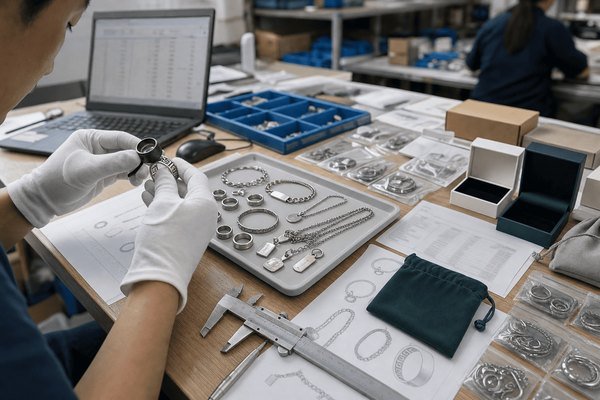
I want to make the buying side less confusing. I speak with Amazon sellers, wholesalers, supermarket buyers, brand developers, and sourcing managers every day. I often see the same problem.
The buyer has a good product idea, but the inquiry is too short. The factory cannot judge the real cost, the sample cannot match the final product, and the delivery plan becomes weak.
<p style="margin:0 0 20px;line-height:1.85;">For a named-design project, <a href="https://yleryler.com/product/r020-custom-name-stainless-steel-signet-ring/">Custom Name Stainless Steel Signet Ring</a> provides a starting product reference. Give the manufacturer the exact text, artwork, dimensions and sample approval requirements for the proposed OEM version.</p>
I will explain how I look at OEM jewelry cooperation from the sales and quotation side, so you can ask better questions and reduce risk before you place an order. Please keep reading.
Why Should I Not Start With “What Is Your Lowest Price?”?
Price feels urgent when I am sourcing. The problem is simple. A price without product details is often only a guess.
I can give a useful quotation only when I understand the material, size, finish, logo, packaging, quantity, market, shipping plan, and deadline. A photo alone is not enough for stable OEM jewelry pricing.
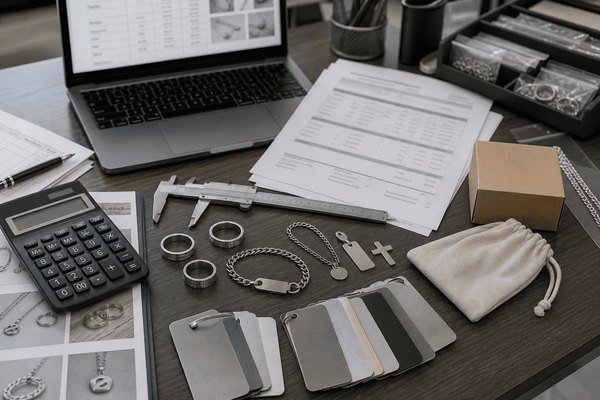
I need the full product picture before I quote
In daily inquiries, I often see buyers send one product photo and ask, “How much?” I understand why they do this. They want to compare factories fast. Still, I cannot confirm a reliable stainless steel jewelry price from a photo only. The same ring, bracelet, necklace, or pendant can have different costs when the steel grade, thickness, plating color, logo process, polishing level, packaging, and quantity change.
I do not treat quotation as a quick number. I treat it as a plan for sampling and mass production. If the details are unclear, the first quote may look attractive, but it may not include the real packaging, surface finish, carton requirement, labeling, or export cost. Then the buyer feels the factory changed the price. In many cases, the problem started with missing details.
| What I ask first | Why I ask it |
|---|---|
| Reference image or drawing | I need to understand the style and structure. |
| Material and surface finish | I need to know the base cost and process route. |
| Size and thickness | I need to estimate weight and production method. |
| Logo method | I need to price laser, engraving, enamel, or printing correctly. |
| Quantity and SKU count | I need to check MOQ, unit cost, and production setup. |
| Packaging | I need to include pouch, card, box, tag, carton, or barcode needs. |
| Deadline and shipping method | I need to judge if the schedule is realistic. |
I always tell buyers that a clear quote protects both sides. It helps me avoid underquoting. It helps the buyer avoid surprise costs. It also helps the sample match the bulk order later.
What Is The Difference Between OEM, ODM, And Private Label Jewelry?
Many buyers use these words as if they mean the same thing. I have seen this create wrong expectations before sampling even starts.
I see OEM, ODM, and private label as three cooperation models. OEM usually follows a buyer-approved specification, ODM involves product development or adaptation, and private label emphasizes branding and packaging. Define the agreed scope in writing.
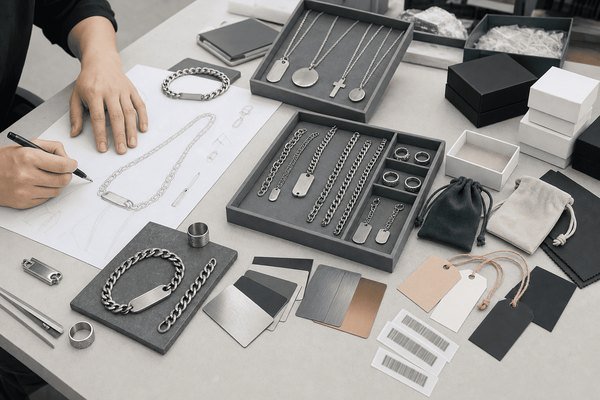
I separate the model before I discuss cost
When a buyer asks for an OEM jewelry manufacturer, I first try to confirm the real cooperation model. The buyer may want a fully custom stainless steel bracelet from a drawing. That is OEM.
The buyer may want to choose existing styles and adjust plating, logo, and packaging. That is closer to ODM or wholesale customization.
The buyer may already like a product and only needs logo cards, tags, pouches, cartons, and barcode labels. That is private label.
This matters because each model changes the quotation path. It also changes the sample time, MOQ, mold or tooling discussion, and production risk. If I treat a private label project like a full OEM project, I may make the project sound harder than it is. If I treat a full custom design like a simple private label job, I may miss important development cost and timeline issues.
| Cooperation model | What I usually confirm | What can change |
|---|---|---|
| OEM | Buyer design, exact size, structure, logo, finish, packaging | Development time, sampling cost, MOQ, tooling need |
| ODM | Factory style, buyer adjustments, color, size, logo | Sample speed, MOQ by style, stock or production plan |
| Private label | Product selection, packaging, tags, labels, carton marks | Packaging cost, barcode work, brand presentation, lead time |
I prefer to define the model early. It keeps the conversation practical. It also helps the buyer decide if the project is a fast test order, a new brand launch, or a long-term product line.
What Details Should I Prepare Before Asking For A Quotation?
A short inquiry may feel efficient. I know the buyer is busy. Still, missing details usually return later as delays.
I prepare a better OEM jewelry inquiry by listing design references, material, size, color, logo method, surface finish, packaging, order quantity, target market, certification needs, shipping method, and deadline.
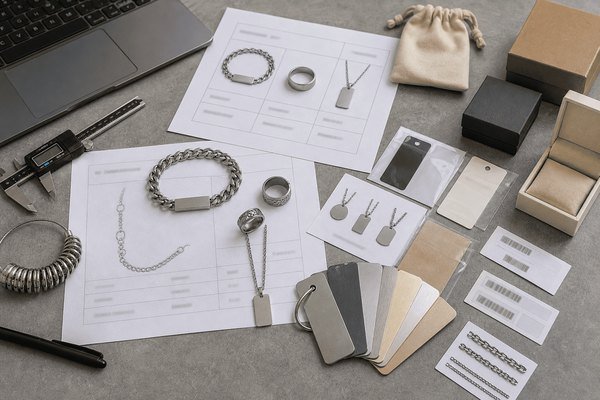
I turn an idea into a quotable specification
I do not need a perfect technical file from every buyer. Many buyers start with only a product image, a mood board, or a competitor link. That is normal.
My job is to help turn those ideas into a quotable specification. Still, the buyer must confirm the key points step by step. Without confirmation, the sample may move in the wrong direction.
For stainless steel jewelry, small choices matter. A brushed finish is not the same as a mirror polish. Laser logo is not the same as deep engraving. A simple OPP bag is not the same as a jewelry card with barcode, pouch, gift box, and outer carton marks. A 500-piece test order is not planned in the same way as repeated monthly orders.
| Detail I request | Example answer I can work with |
|---|---|
| Product type | Men’s stainless steel ring, 8 mm width |
| Material | Stainless steel, with gold plating |
| Finish | Polished outside, brushed inside |
| Logo | Laser logo on inner side |
| Color | Gold, silver, black mixed |
| Size range | US 7 to US 13 |
| Packaging | One piece on card, one card in OPP bag |
| Quantity | 1,000 pieces total, mixed sizes |
| Market | Amazon US, barcode needed |
| Deadline | Need goods ready before launch date |
I like this kind of inquiry because I can check feasibility faster. I can also point out missing points before sampling. This makes the first sample more useful. It also makes the final production plan easier to control.
How Should I Think About MOQ For OEM Jewelry Orders?
MOQ can look like a number to fight over. I understand that feeling. But a very low MOQ can also create weak production planning.
I discuss MOQ together with SKU count, test order size, reorder rhythm, packaging, target market, and long-term plan. MOQ should support the business model, not only lower the first payment.
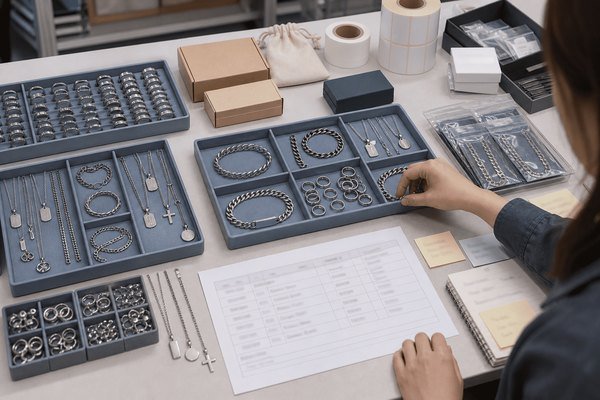
I connect MOQ with the buyer’s sales plan
When buyers ask me for the minimum order quantity, I do not see only one number. I ask what the buyer wants to learn from the first order.
An Amazon seller may need a test batch to check listing performance. A wholesaler may need enough mixed styles for customer selection. A supermarket buyer may need steady supply and carton-level planning. A brand developer may need a smaller launch order with stronger packaging.
MOQ depends on production setup, material sourcing, color process, packaging purchase, and SKU spread. If the buyer wants many styles, many sizes, many colors, and custom packaging, the MOQ pressure becomes higher. If the buyer focuses on fewer SKUs, the project is easier to plan. This is why I often suggest buyers reduce the first SKU list, test the main styles, and build the range after the first sales data comes back.
| Buyer type I meet | MOQ discussion I usually suggest |
|---|---|
| Amazon seller | Start with focused SKUs, clear barcode and packaging plan. |
| Wholesaler | Balance variety with repeatable core styles. |
| Supermarket buyer | Confirm carton packing, delivery batch, and replenishment timing. |
| Brand developer | Match MOQ with launch budget and packaging quality. |
| Event organizer | Confirm deadline first, then check if quantity and logo can match it. |
I do not promise that every MOQ can be reduced. I also do not think a high MOQ is always bad. A practical MOQ should fit production, cost, and sales rhythm. I believe this discussion is more useful than asking for the lowest number only.
How Can I Avoid Sample And Mass Production Problems?
A sample can look good on the desk. The real risk appears when the bulk order must match the approved sample.
I avoid sample and mass production problems by confirming the sample standard, written specifications, logo position, color, packaging, inspection points, approval process, and acceptable tolerance before bulk production starts.
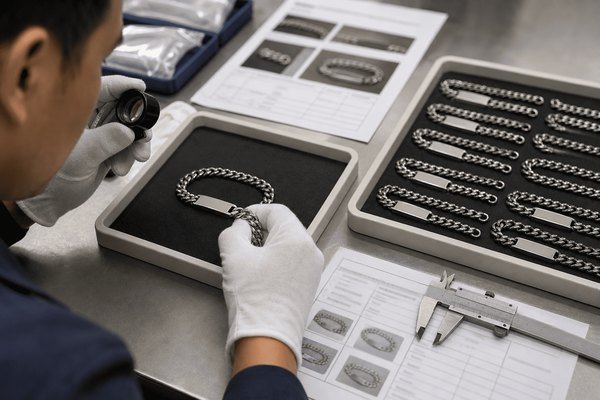
I use the sample as a control point, not a decoration
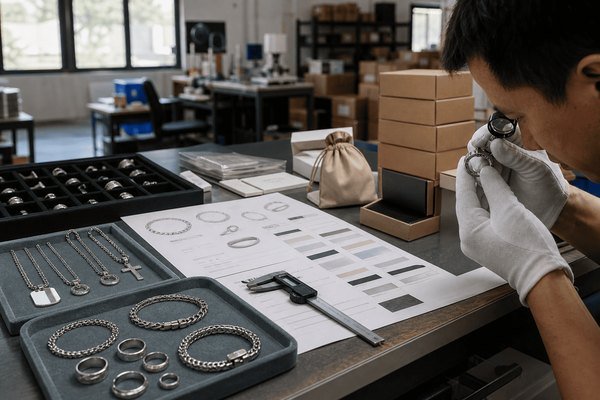
I see sampling as one of the most important parts of OEM jewelry cooperation. A sample is not only a product for taking photos. It is the reference for bulk production. If the buyer approves a sample without checking the size, color, logo, surface, weight feeling, and packaging, the later inspection becomes difficult.
I usually ask the buyer to confirm the approved sample by photo, video, and written notes. If the buyer receives the physical sample, I ask for clear feedback.
I need to know if the plating color is accepted, if the logo depth is right, if the edge feels smooth, if the clasp works well, and if the packaging matches the brand look. These points may sound small, but they become big when thousands of pieces are produced.
| Sample point I confirm | Why I confirm it before bulk |
|---|---|
| Size and fit | I need to prevent customer complaints. |
| Logo position | I need the bulk pieces to match brand needs. |
| Surface finish | I need to control the final visual effect. |
| Color tone | I need to reduce mismatch between sample and bulk. |
| Packaging layout | I need to avoid repacking work. |
| Carton mark | I need to support warehouse and export handling. |
| Approval record | I need both sides to share the same standard. |
I also remind buyers that changes after sample approval can affect cost and lead time. If the buyer changes the logo method, plating color, or packaging after approval, the old quote may no longer apply. I prefer to solve this before production starts.
How Do Packaging, Labeling, And Export Handling Affect The Real Supplier Choice?
Many buyers focus on the jewelry only. I understand why. But the product is not ready for sale until packaging and export details are clear.
I choose a stronger OEM jewelry partner by checking if the factory can support packaging, tags, barcode labels, carton marks, inspection, export documents, and delivery coordination without making the process unclear.
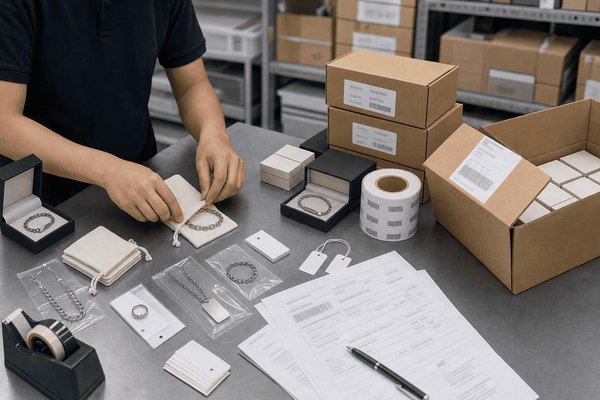
I treat packaging as part of the product
For B2B jewelry orders, packaging is not a small extra. It affects cost, lead time, customer experience, warehouse handling, and retail readiness.
An Amazon seller may need current marketplace-specific FNSKU, SKU and carton-label rules. A supermarket buyer may need hang cards, price labels, inner boxes, and carton marks. A brand developer may need custom pouches, gift boxes, thank-you cards, and brand tags. A non-profit or event buyer may need simple packaging but strict delivery timing.
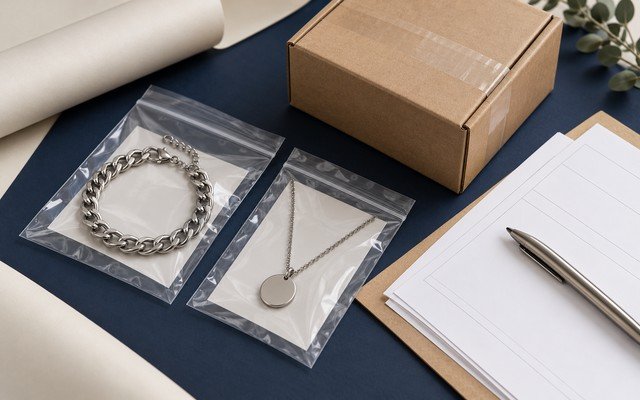
I ask about packaging early because it changes the quotation. A stainless steel pendant with an OPP bag is one cost. The same pendant with a custom card, pouch, barcode sticker, instruction card, and export carton is another cost. If the buyer only asks for the jewelry unit price, the later packaging cost may feel hidden. I do not want that situation.
| Packaging or export item | What I ask the buyer to confirm |
|---|---|
| Jewelry card | Size, paper quality, printing, hole type |
| Pouch or box | Material, logo, color, quantity |
| Barcode label | Label content, size, placement |
| Hang tag | Brand design, string type, attachment point |
| Carton mark | Shipping mark, SKU, quantity, gross weight |
| Shipping method | Air, sea, express, or buyer’s forwarder |
| Documents | Invoice, packing list, certificate request if needed |
I am not a certification body, and I do not pretend to be one. If a buyer needs SGS-related documents, eco-friendly packaging options, or special market labeling, I ask for the exact requirement early. Then I check what can be supported. This keeps the conversation honest and easier to manage.
How Do I Know If An OEM Jewelry Manufacturer Fits My Business Type?
A factory can be good and still be wrong for my project. Supplier fit matters as much as unit price.
I check supplier fit by matching the factory’s product range, customization ability, MOQ, sampling workflow, packaging support, export experience, response speed, and cooperation style with my sales channel.
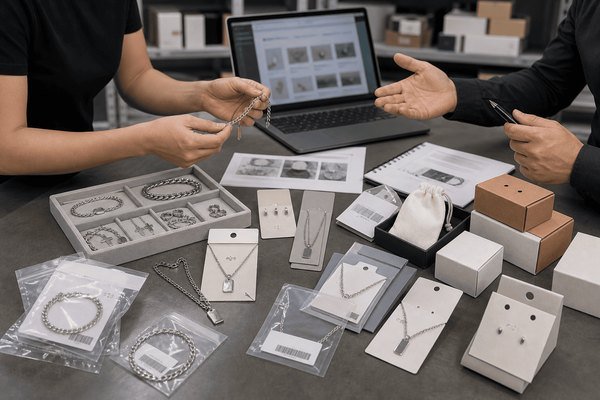
I match the factory with the buyer’s channel
I have learned that different buyers need different support. An Amazon seller often needs clear SKU control, fast communication, photo-friendly samples, barcode labels, and stable replenishment. A wholesaler may need broad style selection, flexible mixed orders, and consistent finish across repeat orders. A supermarket buyer may care more about packing rules, delivery windows, carton marks, and long-term supply stability. A brand developer may care about product development, private branding, and packaging detail.
When I speak with a new buyer, I do not only ask what product they want. I ask how they will sell it. This helps me understand risk.
If the buyer sells on Amazon, a small labeling mistake can create warehouse trouble. If the buyer sells to retail stores, poor card packaging can make the product look cheaper than planned. If the buyer sells wholesale, clear assortment records, consistent finishes and replenishment planning become important. Match the supplier's scope to the actual selling channel and record which services are included.
OEM jewelry buyer FAQ
What must be ready before an order-ready OEM quote?
Provide the drawing or sample reference, quantities by variant, material and finish, logo, packing and destination. Use the quote comparison worksheet to separate development charges from recurring product costs.
Does approving a sample authorize every later change?
No. Identify the accepted revision and stage, and review affected decisions when a component or process changes. Keep the sample approval record with the order.
How should repeat production be controlled?
Keep the drawing, accepted sample, component references and packing instructions together. Confirm proposed substitutions before production using the reorder specification guide.
Prepare an OEM project brief
Send Yleryler your product reference and order requirements with quantities, finish, logo, packing and target destination. A defined brief supports a clearer feasibility review and quotation.
<section data-yleryler-review="2026-10-buyer-spec"><h2 style="margin:38px 0 16px;line-height:1.35;">OEM production handoff worksheet</h2><p style="margin:0 0 20px;line-height:1.85;">Use these fields in your purchase order or sample review. Numerical values and IDs below are illustrative, not live product specifications, test results or confirmed commercial terms. Agree measurement methods, tolerances and acceptance criteria for your actual design.</p><div style="overflow-x:auto;margin:26px 0;"><table style="width:100%;min-width:540px;border-collapse:collapse;font-size:15px;line-height:1.65;"><thead><tr><th style="padding:12px;text-align:left;vertical-align:top;border:1px solid #ddd;background:#f2f5f5;" scope="col">Field</th><th style="padding:12px;text-align:left;vertical-align:top;border:1px solid #ddd;background:#f2f5f5;" scope="col">Record or illustrative example</th><th style="padding:12px;text-align:left;vertical-align:top;border:1px solid #ddd;background:#f2f5f5;" scope="col">Verification before release</th></tr></thead><tbody><tr><td style="padding:12px;text-align:left;vertical-align:top;border:1px solid #ddd;">Buyer specification</td><td style="padding:12px;text-align:left;vertical-align:top;border:1px solid #ddd;">Controlled drawings and approved artwork</td><td style="padding:12px;text-align:left;vertical-align:top;border:1px solid #ddd;">Mark critical dimensions, function requirements and measurement methods</td></tr><tr><td style="padding:12px;text-align:left;vertical-align:top;border:1px solid #ddd;">Supplier feasibility</td><td style="padding:12px;text-align:left;vertical-align:top;border:1px solid #ddd;">Confirmed process, component and tooling proposal</td><td style="padding:12px;text-align:left;vertical-align:top;border:1px solid #ddd;">Resolve open construction questions before development authorization</td></tr><tr><td style="padding:12px;text-align:left;vertical-align:top;border:1px solid #ddd;">Release package</td><td style="padding:12px;text-align:left;vertical-align:top;border:1px solid #ddd;">Sample, drawing, packing and inspection references</td><td style="padding:12px;text-align:left;vertical-align:top;border:1px solid #ddd;">Confirm changes and quantities by variant in writing</td></tr></tbody></table></div></section>
<p style="margin:0 0 20px;line-height:1.85;"><small>Images are educational concepts, not evidence of actual factory operations, stock or inspected customer orders. Confirm specifications and performance using identified finished samples and applicable documents.</small></p>