A small opening order feels safer than a large commitment. Yet low MOQ jewelry orders can still waste money if the assortment is random and the buyer has no clear decision to make afterward. The point of a pilot is to learn something useful before expanding.
Define one main buying question, keep the product version and selling conditions clear, and record both demand and quality outcomes. A small order reduces exposure, but it does not automatically create reliable evidence or remove the need for approval.
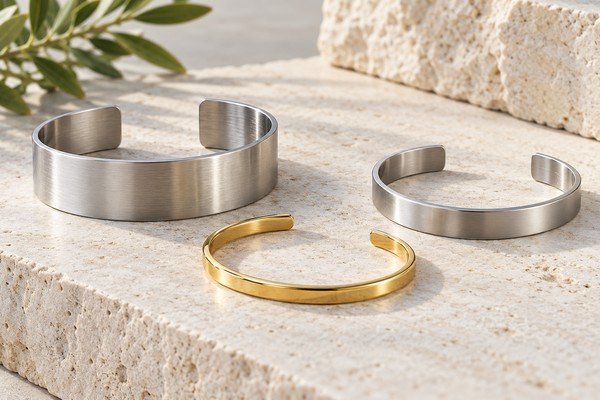
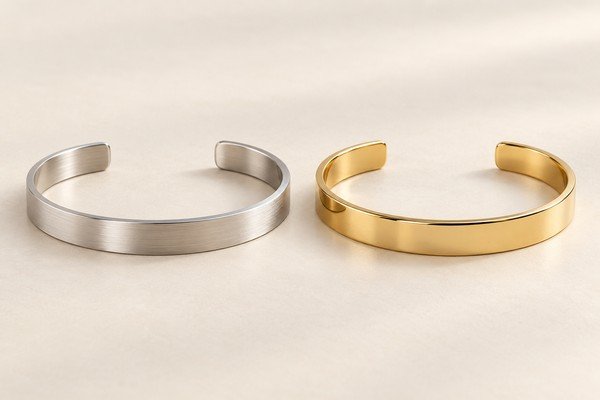
Consider a retailer testing a stainless steel cuff collection. The useful question might be whether customers prefer a brushed silver finish or a polished gold tone at the planned price. That is more focused than asking whether “jewelry sells.”
Begin with the decision after the trial
Write the possible next actions before selecting products: reorder, revise, expand or stop. Identify what evidence would support each action. Without this step, a few enthusiastic comments can become the justification for a much larger purchase.
Keep the decision practical. You may want to learn which finish deserves replenishment, whether packaging is understandable or whether a particular width suits the intended buyer. A single pilot does not need to answer every development question.
A focused pilot using a design such as Stainless Steel Stud Earrings can keep the opening assortment easier to track. Confirm the actual quotation, variant quantities and sample requirements before ordering.
For broader positioning work, our guide to starting a jewelry brand can help narrow the collection before you request samples.
For brand-identity planning, see WIPO trademark guidance. Keep any brand-name or logo review separate from the pilot’s product-performance and demand questions.
Choose a controlled assortment
Limit the number of variables that change at once. If finish is the question, keep cuff geometry, packaging and selling price as consistent as possible. If each finish also has a different shape and price, the results will be harder to interpret.
Ask the supplier how minimums apply to designs, colors and sizes. A quoted minimum for an existing stock item may not apply to a modified product, custom surface treatment or printed box.
Record which goods are available stock and which require production. Similar photographs do not establish that products share materials, dimensions or repeat-order availability.
Approve the product before testing demand
Customers should receive the agreed product, even during a trial. Check dimensions, finish, edges, function and packing. Resolve known problems before using sales feedback to judge the collection.
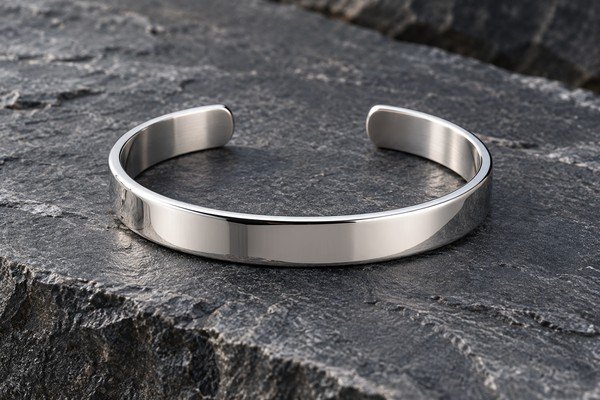
For cuffs, define the intended fit and any permitted adjustment. Do not assume that every open bracelet can be bent repeatedly without consequence. The design and instructions should support the intended use.
Keep the accepted sample and specification revision. If a component or finish changes during the trial, identify the new version separately. Otherwise, feedback from different products will become mixed together.
Record the conditions of the trial
Track the selling dates, available quantity, price, promotions and channel. A launch to existing followers at a heavy discount is different from normal-price sales to new customers.
Count stockouts and unavailable variants. A silver cuff that sells out quickly may have had fewer units available than the gold version. Keep actual counts alongside percentages so the buying team can see the scale of the evidence.
| Trial record | Why it matters |
|---|---|
| Units available and sold | Shows the basis of sell-through |
| Price and promotion | Explains the selling conditions |
| Returns and exchanges | Separates demand from fit or quality issues |
| Customer comments | Reveals reasons behind the numbers |
Separate preference from defects
A customer who dislikes a wide cuff is giving preference feedback. A cuff with a sharp edge presents a product-quality concern. Those findings require different actions and should not share a single “negative feedback” category.
Record the product variant and batch where possible. Ask customer-facing staff to preserve relevant photographs and descriptions without leading customers toward a predetermined answer.
Small samples carry uncertainty. A handful of sales or complaints should not become a confident prediction about an entire national market. Use the pilot to choose a sensible next step.
Compare pilot economics with the next order
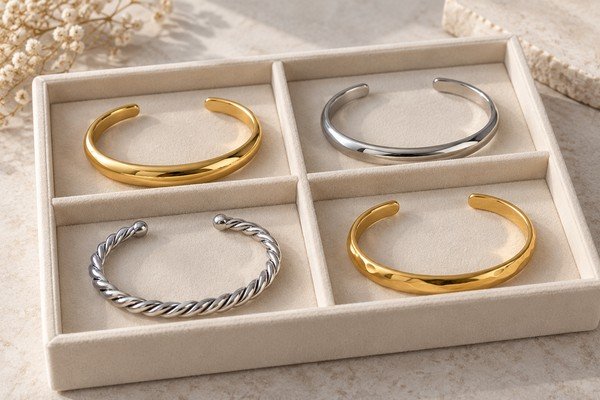
The pilot may include one-time sample or setup costs that will not recur. A larger order may reduce unit costs but increase total stock exposure, packaging commitments and storage needs.
Ask for the proposed expansion quotation separately. Confirm repeat-order minimums, component availability and production timing before assuming a successful pilot can be replenished immediately.
Review sales, quality, margin and operational effort together. A popular item that requires frequent repacking or unclear fit explanations may need refinement before expansion.
My buying view: the most useful pilot ends with a short decision record. State what you learned, what remains uncertain and exactly what changes in the next order.
Calculate sell-through with the trial conditions visible
For a defined trial period, sell-through can be recorded as units sold divided by units available for sale, multiplied by 100. Define how replenishments, returns and stockouts enter your calculation before comparing variants. Keep price, promotion and launch dates beside the result. A variant that was unavailable for most of the period cannot fairly be judged against one continuously in stock.
Use the capsule planning guide to limit assortment variables and the cost comparison worksheet before committing to the next order.
Pilot-order decision worksheet
Use these fields in your purchase order or sample review. Numerical values and IDs below are illustrative, not live product specifications, test results or confirmed commercial terms. Agree measurement methods, tolerances and acceptance criteria for your actual design.
| Field | Record or illustrative example | Verification before release |
|---|---|---|
| Trial question | Which of two finishes merits replenishment? — illustrative | Hold channel and promotion conditions visible |
| Demand measure | Units sold ÷ units available for sale | Record dates, stockouts, returns and markdowns alongside the result |
| Next order | Reorder, revise, expand or stop | Review defect findings and repeat-order economics separately from customer preference |
Pilot-order questions
Does a sold-out pilot prove long-term demand?
No. Initial quantity, audience, promotion and availability influence the outcome. Preserve that context.
Should I order the smallest possible quantity?
Choose a practical quantity for the intended question and variant coverage, within your budget and the supplier’s constraints.
Discuss a focused pilot with Yleryler. Send the target customer, proposed cuff designs, finish options, channel and decision you want the trial to support.
Images are AI-generated design illustrations. Confirm actual products and specifications against approved samples.
Should returns be included when reviewing a pilot?
Record returns, reasons, stock availability and trial conditions alongside sales. Distinguish customer preference from quality findings before deciding whether to replenish or revise.