An ODM jewelry manufacturer can help you turn a jewelry idea into a producible product, but many buyers start with the wrong question. They ask for the lowest price first, then discover problems with samples, packaging, plating, or delivery later. I believe the better path is to define the product clearly before asking for a quote.
An ODM jewelry manufacturer supports product development, sampling, customization, production, quality control, and export coordination for jewelry buyers. The right partner should not only print a logo or copy a design. It should help confirm materials, sizes, finishes, packaging, MOQ, lead time, and approval standards before bulk production starts.
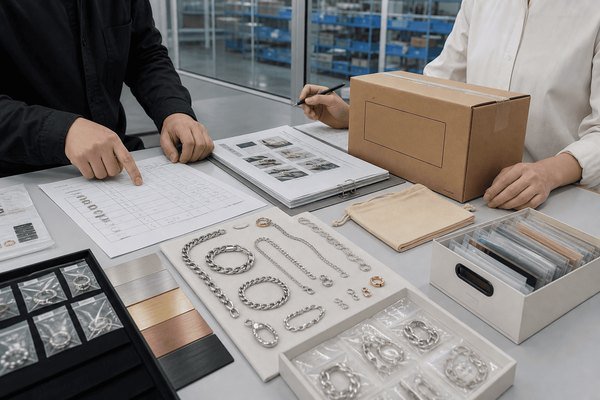
In my daily factory communication, I see the same pattern often. Buyers want a fast quote, but the real work begins when we clarify what they actually need to sell, where they will sell it, and what standard the final product must meet.
What Does an ODM Jewelry Manufacturer Actually Do?
Many buyers search for an ODM jewelry manufacturer because they want more than a ready-made catalog item. That is reasonable. However, confusion starts when ODM is treated as a magic shortcut. If the idea, target channel, and product requirements are unclear, the sample process can become slow and expensive.
<p style="margin:0 0 20px;line-height:1.85;">Use <a href="https://yleryler.com/product/r006-gold-stainless-steel-blank-oval-signet-ring/">Gold Stainless Steel Blank Oval Signet Ring</a> as an existing design direction for an ODM discussion. Identify which changes require development and confirm the revised sample before production.</p>
An ODM jewelry manufacturer helps buyers develop jewelry products based on a concept, reference, market need, or partial design. The supplier may support material selection, structure adjustment, logo methods, packaging plans, samples, production, QC, and export. The buyer still needs to confirm requirements, samples, and final production standards.
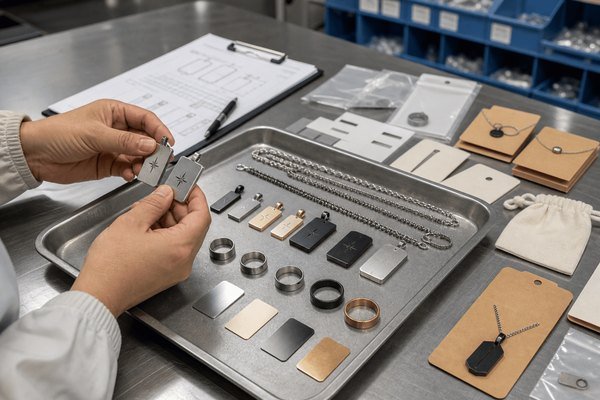
ODM means product development support
In simple terms, ODM means Original Design Manufacturing. In the jewelry business, I see ODM as one step beyond basic production. A buyer may not have a complete technical drawing. They may have a market idea, a reference image, or a product direction. The supplier helps turn that direction into something that can be sampled and produced.
For stainless steel jewelry, ODM work can include:
- Product structure suggestions, such as chain length, pendant thickness, clasp type, or ring width
- Material suggestions, such as common stainless steel options used for jewelry production
- Surface finish planning, such as polished, brushed, matte, sandblasted, or mirror finish
- Color plating choices, such as gold, rose gold, black, or steel color
- Logo customization, such as laser engraving, stamping, enamel, or screen printing
- Packaging development, such as cards, pouches, boxes, tags, barcodes, and cartons
- Sample production, so the buyer can approve the final look before bulk order
- Production and QC control, so bulk goods match the confirmed sample as closely as possible
ODM still needs clear buyer input
I often remind buyers that an ODM jewelry manufacturer cannot develop accurately from one sentence like “I want a trendy bracelet.” That request is too wide. A supplier needs practical information.
Here is a simple way to think about it:
| Buyer Input | Why It Matters |
|---|---|
| Target customer | It affects size, style, finish, and packaging |
| Sales channel | Amazon, supermarket, wholesale, and event sales may need different packaging |
| Expected order quantity | It affects MOQ, unit cost, and production method |
| Target price range | It helps the supplier suggest realistic material and packaging options |
| Logo requirement | It affects sample cost, production time, and appearance |
| Delivery deadline | It affects whether sampling and bulk production are realistic |
I once had a buyer who asked for a quick quote on a stainless steel pendant. After a few questions, I learned they needed a full private brand set for an online store: pendant, chain, logo engraving, card, pouch, barcode label, and export carton marks. The quote changed because the project was not just a pendant. It was a complete product package.
That is the real value of ODM. It helps convert a selling idea into a defined product. But the process works best when both sides treat development as a serious step, not as a casual price request.
How Is an ODM Jewelry Manufacturer Different From OEM and Private Label?
Many buyers use ODM, OEM, and private label as if they mean the same thing. That creates mistakes. If a buyer asks for ODM but only needs a logo on an existing item, the quote may become too complicated. If they ask for OEM but need design help, the supplier may miss key development work.
An ODM jewelry manufacturer helps develop or adapt products before production. OEM jewelry manufacturing usually produces according to an existing design, drawing, mold, or confirmed specification. Private label jewelry focuses more on branding, such as logo, packaging, tags, and cartons, often using existing products or lightly customized styles.
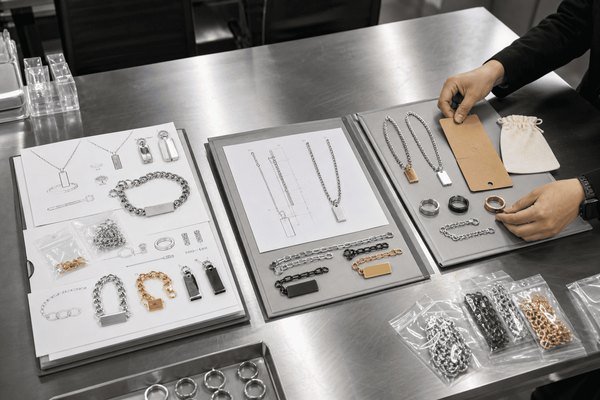
ODM, OEM, and private label compared
I like to separate these three terms early in communication. It saves time for both buyer and supplier.
| Model | Main Meaning | Buyer Usually Provides | Supplier Usually Supports |
|---|---|---|---|
| ODM | Product development plus production | Concept, reference, market direction, requirements | Design adjustment, sampling, material, logo, packaging, production |
| OEM | Production based on buyer design | Drawing, sample, mold, exact specification | Manufacturing, QC, packaging, export |
| Private Label | Branding on existing or selected products | Logo, brand name, packaging preference | Logo process, packaging, label, carton, bulk production |
ODM is not just logo printing
A common misunderstanding is that ODM means the supplier simply adds a logo to jewelry. That is closer to private label or OEM customization, depending on the product.
For example:
- If you choose an existing stainless steel ring and add your logo inside, that is usually private label customization.
- If you send a complete CAD drawing and ask the factory to produce it, that is usually OEM production.
- If you have a target customer group and a rough idea for a ring collection, and the supplier helps adjust widths, finishes, plating colors, logo placement, and packaging, that is closer to ODM jewelry development.
The buyer’s real question should change
Many first emails start with:
“What is your best price?”
I understand why buyers ask this. Price matters. However, as a factory-side supplier, I cannot give a meaningful price without knowing what I am quoting.
A better question is:
“Can you help me define the product, customization, packaging, MOQ, sample standard, lead time, and price range for this sales channel?”
That question leads to better answers.
Why the difference matters for B2B buyers
Different buying groups need different levels of support.
- Amazon and e-commerce sellers often need packaging, barcodes, stable color consistency, and repeat orders.
- Supermarkets and wholesalers often care about price levels, carton packing, delivery timing, and consistent supply.
- Brand developers usually need product line planning, logo placement, packaging design, and sample revisions.
- Non-profits and event organizers often need custom messages, deadline control, and clear approval before production.
- Sourcing managers need reliable documentation, communication, QC checks, and export coordination.
If you choose the wrong supplier model, the process becomes inefficient. A simple logo order does not need a full ODM discussion. A new product collection should not be treated like a standard catalog order. The right category helps the ODM jewelry manufacturer quote faster, sample better, and control production more clearly.
What Should Buyers Confirm Before Asking an ODM Jewelry Manufacturer for a Quote?
A quote can look simple on paper, but the real cost hides inside product details. If the material, size, finish, logo process, packaging, and sample approval method are not clear, the cheapest quote may become the most expensive mistake later.
Before asking an ODM jewelry manufacturer for a quote, buyers should confirm the product type, target market, quantity, material preference, size, finish, color plating, logo method, packaging, price range, required documents, sample approval process, and delivery timeline. Clear requirements help the factory quote accurately and reduce revisions.
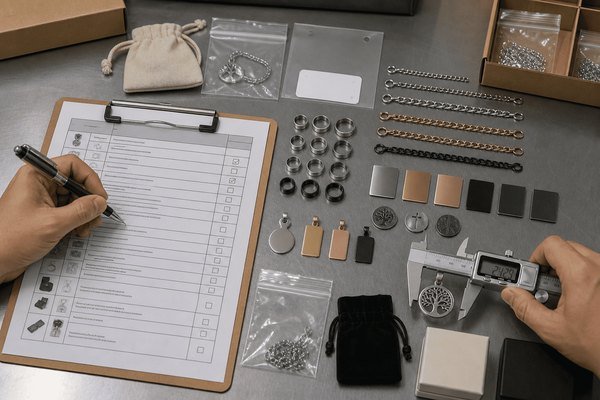
A practical quote checklist
When I receive a new inquiry, I usually try to confirm several points before quoting. This is not because I want to make the process difficult. It is because every detail affects cost, lead time, and production risk.
Here is a useful checklist:
Product category
- Ring, necklace, bracelet, bangle, earrings, pendant, chain, charm, or set
Development level
- New design development
- Production from drawing
- Existing style with logo
- Existing style with packaging only
Material
- Stainless steel type requested by the buyer
- Any market-specific material requirement
- Any need for test reports or compliance documents
Size and structure
- Ring sizes
- Chain length
- Pendant dimensions
- Bracelet diameter
- Thickness and weight target
Surface finish
- Polished
- Brushed
- Matte
- Sandblasted
- Plated color
Logo method
- Laser engraving
- Deep engraving
- Stamping
- Enamel color filling
- Screen printing on packaging
Packaging
- OPP bag
- Jewelry card
- Velvet pouch
- Paper box
- Gift box
- Barcode sticker
- Carton marks
Quantity and MOQ
- Sample quantity
- First bulk order quantity
- Reorder forecast if available
Timeline
- Sample deadline
- Bulk production deadline
- Shipping deadline
Approval standard
- Photo approval
- Physical sample approval
- Golden sample kept by buyer and factory
- QC checklist before shipment
Why “304 or 316L” is not the whole story
In stainless steel jewelry, buyers often ask, “Is it 304 or 316L?” That is an important question, but it is not the only one. Product performance and customer satisfaction also depend on finish, polishing, plating quality, welding points, edges, logo clarity, packaging protection, and QC consistency.
For example, two bracelets may both be made from stainless steel, but they can feel very different because of:
| Variable | Buyer Impact |
|---|---|
| Edge polishing | Comfort and perceived quality |
| Plating color | Brand style and customer expectations |
| Logo depth | Durability and premium feeling |
| Clasp strength | Return rate and user satisfaction |
| Packaging | Retail appearance and shipping protection |
| Size tolerance | Fit, reviews, and reorder consistency |
Documents and compliance should be market-specific
Some buyers need SGS-related documents, material reports, or market compliance information. I can support document discussion based on actual product and buyer requirements, but I do not treat one document as a universal answer for every country, platform, or retail channel.
If you sell through Amazon, supermarkets, or regulated markets, you should confirm the exact requirements with your platform, importer, or compliance consultant. Then the ODM jewelry manufacturer can check what documents are available or what testing may be needed for that product and order.
The strongest quote is not the lowest number. The strongest quote is the one based on the same product definition, same packaging plan, same QC standard, and same delivery expectation.
How Does Stainless Steel Jewelry ODM Work From Sample to Bulk Production?
The sample stage is where many ODM projects succeed or fail. A beautiful idea can still become a weak product if the sample approval is rushed. On the other hand, endless sample changes can delay production and increase cost. A clear process protects both buyer and factory.
A stainless steel ODM jewelry manufacturer usually follows a process of requirement confirmation, design or specification review, sample quotation, sample making, buyer approval, bulk production planning, QC inspection, packaging, and export delivery. Bulk production should start only after the buyer confirms the sample and production standard.
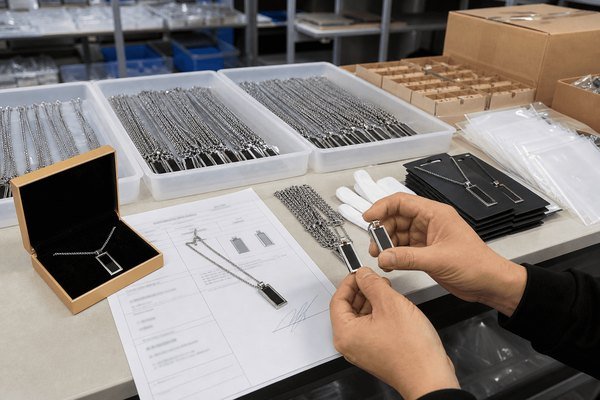
A normal ODM workflow
Every factory has its own process, but I usually guide buyers through a practical sequence.
| Step | What Happens | Buyer Responsibility | Supplier Responsibility |
|---|---|---|---|
| 1. Requirement confirmation | Product and brand needs are discussed | Share clear details | Ask clarifying questions |
| 2. Development review | Feasibility and options are checked | Confirm target price and channel | Suggest material, finish, process |
| 3. Sample quotation | Sample cost and time are quoted | Approve cost and details | Prepare sample plan |
| 4. Sample production | Physical sample is made | Wait for review sample | Make sample based on agreed details |
| 5. Sample approval | Buyer checks sample | Confirm or request changes | Record final standard |
| 6. Bulk production | Mass order begins | Approve PI and payment terms | Produce according to sample |
| 7. QC and packing | Goods are inspected and packed | Confirm shipping marks if needed | Check quantity, appearance, packing |
| 8. Export coordination | Shipment is arranged | Provide shipping instruction | Support documents and delivery |
Why sample approval matters
A sample is not just a preview. It is the reference point for bulk production. I prefer to treat the approved sample as a confirmation standard.
The buyer should check:
- Overall appearance
- Size and weight
- Surface finish
- Color plating
- Logo position and clarity
- Wearing comfort
- Packaging look
- Barcode or label accuracy
- Any sharp edges or weak connection points
If the buyer only approves photos, the process can be faster, but risk may be higher. If the buyer approves a physical sample, the process takes longer, but the final standard becomes clearer. For new product development, I often recommend physical sample approval when timing allows.
Bulk production is controlled by details
Once bulk production begins, changes become difficult. A small change can affect material preparation, logo fixtures, plating arrangements, packaging printing, and delivery schedule. This is why an ODM jewelry manufacturer should confirm details before mass production.
Important production controls include:
- Material preparation: The factory needs to match the confirmed specification.
- Surface treatment: Polishing and plating must follow the approved sample.
- Logo application: Logo position, size, and depth should remain consistent.
- Packaging assembly: Cards, pouches, boxes, tags, and labels must match the order.
- Carton packing: Quantity per carton and shipping marks should follow buyer requirements.
- QC inspection: The team should check appearance, quantity, size, logo, and packing.
I have seen buyers try to change packaging after bulk jewelry is already finished. The change looked small from the buyer side, but it affected printed cards, barcode labels, carton planning, and the shipping schedule. That experience taught me to push packaging confirmation earlier, especially for private label and ODM orders.
What a realistic timeline can include
Timeline depends on design complexity, quantity, packaging, and factory schedule. A simple logo customization order can move faster than a new product development project. A custom-plated jewelry set with branded packaging will need more time.
A realistic timeline usually includes:
- Requirement confirmation
- Sample quotation
- Sample production
- Sample shipping and buyer review
- Revision if needed
- Bulk material preparation
- Production
- Logo and plating process
- Packaging
- QC and shipment
ODM is not slow by nature. It becomes slow when decisions are unclear. When the buyer confirms details quickly and the factory communicates openly, the project can move much more smoothly.
How Should You Evaluate an ODM Jewelry Manufacturer for Long-Term Cooperation?
Choosing an ODM jewelry manufacturer only by unit price can create hidden problems. A low quote may look attractive, but weak communication, unclear samples, unstable packaging, or poor delivery control can damage your sales channel. Long-term cooperation needs more than one cheap order.
Buyers should evaluate an ODM jewelry manufacturer by communication quality, development ability, sampling process, production consistency, logo and packaging support, QC standards, export experience, flexibility, and response speed. A good supplier asks detailed questions before quoting because accurate production depends on accurate requirements.
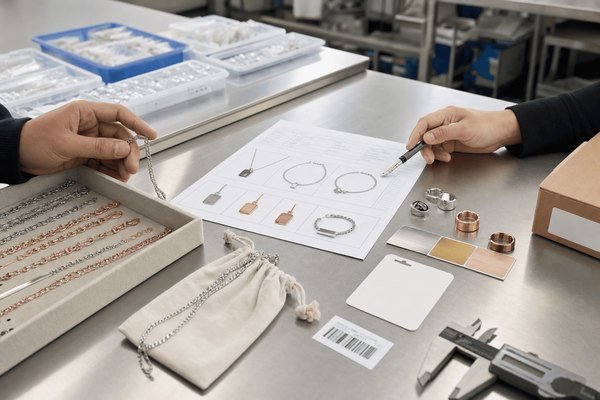
The supplier should ask questions before quoting
A capable supplier does not only say, “Yes, we can make it.” In my experience, a serious factory first asks questions to understand the project.
Useful supplier questions include:
- Do you need new product development, OEM production, or private label customization?
- What is your target sales channel?
- What quantity do you expect for the first order?
- What is your target price range?
- Do you need stainless steel, plated color, or special finish?
- Do you have a drawing, sample, photo, or reference item?
- What logo method do you prefer?
- Do you need custom packaging, tags, barcodes, or cartons?
- What is your required delivery time?
- How will you approve the sample?
These questions help prevent mistakes. They also show whether the supplier understands B2B jewelry production.
Evaluation criteria for B2B buyers
I recommend using a balanced scorecard instead of choosing only by price.
| Evaluation Area | What to Check | Why It Matters |
|---|---|---|
| Communication | Fast, clear, and practical replies | Reduces misunderstanding |
| Product development | Can suggest realistic options | Helps turn ideas into products |
| Sampling | Clear sample cost, time, and revision process | Protects approval standard |
| Stainless steel experience | Understands finish, plating, logo, sizing | Improves production consistency |
| Packaging support | Can handle cards, boxes, pouches, labels | Supports retail and e-commerce sales |
| QC process | Checks appearance, quantity, logo, packaging | Reduces disputes and returns |
| Export coordination | Understands cartons, shipping documents, deadlines | Helps international buyers |
| Flexibility | Supports phased delivery or project-based orders | Helps growing brands manage inventory |
Factory-direct does not mean careless pricing
As a China-based stainless steel jewelry supplier, I understand that buyers want factory-direct advantages. Direct production lines can help with communication, QC, and cost control. However, I do not believe “factory direct” should mean unclear pricing or rushed confirmation.
A good quote should show what is included:
- Product unit price
- Logo cost if separate
- Packaging cost if separate
- Sample cost
- Mold or development cost if needed
- MOQ
- Estimated lead time
- Payment and delivery terms
- Packing method
- Any special requirement
If two suppliers quote very different prices, buyers should compare the details. One quote may include custom packaging and logo engraving. Another may only include the plain jewelry item. Without the same assumptions, price comparison is not fair.
Long-term cooperation needs repeatability
For wholesalers, supermarkets, e-commerce sellers, and brand developers, the first order is only the beginning. Reorders matter. A product that sells well needs stable quality in the second, third, and fourth shipment.
Long-term cooperation depends on:
- Keeping approved samples or production records
- Maintaining consistent plating color as much as possible
- Using the same packaging standard
- Confirming reorder details before production
- Reporting issues early
- Supporting flexible delivery plans when possible
I always prefer long-term projects where both sides build a shared standard. The buyer understands what the factory can control. The factory understands what the buyer’s market expects. That relationship is much stronger than one-time price bargaining.
Define what the development payment releases
Identify the deliverable, revision allowance, ownership terms and approval gate for each proposed development stage. A rendering approval should not silently release tooling or production. Resolve geometry through the CAD review, confirm branding with the logo artwork guide, and record the release using the sample checklist.
Frequently Asked Questions
Is an ODM jewelry manufacturer the same as an OEM jewelry factory?
No. An ODM jewelry manufacturer supports product development or design adaptation before production. An OEM jewelry factory usually produces according to the buyer’s existing design, drawing, sample, or exact specification. Some suppliers can support both, but buyers should clarify which service they need.
Can I ask for ODM jewelry if I only have a reference photo?
Yes, you can start with a reference photo, but you should also provide target size, material, finish, quantity, price range, logo needs, packaging, and sales channel. The supplier may need to adjust the design for production feasibility and avoid direct copying concerns.
What is the most important step before bulk production?
Sample approval is usually the most important step. The approved sample sets the standard for material feel, size, finish, logo position, packaging, and overall appearance. Bulk production should begin only after both buyer and supplier clearly confirm the sample and order details.
Does stainless steel jewelry ODM always require a high MOQ?
Not always. MOQ depends on product type, customization level, material, plating, logo method, and packaging. Existing styles with logo customization may have lower MOQ. New design development, custom molds, special plating, or printed packaging may require higher quantities.
Can you support private label packaging for stainless steel jewelry?
Yes, I can support private label options such as custom logo, jewelry cards, pouches, boxes, tags, barcode labels, and cartons. The exact method depends on quantity, design files, budget, and timeline. Clear packaging confirmation is important before production starts.
<section data-yleryler-review="2026-10-buyer-spec"><h2 style="margin:38px 0 16px;line-height:1.35;">ODM development gate worksheet</h2><p style="margin:0 0 20px;line-height:1.85;">Use these fields in your purchase order or sample review. Numerical values and IDs below are illustrative, not live product specifications, test results or confirmed commercial terms. Agree measurement methods, tolerances and acceptance criteria for your actual design.</p><div style="overflow-x:auto;margin:26px 0;"><table style="width:100%;min-width:540px;border-collapse:collapse;font-size:15px;line-height:1.65;"><thead><tr><th style="padding:12px;text-align:left;vertical-align:top;border:1px solid #ddd;background:#f2f5f5;" scope="col">Field</th><th style="padding:12px;text-align:left;vertical-align:top;border:1px solid #ddd;background:#f2f5f5;" scope="col">Record or illustrative example</th><th style="padding:12px;text-align:left;vertical-align:top;border:1px solid #ddd;background:#f2f5f5;" scope="col">Verification before release</th></tr></thead><tbody><tr><td style="padding:12px;text-align:left;vertical-align:top;border:1px solid #ddd;">Design brief</td><td style="padding:12px;text-align:left;vertical-align:top;border:1px solid #ddd;">Intended function, references and constraints</td><td style="padding:12px;text-align:left;vertical-align:top;border:1px solid #ddd;">Agree proposed changes and development scope before paid work</td></tr><tr><td style="padding:12px;text-align:left;vertical-align:top;border:1px solid #ddd;">Prototype gate</td><td style="padding:12px;text-align:left;vertical-align:top;border:1px solid #ddd;">Drawing version and questions the sample must answer</td><td style="padding:12px;text-align:left;vertical-align:top;border:1px solid #ddd;">Review geometry, operation, finish and assembly separately</td></tr><tr><td style="padding:12px;text-align:left;vertical-align:top;border:1px solid #ddd;">Production gate</td><td style="padding:12px;text-align:left;vertical-align:top;border:1px solid #ddd;">Accepted finished sample and itemized quotation</td><td style="padding:12px;text-align:left;vertical-align:top;border:1px solid #ddd;">Record approved revision and milestone owners before release</td></tr></tbody></table></div></section>
Conclusion
An ODM jewelry manufacturer is valuable when you need more than simple logo printing. The right partner helps define the product, develop samples, confirm materials and finishes, plan packaging, control production, and coordinate export details. However, ODM still requires clear buyer requirements and careful sample approval.
If you are developing stainless steel jewelry for wholesale, e-commerce, supermarkets, events, or private branding, I can help review your project and suggest a practical production plan. Contact me at send your ODM jewelry project brief or email billh@yleryler.com to discuss your next custom jewelry order.
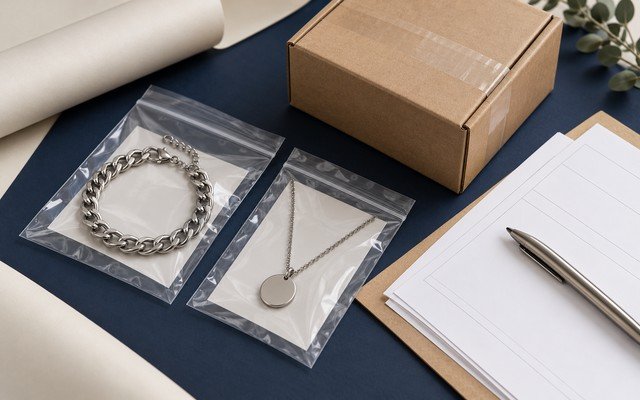
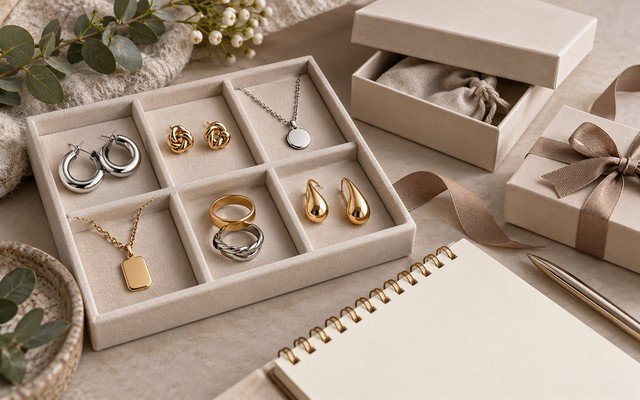
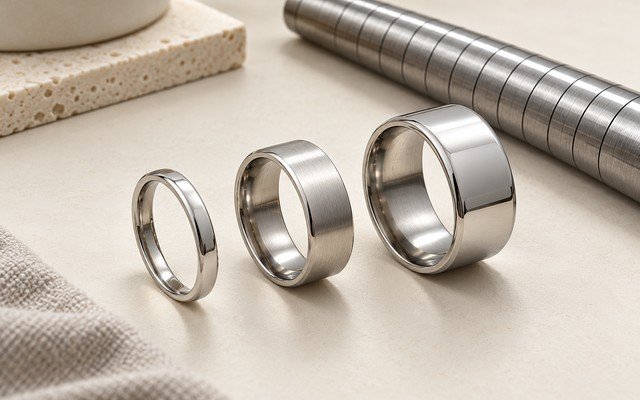
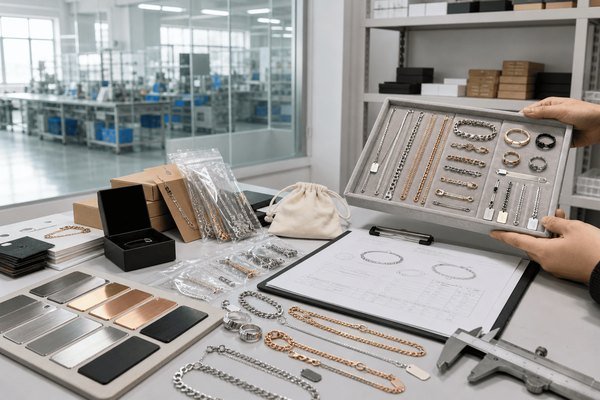
<p style="margin:0 0 20px;line-height:1.85;"><small>Images are educational concepts, not evidence of actual factory operations, stock or inspected customer orders. Confirm specifications and performance using identified finished samples and applicable documents.</small></p>