Many buyers feel safe after they get a low price. I see the problem later, when samples, logos, packaging, or delivery no longer match the plan.
A stainless steel jewelry manufacturer should help you confirm style, quantity, finish, logo, packaging, samples, QC, and delivery before mass production. I believe the right factory is not only cheap. It must reduce mismatch risk and keep the order clear from inquiry to export.
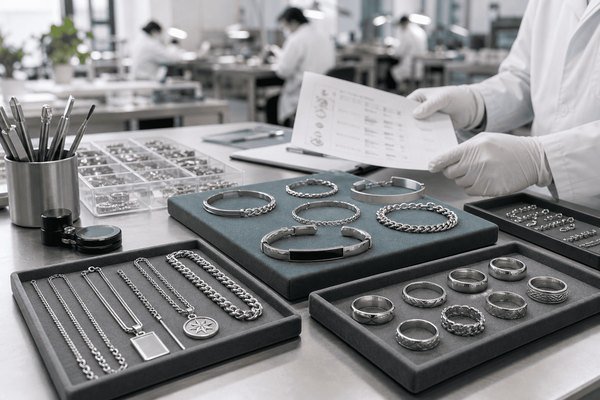
I work with stainless steel jewelry projects from factory production to export support. I often see buyers start with one short question: “What is your MOQ and price?” I understand this question because every buyer has a budget.
<p style="margin:0 0 20px;line-height:1.85;">Explore <a href="https://yleryler.com/product/sse-012-stainless-steel-stud-earrings/">Stainless Steel Stud Earrings</a> and <a href="https://yleryler.com/product/ssn-001-mens-stainless-steel-cuban-link-necklace/">Men's Stainless Steel Cuban Link Necklace</a> when preparing a stainless steel sourcing brief. Quote the exact product references and specify the required finish, quantity, branding and packaging.</p>
But I also know that a fast price without clear details can create later risk. If you are choosing a stainless steel jewelry manufacturer for wholesale, private label, Amazon, supermarket supply, or OEM/ODM work, I suggest you keep reading because the real decision is about fit, control, and clear execution.
What Information Should I Prepare Before Contacting a Stainless Steel Jewelry Manufacturer?
Many buyers lose time because the first inquiry is too simple. I see repeated emails when style, finish, logo, and packaging are not clear.
Before contacting a stainless steel jewelry manufacturer, I suggest preparing product style, size, quantity, material finish, logo method, packaging needs, target market, delivery time, and sample expectations. These details help the factory quote more accurately and judge whether the project can be made smoothly.
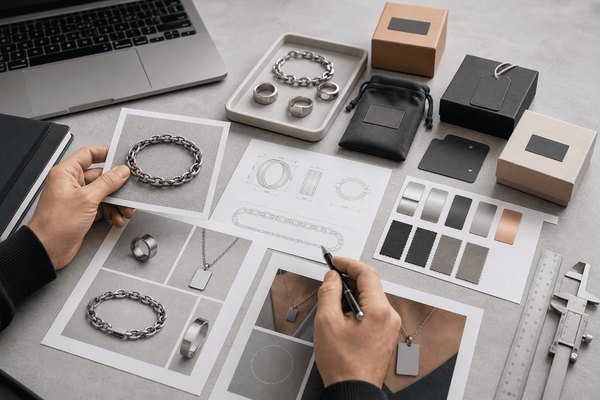
I do not think a buyer needs a perfect technical file before the first message. I do think a buyer should give enough information for a useful reply. In common project communication, I often ask for pictures, drawings, size, color, plating request, logo position, packaging type, and expected order quantity.
If the product is a ring, I need size range. If the product is a bracelet, I need length and clasp type. If the buyer wants a brand logo, I need to know whether the logo should be laser engraved, etched, enamel filled, printed, or stamped.
| Information I ask for | Why it matters | ||
|---|---|---|---|
| Product photo or drawing | I can judge structure and production process | ||
| Quantity or order plan | I can check MOQ, cost, and production schedule | ||
| Finish and color | I can estimate surface process and consistency risk | ||
| Logo method | I can confirm effect, tooling, and sample cost | ||
| Packaging type | I can include bags, cards, boxes, labels, and cartons | ||
| Delivery time | I can check sample time and mass production time | ||
| [ | Target market | I can discuss document needs, where applicable | ](https://www.ftc.gov/news-events/topics/tools-consumers/jewelry-guides) |
I also suggest stating whether the order is a one-time project or a long-term replenishment plan. These two cases need different thinking. A one-time event order needs stable delivery. A long-term wholesale order needs repeat color, repeat size, and stable packaging. When I know this early, I can help the buyer avoid a quote that looks good today but becomes difficult later.
How Should I Judge OEM and ODM Ability?
Some suppliers show many products, but they may not support your real project. I see problems when buyers need development, logo, and packaging together.
I judge OEM/ODM ability by checking whether the manufacturer can support design discussion, sampling, logo processes, packaging, production coordination, QC checkpoints, and export documents. A useful supplier should help turn a product idea into a controlled production plan, not only sell existing items.
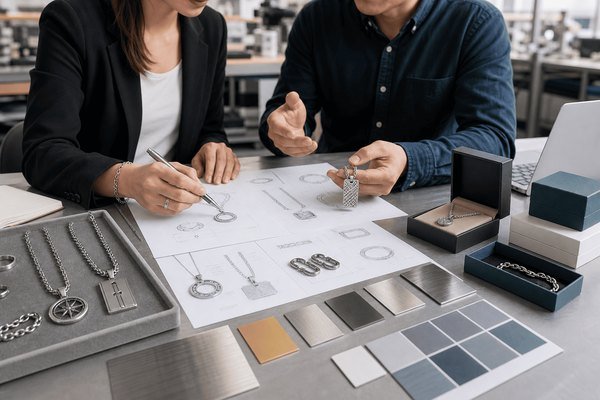
I work in stainless steel jewelry OEM/ODM, so I see that “custom” can mean many things. One buyer may only need a logo on an existing pendant. Another buyer may need a new shape, new packaging card, private label box, carton mark, barcode sticker, and phased shipment. These projects both sound like customization, but the factory work is very different. I suggest that buyers ask direct questions before they place an order.
| OEM/ODM item | Simple question to ask |
|---|---|
| Existing product with logo | Can I see the logo effect before production? |
| New design | Can you discuss structure, size, and process limits? |
| Sampling | What will the sample confirm and what will it not confirm? |
| Packaging | Can you make custom cards, tags, boxes, and cartons? |
| Production control | What checkpoints do you use before packing? |
| Export support | What documents can you provide for this shipment? |
I also suggest checking the supplier’s response style. A good manufacturer should ask questions when something is unclear. I do not see silence as efficiency. I see silence as risk.
If a pendant has a small logo area, the factory should tell you that fine lines may not show well. If enamel color is required, the factory should confirm color reference. If private packaging is needed, the factory should confirm material, size, artwork file, and carton packing.
These small checks protect the final order. They also show whether the supplier can handle more than simple stock sales.
Why Can Sample Approval Still Lead to Mass Production Problems?
Many buyers trust the approved sample too much. I see stress later when bulk color, logo, size, or package details shift.
Sample approval reduces risk, but it does not remove risk. I suggest confirming the approved sample, bulk standard, logo effect, size tolerance, finish color, packaging artwork, and inspection points in writing before mass production starts. This helps prevent practical mismatch between sample and bulk goods.
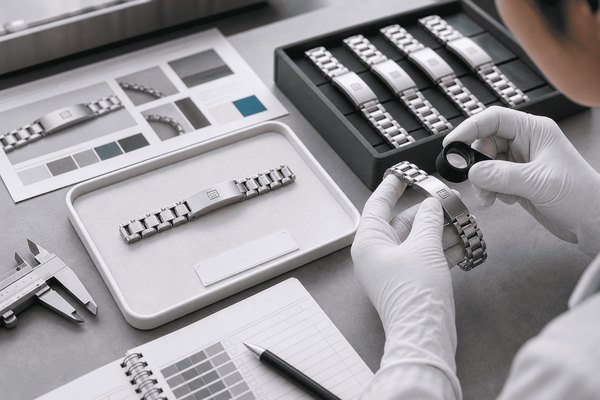
I treat the sample as a bridge, not as the whole road. A sample shows the buyer what the product can look like. It also helps the factory test the process.
But mass production adds new conditions. More pieces are made. More workers and steps may be involved.
More packaging parts may arrive from outside vendors. A color that looks close in one sample may look different across a large batch if the standard is not written clearly.
| Risk point | What I suggest confirming |
|---|---|
| Size | Confirm key measurements and acceptable range |
| Surface finish | Keep sample photos and finish name in order file |
| Logo | Confirm method, position, depth, color, and size |
| Color | Use clear reference, sample approval, or color card |
| Packaging | Confirm artwork, material, label, and carton mark |
| Quantity split | Confirm shipment plan and phased delivery if needed |
| QC | Confirm inspection points before packing |
I often remind buyers that packaging can create as many complaints as the jewelry itself. A wrong logo card, wrong barcode, weak box, or mixed carton can hurt a marketplace seller or supermarket buyer. The jewelry may be correct, but the order can still fail at the receiving side.
This is why I like to confirm both product and packaging before bulk work. If the buyer needs SGS, eco-friendly support, or other documents, I also suggest checking availability by product and market before the order is locked.
I do not see document discussion as a last-minute job. I see it as part of order control.
Why Is the Lowest Unit Price Not Always the Best Choice?
A low price feels good at first. I see it become expensive when rework, delay, weak packaging, or unclear communication enters the order.
The lowest unit price is not always the best choice because it may not include stable finish, logo control, packaging quality, QC time, delivery planning, replenishment support, or document support. I suggest comparing total order risk, not only the unit number on the quotation.
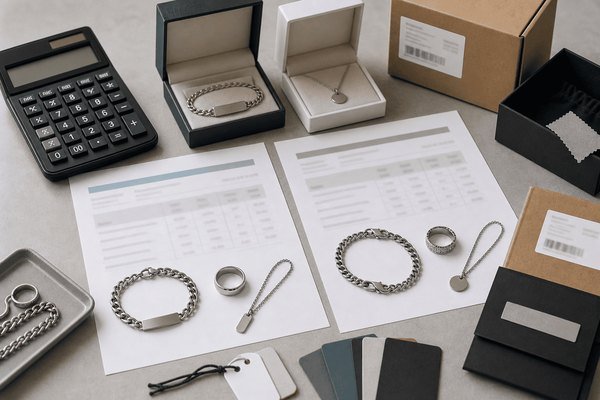
I do not say buyers should ignore price. Price matters. I also do not say a higher price is always better. I only say that a quote must be read with its conditions.
In factory communication, I often see two quotations that look easy to compare. But one includes custom packaging, logo sample, carton mark, and inspection. Another only includes basic product cost. If the buyer only looks at the unit price, the decision can be wrong.
| Quote item | Why it changes the real cost | ||
|---|---|---|---|
| Product structure | Complex styles take more steps and more checking | ||
| Plating or finish | Stable color may need better process control | ||
| Logo method | Laser, engraving, enamel, and printing have different costs | ||
| Packaging | Cards, boxes, bags, tags, labels, and cartons add cost | ||
| MOQ | Small quantity may raise unit cost | ||
| Delivery plan | Urgent orders may need special coordination | ||
| [ | Documents | Some support may need time, fee, or product check | ](https://www.trade.gov/common-export-documents) |
I also suggest asking whether the price supports repeat orders. Some buyers need long-term supply for Amazon or wholesale channels. In that case, the first order is only the start. The buyer needs similar color, size, packaging, and replenishment speed later.
A very low first price may not help if the supplier cannot keep consistency. I prefer to discuss the order as a working project. I want to know the selling channel, packaging needs, target delivery date, and possible reorder plan. Then I can give a more realistic price and a more useful production suggestion.
What QC Points Should I Discuss With the Manufacturer?
Quality sounds like a big word. I see that most order problems come from small visible points that were not checked early.
I suggest discussing QC points such as size, surface scratches, plating color, logo position, logo clarity, sharp edges, clasp function, stone or enamel setting, packaging accuracy, carton labels, and quantity count. Clear QC points help both buyer and factory judge goods by the same standard.
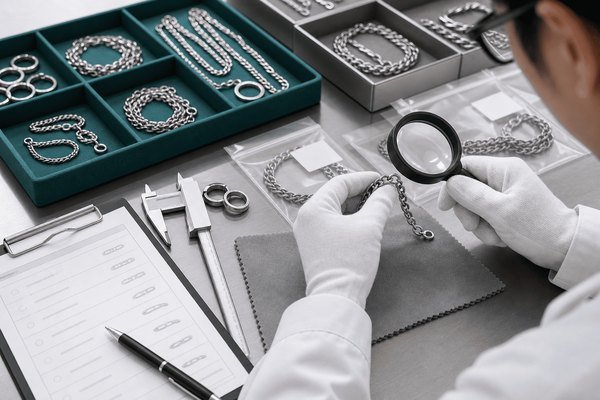
I believe QC should be practical. Buyers do not need to use difficult words to start the discussion. They can ask the manufacturer what will be checked before packing. They can also share their own selling channel needs.
A supermarket buyer may care about barcode labels and carton marks. An Amazon seller may care about unit packaging, product photos, and variation control. A brand developer may care about logo feel, surface finish, and gift box presentation.
| QC point | Simple check method |
|---|---|
| Size and length | Measure key points against approved standard |
| Surface | Check visible scratches, dents, and dirty marks |
| Color | Compare with approved sample or agreed reference |
| Logo | Check position, size, clarity, and missing parts |
| Edges | Touch and inspect sharp or rough areas |
| Function | Test clasp, hinge, chain, and connection parts |
| Packaging | Check artwork, labels, bags, cards, boxes, and cartons |
| Quantity | Count pieces by SKU, color, and size |
I also think photos and short videos help during production. They cannot replace all inspection work, but they help both sides see the real status. If a buyer needs third-party inspection, this should be planned before shipment.
If a buyer wants phased delivery, the factory should know which SKUs ship first and which can follow later. I have seen projects become smoother when buyers give a clear packing list and label rule early.
This is not complicated work. It is basic order discipline. It protects the buyer’s warehouse, sales team, and customer service team after the goods arrive.
How Should I Communicate Delivery, Packaging, and Export Needs?
Late changes can hurt even a good product. I see delays when packaging files, labels, cartons, or document needs are confirmed too late.
I suggest confirming delivery time, packaging artwork, label rules, carton marks, shipping method, consignee details, and document needs before mass production is near completion. Export support works better when the factory receives clear information early and can coordinate packing and shipment in order.
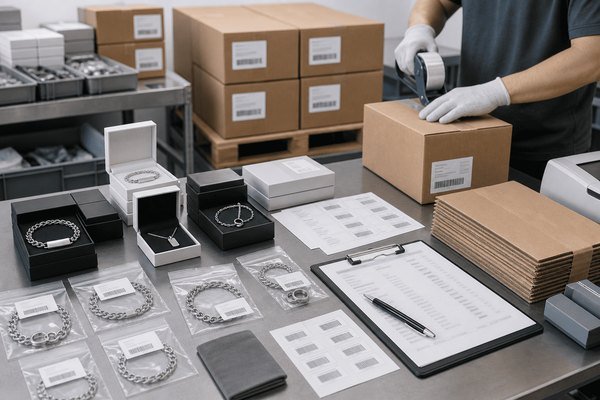
I often tell buyers that delivery is not only the production finish date. Delivery also includes packing, carton preparation, booking, pickup, export documents, and sometimes extra checking. If private label packaging is involved, the timeline starts even earlier.
Artwork files need review. Packaging samples may need confirmation. Barcodes may need to match SKU rules. Carton marks may need to match the buyer’s warehouse system.
| Delivery item | What I suggest confirming |
|---|---|
| Sample schedule | Confirm sample making time and shipping time |
| Bulk schedule | Confirm start date, production time, and packing time |
| Packaging files | Provide artwork, barcode, label, and carton mark early |
| Shipment method | Confirm express, air, sea, or forwarder pickup |
| Phased delivery | List which styles or SKUs ship first |
| Documents | Ask what can be provided for the product and market |
| Final inspection | Plan checking time before goods leave the factory |
I do not think every project needs the same export support. A small sample shipment is different from a supermarket order. A private label e-commerce order is different from a wholesale replenishment order.
This is why I ask buyers to explain the order path. If the goods go to an overseas warehouse, carton labels may be important. If the goods go to a marketplace seller, unit labels may be important.
If the buyer needs SGS-related or eco-friendly documentation, I suggest checking the exact product, material, process, and market need before production. I can support this discussion as a factory, but the buyer should also verify what their market requires. This shared check prevents late surprises.
Questions to settle before placing a manufacturing order
Does the material name prove the complete product specification?
No. Record the specified grade, dimensions, construction, component references and finish separately. Request relevant material and product documentation for the actual order; a report for another product is not a substitute.
Can a finish photograph release production?
It can support a visual discussion, but use the physical finish-reference process and sample approval checklist for the defined release checks.
What should my purchase order include?
Include quantities by variant, accepted sample and drawing references, packaging, inspection scope and delivery responsibilities. Use the quote comparison guide to identify unresolved costs before ordering.
Send Yleryler your product brief with the product reference, quantities, finish and destination for a B2B feasibility review.
<section data-yleryler-review="2026-10-buyer-spec"><h2 style="margin:38px 0 16px;line-height:1.35;">Stainless steel sourcing record</h2><p style="margin:0 0 20px;line-height:1.85;">Use these fields in your purchase order or sample review. Numerical values and IDs below are illustrative, not live product specifications, test results or confirmed commercial terms. Agree measurement methods, tolerances and acceptance criteria for your actual design.</p><div style="overflow-x:auto;margin:26px 0;"><table style="width:100%;min-width:540px;border-collapse:collapse;font-size:15px;line-height:1.65;"><thead><tr><th style="padding:12px;text-align:left;vertical-align:top;border:1px solid #ddd;background:#f2f5f5;" scope="col">Field</th><th style="padding:12px;text-align:left;vertical-align:top;border:1px solid #ddd;background:#f2f5f5;" scope="col">Record or illustrative example</th><th style="padding:12px;text-align:left;vertical-align:top;border:1px solid #ddd;background:#f2f5f5;" scope="col">Verification before release</th></tr></thead><tbody><tr><td style="padding:12px;text-align:left;vertical-align:top;border:1px solid #ddd;">Material declaration</td><td style="padding:12px;text-align:left;vertical-align:top;border:1px solid #ddd;">Specified grade and supplier material evidence</td><td style="padding:12px;text-align:left;vertical-align:top;border:1px solid #ddd;">Match documentation to actual components; avoid inferring composition from appearance</td></tr><tr><td style="padding:12px;text-align:left;vertical-align:top;border:1px solid #ddd;">Finish</td><td style="padding:12px;text-align:left;vertical-align:top;border:1px solid #ddd;">Process and physical reference</td><td style="padding:12px;text-align:left;vertical-align:top;border:1px solid #ddd;">Record coating/texture scope and approve the finished sample</td></tr><tr><td style="padding:12px;text-align:left;vertical-align:top;border:1px solid #ddd;">Production evidence</td><td style="padding:12px;text-align:left;vertical-align:top;border:1px solid #ddd;">SKU-specific dimensions and functional observations</td><td style="padding:12px;text-align:left;vertical-align:top;border:1px solid #ddd;">Ask for identified sample photos and relevant documents rather than generic factory claims</td></tr></tbody></table></div></section>
Conclusion
I choose a stainless steel jewelry manufacturer by checking clarity, sampling, QC, packaging, delivery, and support, not only by comparing the lowest unit price.
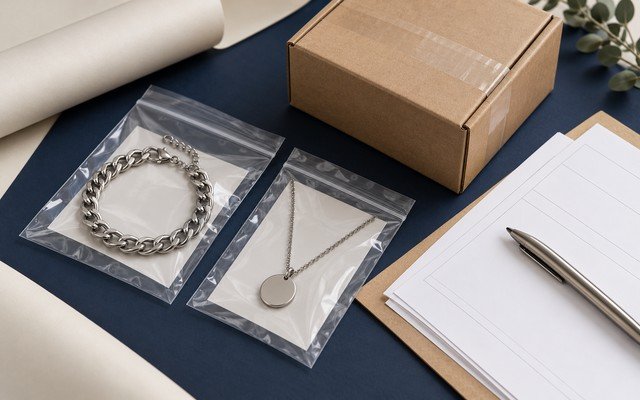
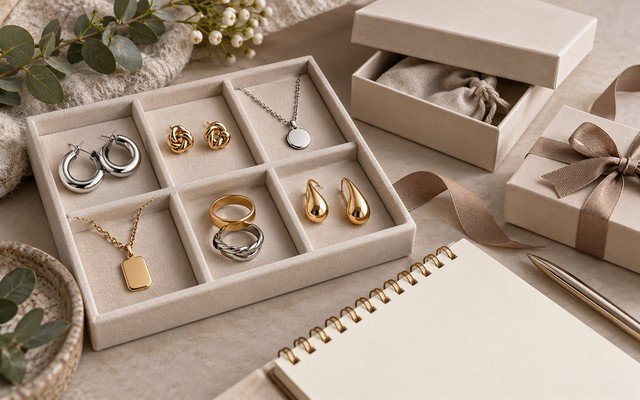
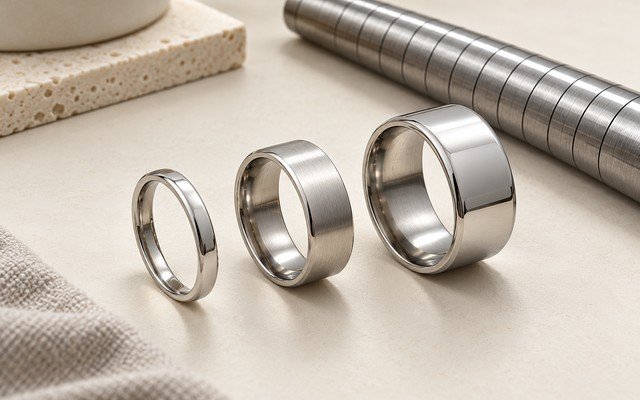
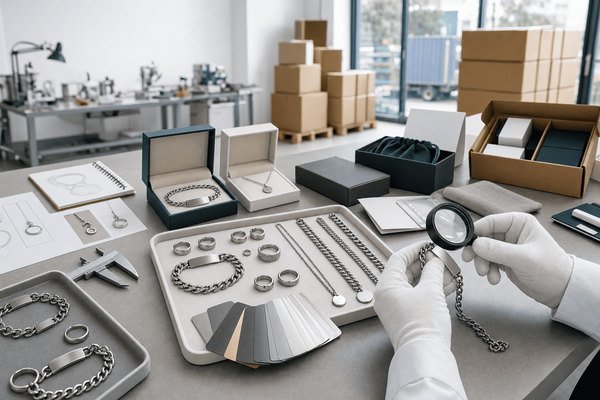
<p style="margin:0 0 20px;line-height:1.85;"><small>Images are educational concepts, not evidence of actual factory operations, stock or inspected customer orders. Confirm specifications and performance using identified finished samples and applicable documents.</small></p>