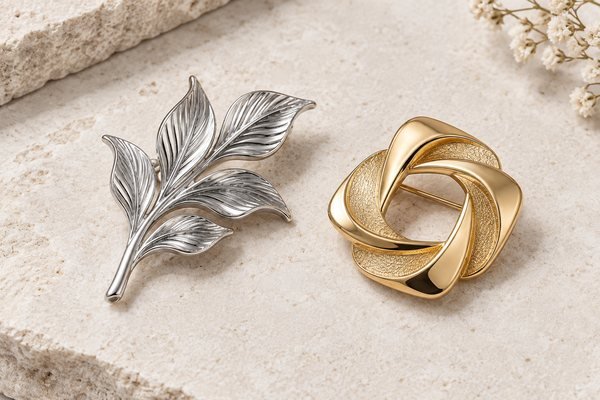
A brooch is purchased for its decorative face, but its reverse determines how it attaches to clothing and how it should be handled. A sample that looks attractive in a catalogue may be awkward on the intended fabric or difficult to pack without exposing the pin.
Approve wholesale brooches by checking the actual pin mechanism, attachment position, closed configuration, intended fabric use and packing protection. Review the reverse as carefully as the front. Define the operating method and inspection criteria before ordering, rather than assuming every decorative pin works the same way.
1. Define the intended use and attachment type
Specify whether the product is intended for a jacket, scarf, bag or another application. Fabric weight and construction can affect how a brooch sits. Choose representative materials for sample review rather than treating one fabric trial as proof of suitability for all clothing.
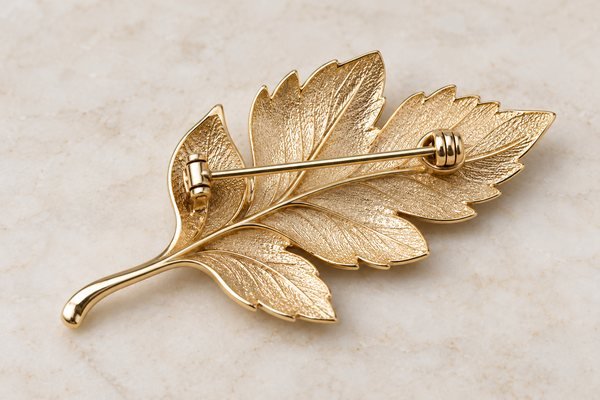
Identify the proposed attachment system through photographs and a sample. Record its component reference and operating sequence. A rotating catch, locking arrangement or another closure should have clear handling instructions appropriate to its actual construction.
2. Inspect the reverse and pin alignment
Look at the pin, hinge or pivot, catch and attachment points as a complete system. Check whether the pin reaches the catch without forcing and whether the closed arrangement matches the approved reference. Record any visible misalignment before attempting adjustment.
Inspect accessible edges and contact areas on the back. Decorative projections can press against fabric even when the closure itself works. Use consistent photographs showing the entire reverse and close-ups of the mechanism so the supplier can reproduce the finding.
For a brooch project, send front and reverse drawings through our jewelry customization services page, including the pin mechanism, intended fabric and protective packing requirements.
3. Trial the complete brooch on intended material
Mount the sample using the intended operating method and observe its resting orientation. A heavy or offset design may pull differently depending on attachment position and fabric. Record visible sagging, rotation or handling difficulty under the agreed trial.
Avoid promising that a brooch will leave no marks on every textile. A pin-based attachment passes through material, and the outcome depends on the fabric and use. Keep the trial description specific and communicate the intended application clearly to retailers.
4. Agree functional checks before production
Define normal opening, mounting and closing checks on the finished sample. Where a buyer requires measured attachment or repeated-operation tests, agree the setup, sequence and acceptance criteria with the supplier before testing.
Keep test observations separate from root-cause conclusions. A catch that does not engage might involve alignment, component selection or damage. Photograph the condition, identify the sample revision and request an assessment instead of forcing the mechanism until it changes.

5. Approve a protective packed configuration
Confirm whether the brooch should be packed closed, mounted on a card or secured within an insert. The approved arrangement should prevent the pin from becoming exposed during ordinary handling and avoid pressure on the mechanism.
If transport-package testing is required, consult ISTA transport-packaging test procedures when discussing a suitable procedure with the laboratory. Evaluate the brooch and its protective packaging together.
Use the table below to record the final pack-out. Check the reverse after unpacking and retain a reference image of the closed position. Include component counts and any removable protective pieces so the warehouse can verify complete sales units.

Copyable buyer review template
Copy these headings into your working spreadsheet. Add the product SKU, sample revision, date, reviewer, findings, responsible person and final decision. Example fields are planning aids; acceptance criteria must be agreed for your actual product.
| Review area | Record | Required decision |
|---|---|---|
| Application | Intended fabric and mounting position | Approve representative trial |
| Mechanism | Component ID and operating sequence | Confirm normal engagement |
| Reverse | Alignment and contact areas | Resolve interference |
| Packing | Closed position and protection | Approve pack-out sample |
Practical example — hypothetical
In a hypothetical development project, a decorative brooch sits well on a heavy jacket but tilts on the lightweight scarf proposed for the launch. The buyer records both trials and asks the supplier to review attachment placement and design weight. The collection description is revised around the approved application, and the updated sample is checked again. This is an illustrative decision process, not a verified performance result.
Brooch mechanism approval record
Use these fields in your purchase order or sample review. Numerical values and IDs below are illustrative, not live product specifications, test results or confirmed commercial terms. Agree measurement methods, tolerances and acceptance criteria for your actual design.
| Field | Record or illustrative example | Verification before release |
|---|---|---|
| Sample identity | BR-01 / finished revision B | Record face dimensions, total mass and the actual pin component ID |
| Fabric trial | Named jacket fabric and named scarf fabric | Record mounting point, sagging, rotation and any visible fabric marks separately |
| Closure and pack | Closed catch / approved card or insert | Check normal engagement and inspect whether unpacking exposes or loads the pin |
Separate mechanism correction from fabric suitability
Illustrative before/after: a sample pin misses its catch during normal closing. Hold approval and record the reverse view before adjustment. After a supplier-approved alignment or component correction, check engagement again and repeat the intended fabric and packing trials. A working catch does not establish that a heavy brooch suits every fabric.
Request design-specific material and finish options, MOQ by design/color, sample and tooling fees, and delivery milestones. Supply front and reverse drawings, face dimensions, preferred mechanism and intended application; confirm the availability of each proposed construction before quoting.
Frequently asked questions
Should brooch inspection include the reverse?
Yes. Check the pin mechanism, attachment points, alignment and contact surfaces as well as the decorative front. The reverse helps explain function, mounting position and packing requirements.
Can one fabric trial establish universal compatibility?
No. Use materials representative of the intended application and record them. Fabric construction, thickness and handling vary, so avoid broad claims based on a single trial.
Should a buyer repair a misaligned pin during inspection?
Document the condition first and ask the supplier to assess it. Unapproved adjustment may alter the evidence or damage the mechanism. Agree any correction and repeat-check method before proceeding.
Related buyer resources
CAD design review · sample approval checklist · product photography brief
Discuss your wholesale project with Yleryler
Send Yleryler your brooch design, dimensions, preferred attachment type, intended fabric or application, finish, quantities and packaging concept. Include reverse-view references and any required functional checks for sample planning.
Request a Product-Specific Wholesale Quote
Images are AI-generated product concepts for educational illustration, not photographs of actual Yleryler stock, tooling or customer orders. Dimensions and product performance must be reviewed using the actual approved sample.