A smooth snake chain can be attractive in a flat photograph while behaving very differently when worn, threaded through a pendant or packed for transport. Buyers need to understand its movement before choosing it for a necklace collection. Appearance alone does not reveal whether the proposed assembly and packing method are suitable.
Approve wholesale snake chains as complete assemblies: review normal bending, visible kinks, pendant movement, end fittings and packing position against an agreed sample. Avoid sharp folds or improvised bend tests. Define the handling and inspection method before ordering, because construction and dimensions affect behavior.
1. Identify the actual chain construction
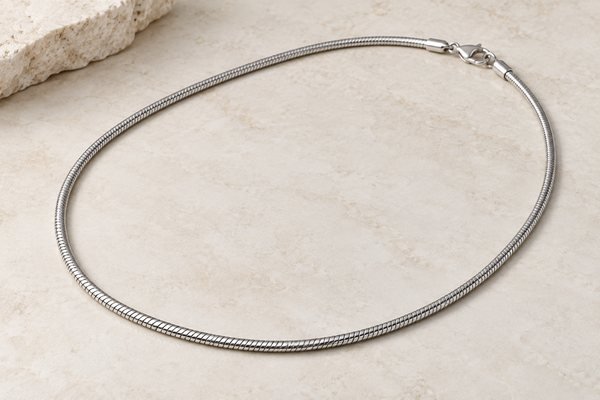
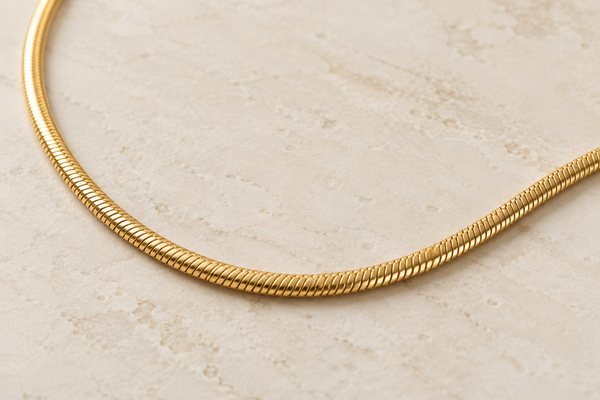
Request a close-up and a physical sample of the proposed chain. Product names such as snake, herringbone or rounded chain are sometimes used loosely, so the quotation should reference the actual construction and SKU rather than a marketing label alone.
Record the cross-section, finished width or diameter, length and end fittings. A chain supplied under the same style name may still differ in structure. Changes to these details should trigger a compatibility review, especially when a pendant will be added.
Compare Gold Stainless Steel Snake Chain Necklace and Women’s Silver Stainless Steel Snake Chain Necklace as snake-chain sourcing options. Confirm the finished chain dimensions, pendant compatibility and protective packing on the selected sample.
2. Observe normal movement without forcing a fold
Place the sample on a clean surface, lift it naturally and follow the intended wearing movement. Look for local distortions, uneven curves or sections that do not settle as expected. Record the location with an overview image and a close-up.
Do not fold the chain tightly to see whether it survives unless a specified test explicitly requires that movement. Any minimum bending requirement should be developed for the actual product and confirmed by the supplier. An arbitrary radius cannot be assumed valid for every snake chain.
3. Check the pendant and terminal together
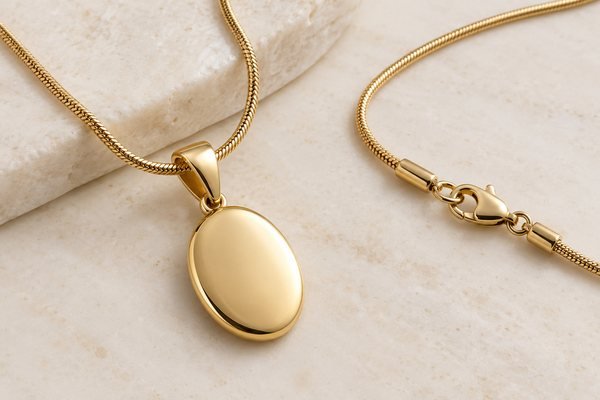
Thread the actual chain end through the actual bail. The clasp or terminal may be wider than the chain body, and the usable opening may be smaller than it appears in a front view. Check assembly access before approving the combination.
Observe how the pendant moves during ordinary handling. A heavy pendant, tight bail or sharp internal contact point can change the way the chain sits. Confirm that the intended assembly does not require repeated twisting or forcing during packing and customer use.
4. Create a movement and packing record
Use the table below as a sample-review template. Add sample revision, chain identification, pendant identification and reviewer. Record observed behavior separately from a proposed cause; a visible kink does not, by itself, explain when or why it formed.
If a buyer needs repeatable functional testing, agree the movement, setup and acceptance criteria in advance. Keep destructive testing distinct from saleable sample review. The supplier and buyer should know which samples have undergone tests and cannot be treated as untouched references.
5. Approve packaging that preserves the intended shape
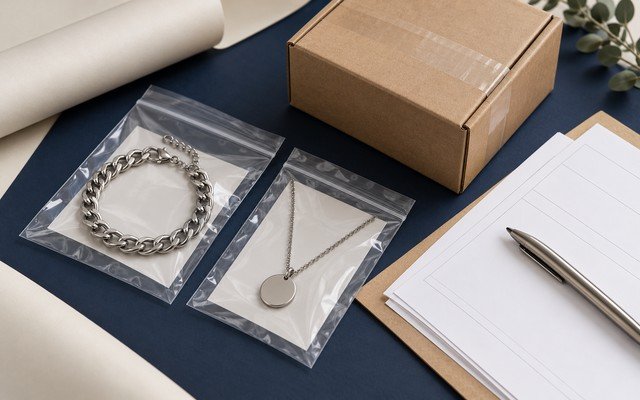
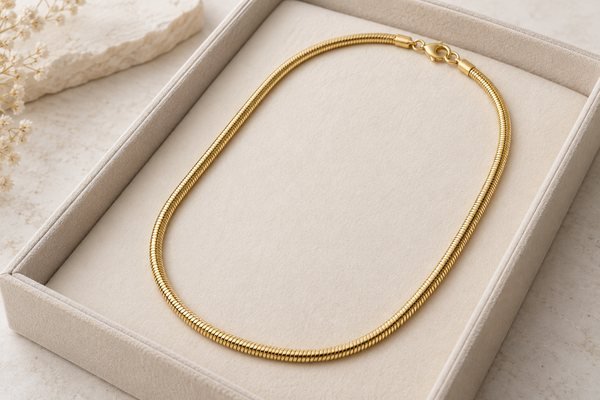
Evaluate the chain inside the proposed pouch, card or insert. Check whether the packing sequence introduces a sharp fold, catches the terminal or leaves the pendant free to drag across the chain. Unpack the sample and compare its condition with the pre-packing reference.
Agree a packing position and retention method suitable for the actual necklace. A larger package is not automatically protective if the chain can move uncontrolled. Carry the approved pack-out photographs into the production record and receiving instructions.
Consult ISTA transport-packaging test procedures if a laboratory transport assessment is needed. Select the procedure around the actual packed chain and shipment route.
Copyable buyer review template
Copy these headings into your working spreadsheet. Add the product SKU, sample revision, date, reviewer, findings, responsible person and final decision. Example fields are planning aids; acceptance criteria must be agreed for your actual product.
| Checkpoint | Evidence to retain | Approval question |
|---|---|---|
| Construction | Close-up and supplier SKU | Is this the quoted chain? |
| Normal bending | Overview plus local detail | Does movement match the reference? |
| Pendant interface | Actual terminal and bail trial | Can it assemble without forcing? |
| Packing | Before/after unpacking photographs | Does packing introduce distortion? |
Practical example — hypothetical
In a hypothetical project, a buyer approves a snake chain by itself but later adds a pendant with a narrow bail. The terminal cannot pass through without force. The team records the interference, requests an alternative bail or assembly sequence, and reviews the complete necklace again. Packaging is then checked with the pendant attached. This example illustrates an assembly decision; it is not a verified customer incident or a claim that one chain design always performs better.
Snake-chain assembly release fields
Use these fields in your purchase order or sample review. Numerical values and IDs below are illustrative, not live product specifications, test results or confirmed commercial terms. Agree measurement methods, tolerances and acceptance criteria for your actual design.
| Field | Record or illustrative example | Verification before release |
|---|---|---|
| Chain | SC-01 / cross-section / finished length | Retain a close-up and the actual chain construction reference |
| Pendant fit | Bail opening / end fitting / pendant mass | Trial the finished assembly without forcing a tight passage |
| Packing | Approved curve and support points | Compare before packing and after unpacking; record any visible permanent distortion |
Frequently asked questions
Can every snake chain carry a pendant?
No. Review the actual chain, pendant weight, bail opening, contact surfaces and terminal dimensions together. Approve the complete assembly rather than assuming compatibility from the style name.
Is a sharp bend a useful quality test?
Only when an agreed test requires it. An improvised sharp fold can damage a chain and may not represent intended use. Define repeatable functional checks with the supplier before testing.
What should buyers do if a chain arrives kinked?
Record the SKU, carton, packaging position and affected quantity. Retain the package and photograph the distortion before attempting correction. Ask the supplier to assess the evidence and agree the next action.
Related buyer resources
pendant bail compatibility · protective jewelry packaging · receiving inspection checklist
Discuss your wholesale project with Yleryler
Send Yleryler the chain reference, desired length and cross-section, pendant dimensions and weight, bail opening, finish, quantities and packaging concept. Include any intended movement tests so the quotation and sample review cover the complete necklace.
Request a Product-Specific Wholesale Quote
Images are AI-generated product concepts for educational illustration, not photographs of actual Yleryler stock, tooling or customer orders. Dimensions and product performance must be reviewed using the actual approved sample.